
Powder Coating Paint Thickness Testing in Chennai | Kiyo R&D LAB

Powder Coating Paint Thickness Testing in Chennai | Kiyo R&D LAB

Powder Coating Paint Thickness Testing in Chennai

Check Powder Coating Thickness for QC & OEM – Chennai | Kiyo R&D LAB

Introduction

Powder coating is widely used in automotive parts, industrial equipment, metal furniture, appliances, aluminum profiles, and fabricated structures. It looks smooth, durable, and attractive. But appearance alone does not guarantee quality. The real measure of powder coating performance lies in paint thickness. If the coating is too thin, corrosion will start early. If it is too thick, cracking, peeling, or poor adhesion may occur. That is why Powder Coating Paint Thickness Testing in Chennai – Kiyo R&D LAB is critical for manufacturers who care about durability, compliance, and product reliability. Companies searching for Powder Coating Paint Thickness Testing in Chennai – Kiyo R&D LAB are usually dealing with real issues: premature rusting, customer complaints, rejection of batches, or audit failures. Thickness testing is not optional—it is quality control.
Powder Coating Paint Thickness Testing in Chennai | Kiyo R&D LAB

Why Powder Coating Thickness Matters

Many people assume that powder coating automatically protects metal. This is a dangerous assumption.

The performance of powder coating depends on:

  • Surface preparation

  • Coating method

  • Curing temperature

  • Powder quality

  • Final coating thickness

If thickness is not controlled, even the best powder coating can fail.

With Powder Coating Paint Thickness Testing in Chennai – Kiyo R&D LAB, manufacturers can:

  • Verify coating uniformity

  • Prevent corrosion

  • Reduce warranty claims

  • Meet customer specifications

  • Pass third-party audits

  • Improve product lifespan

This is why serious manufacturers in Chennai rely on professional testing instead of visual inspection.


What is Powder Coating Paint Thickness Testing?

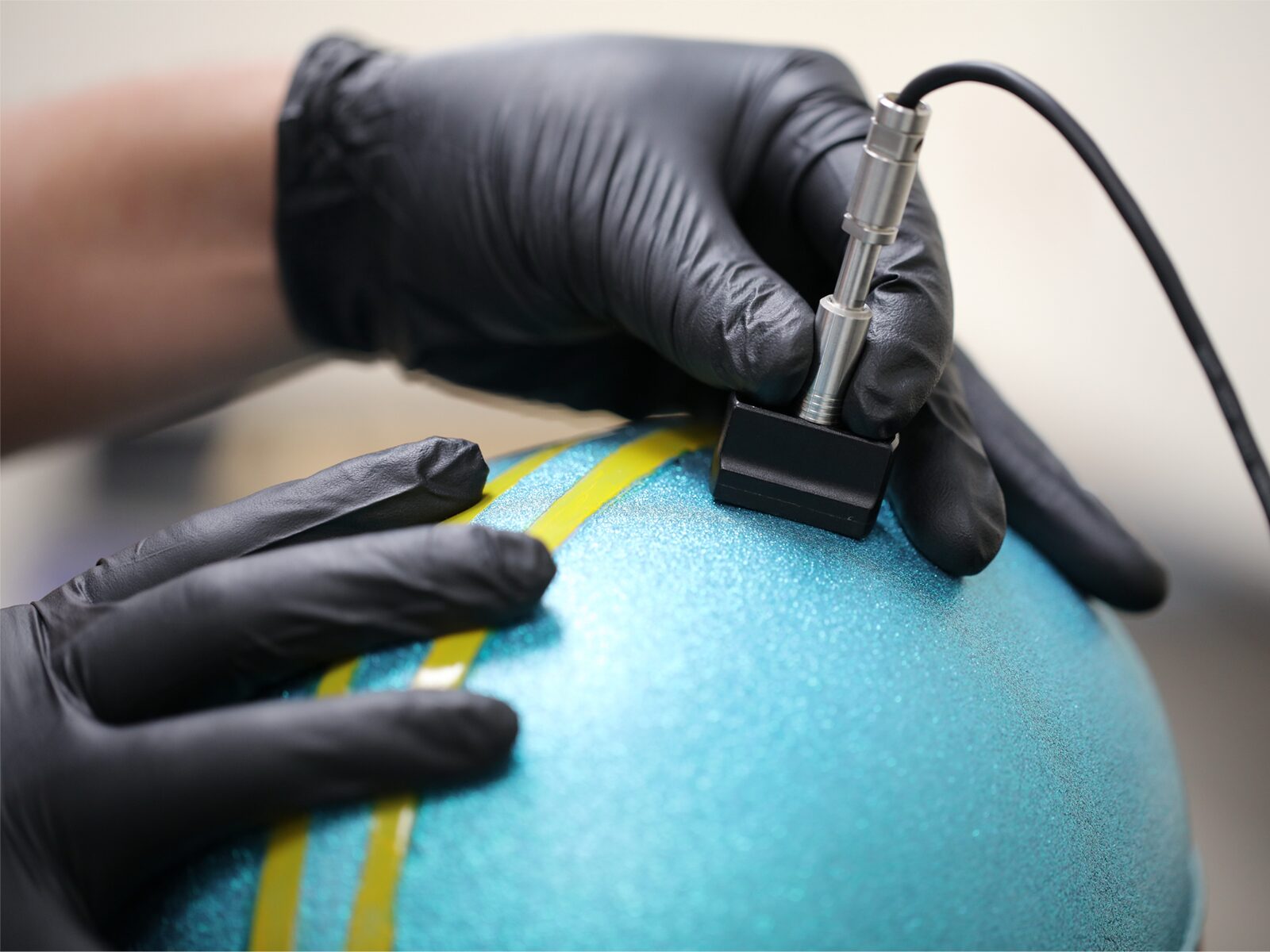
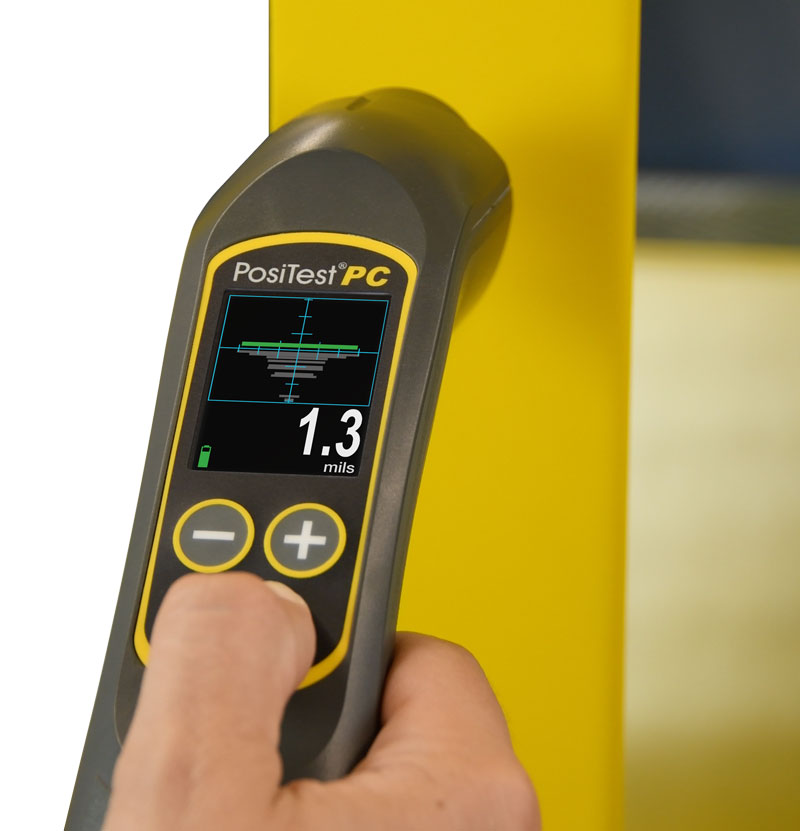
Powder Coating Paint Thickness Testing in Chennai – Kiyo R&D LAB measures the thickness of the powder layer applied on metal surfaces such as steel, aluminum, or galvanized sheets.

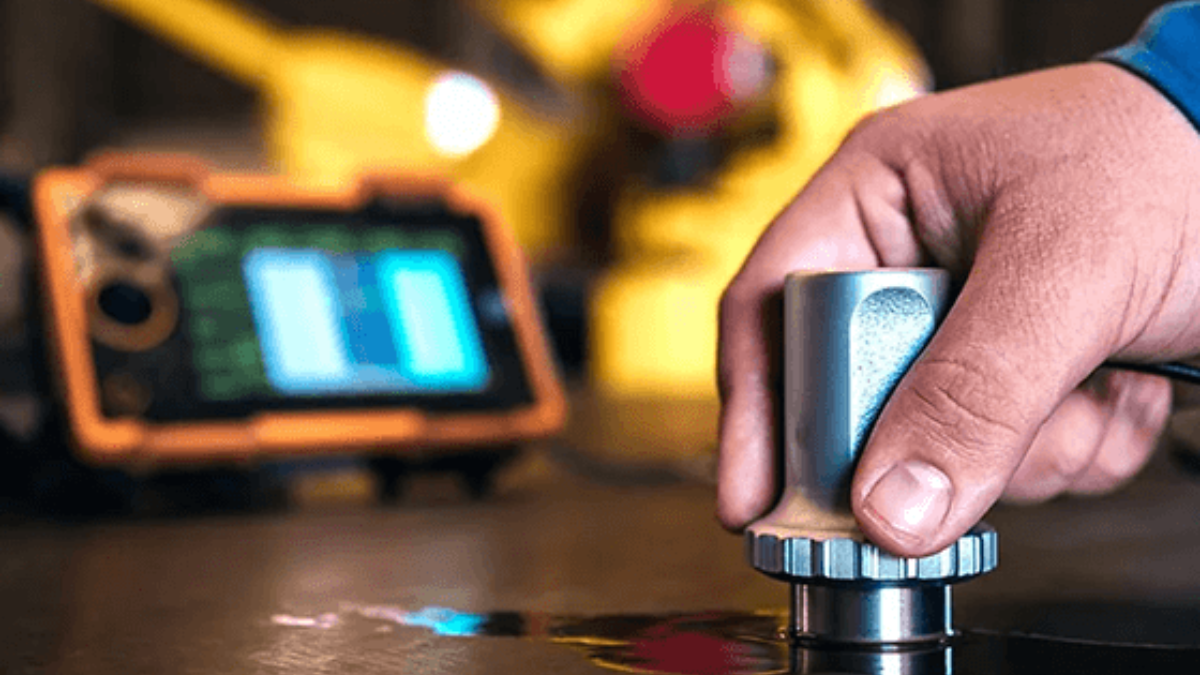
This is done using specialized non-destructive instruments like:

  • Magnetic thickness gauges

  • Eddy current thickness meters

These tools allow accurate measurement without damaging the coating.

In simple terms, thickness testing answers one key question:
👉 “Is the powder coating within the required range?”

Typical acceptable thickness ranges are:

  • 60 to 80 microns (µm) for general industrial parts

  • 80 to 120 microns for outdoor applications

  • 120+ microns for heavy-duty corrosion protection

The exact requirement depends on the application, standard, and customer need.


Why Manufacturers Need Powder Coating Thickness Testing

Without proper Powder Coating Paint Thickness Testing in Chennai – Kiyo R&D LAB, businesses face several risks:

1) Corrosion Failure

If coating is too thin, moisture reaches metal faster → rust starts → product fails.

2) Poor Adhesion

If coating is too thick, it may crack, peel, or chip under stress.

3) Customer Rejection

Many OEM buyers demand thickness reports before accepting parts.

4) Audit Non-Compliance

Quality audits often require documented thickness measurements.

5) Cost Loss

Rework, repainting, or scrapping defective parts increases expenses.

This makes Powder Coating Paint Thickness Testing in Chennai – Kiyo R&D LAB a must-have quality step.


How Kiyo R&D LAB Performs Thickness Testing

At Powder Coating Paint Thickness Testing in Chennai – Kiyo R&D LAB, testing follows a structured process:

  1. Sample identification

  2. Surface condition check

  3. Multiple readings across different areas

  4. Average thickness calculation

  5. Comparison with required standard

  6. Clear, printable test report

Testing can be done:

  • In-lab for small components

  • On-site for large fabricated structures

This flexibility helps manufacturers avoid transport delays.


Industries That Need Powder Coating Thickness Testing

Several industries depend on Powder Coating Paint Thickness Testing in Chennai – Kiyo R&D LAB, including:

  • Automotive parts manufacturers

  • Metal furniture producers

  • Electrical enclosures manufacturers

  • Industrial machinery fabricators

  • Aluminum profile suppliers

  • Construction and structural fabricators

  • White goods and appliance makers

Any product exposed to weather, moisture, or handling needs verified coating thickness.


Standards Followed in Testing

Kiyo R&D LAB aligns Powder Coating Paint Thickness Testing in Chennai – Kiyo R&D LAB with recognized standards such as:

  • ISO standards

  • ASTM guidelines

  • IS standards

  • Customer-specific OEM requirements

Following standards ensures test results are credible, comparable, and audit-ready.


Benefits of Choosing a Local Lab in Chennai

Searching for Powder Coating Paint Thickness Testing in Chennai – Kiyo R&D LAB makes sense because local testing offers:

  • Faster turnaround time

  • Easy sample submission

  • Direct technical consultation

  • Repeat testing when required

  • Lower logistics cost

  • Better coordination with coating vendors

Instead of sending samples outside Chennai, manufacturers get quick solutions locally.


Support for Coating Vendors and Fabricators

Powder coating vendors in Chennai often face customer disputes over coating quality.

By using Powder Coating Paint Thickness Testing in Chennai – Kiyo R&D LAB, coating vendors can:

  • Prove their quality with data

  • Avoid disputes

  • Improve process control

  • Reduce rework

  • Build customer trust

Testing acts as proof, not just opinion.


Support for Final-Year Engineering Students

Many engineering students search for Powder Coating Paint Thickness Testing in Chennai – Kiyo R&D LAB for their final-year projects.

Kiyo R&D LAB supports students by:

  • Providing real industrial testing

  • Explaining results clearly

  • Helping with report preparation

  • Offering hands-on exposure

Students gain practical knowledge that textbooks cannot provide.


Why Choose Kiyo R&D LAB?

Not every lab understands coatings deeply. What makes Powder Coating Paint Thickness Testing in Chennai – Kiyo R&D LAB stand out is:

  • Experienced materials team

  • Advanced measuring instruments

  • Standard-based testing methods

  • Clear, structured reports

  • Support for industries, startups, and students

Kiyo R&D LAB does not just test — it helps clients improve their coating process.


What Happens If You Skip Thickness Testing?

Manufacturers who skip Powder Coating Paint Thickness Testing in Chennai – Kiyo R&D LAB often face:

  • Rusting in 6–12 months

  • Customer complaints

  • Warranty claims

  • Repainting costs

  • Loss of reputation

Most of these issues could have been prevented with simple thickness testing.
Powder Coating Paint Thickness Testing in Chennai | Kiyo R&D LAB

Conclusion

If you are searching for Powder Coating Paint Thickness Testing in Chennai – Kiyo R&D LAB, you are already thinking about quality — and that is the right mindset. Powder coating thickness testing is the difference between a product that lasts and one that fails early. For accurate, reliable, and standard-based testing in Chennai, Kiyo R&D LAB is the trusted choice. Because in coating quality, thickness is everything.

FAQ

What is powder coating thickness testing?

It is measuring the thickness of the powder coating layer on metal surfaces, usually reported in microns (µm), to confirm it meets required limits.

Why is powder coating thickness important?

Too thin coating can lead to corrosion; too thick coating can cause cracking, peeling, and poor adhesion. Correct thickness improves durability and quality.

How is powder coating thickness measured?

Typically using non-destructive gauges (magnetic/eddy current) with multiple readings taken across the component to evaluate uniformity and compliance.

What thickness range is usually recommended?

It depends on application and customer specs. Common industrial ranges are often around 60–120 µm, but the required limits should come from the spec/standard.

Who needs powder coating thickness testing in Chennai?

Coating units, fabricators, OEM vendors, and manufacturers supplying panels, enclosures, furniture, automotive parts, and structural components.
Polymer Testing Methods in Chennai | Kiyo R&D LAB

Polymer Testing Methods in Chennai | Kiyo R&D LAB

Polymer Testing Methods

Polymer Testing for Plastics & Composites in Chennai – Kiyo R&D LAB

Introduction

Polymers are engineered materials. A material that looks fine can still fail under load, heat, chemicals, or aging. That’s why polymer testing methods in Chennai – Kiyo R&D LAB are important: they turn assumptions into measurable, repeatable data for material selection, supplier approval, and product validation.

Polymer Testing Methods in Chennai | Kiyo R&D LAB

What Are Polymer Testing Methods?

Polymer testing methods are systematic laboratory techniques used to evaluate the mechanical, thermal, chemical, physical, and durability properties of plastic and polymer-based materials.

Using polymer testing methods in Chennai – Kiyo R&D LAB, materials are tested under controlled conditions to determine whether they are suitable for:

  • Load-bearing applications

  • Heat exposure

  • Chemical contact

  • Long-term service

  • Safety and compliance requirements

In simple terms, polymer testing answers one core question:
“Will this material actually perform as expected in real use?”


Why Polymer Testing Methods Is Necessary

Modern polymers are engineered materials. Small changes in formulation or processing can cause major performance differences.

Without proper polymer testing, companies face:

  • Premature cracking or brittleness

  • Excessive deformation or creep

  • Heat distortion in service

  • Chemical attack and swelling

  • Flammability or safety failures

  • Product rejections and recalls

That’s why industries rely on polymer testing methods in Chennai – Kiyo R&D LAB to reduce risk before production or market release.


Major Polymer Testing Methods Used at Kiyo R&D LAB

Kiyo R&D LAB applies a wide range of polymer testing methods depending on material type, application, and standard requirements.

1. Mechanical Testing Methods for Polymers

Mechanical testing evaluates how a polymer behaves under force.

Common mechanical tests include:

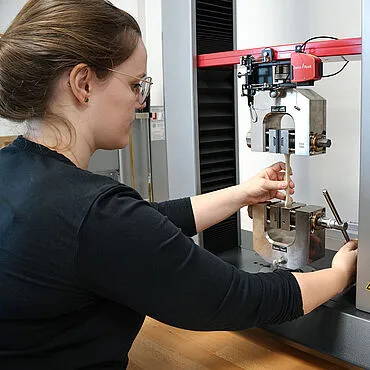
  • Tensile testing – measures strength, elongation, and modulus

  • Flexural testing – evaluates bending strength and stiffness

  • Compression testing – checks resistance to crushing loads

  • Impact testing – assesses resistance to sudden shock

  • Hardness testing – evaluates surface resistance and consistency

These tests are essential for structural, automotive, and load-bearing polymer components.


2. Thermal Testing Methods for Polymers

Thermal performance is critical for polymers exposed to heat or temperature variation.

Key thermal testing methods include:

  • DSC (Differential Scanning Calorimetry) – identifies melting, glass transition, and crystallization behavior

  • TGA (Thermogravimetric Analysis) – evaluates thermal degradation and composition

  • Heat Deflection Temperature (HDT) – measures deformation under heat and load

  • Vicat Softening Temperature – determines softening behavior

Thermal testing helps predict how polymers behave during processing and service.


3. Physical Property Testing Methods

Physical testing methods evaluate basic material characteristics that influence performance.

These include:

  • Density and specific gravity

  • Water absorption

  • Thickness and dimensional stability

Such tests are simple but crucial, especially for quality control and supplier comparison.


4. Chemical Resistance Testing Methods

Many polymers operate in contact with oils, fuels, solvents, and cleaning agents.

Chemical testing methods help determine:

  • Resistance to specific chemicals

  • Swelling or weight change

  • Loss of mechanical properties after exposure

Using polymer testing methods in Chennai – Kiyo R&D LAB, materials are evaluated for suitability in harsh environments.


5. Environmental and Aging Testing Methods

Polymers change over time due to heat, moisture, and environmental exposure.

Aging tests evaluate:

  • Long-term durability

  • Property retention

  • Performance after exposure

These methods are critical for outdoor, automotive, and industrial applications.


6. Non-Destructive Testing (NDT) Methods for Polymers

Some defects are internal and invisible on the surface.

Non-destructive polymer testing methods help detect:

  • Internal voids

  • Delamination

  • Thickness variation

  • Hidden cracks

NDT is especially useful for molded parts, bonded assemblies, and composites.


7. Flammability and Safety Testing Methods

For electrical, automotive, and consumer products, fire behavior matters.

Flammability testing methods help assess:

  • Burning rate

  • Flame spread

  • Dripping behavior

These tests support product safety and regulatory compliance.


Polymer Testing Methods  for Composites and Reinforced Plastics

Fiber-reinforced polymers (GFRP, CFRP, FRP) behave differently from unfilled plastics.

Using polymer testing methods in Chennai – Kiyo R&D LAB, composite materials are evaluated for:

  • Mechanical performance

  • Delamination risk

  • Thermal stability

  • Manufacturing defects

Composite testing is essential because failures often start internally.


Standards Followed in Polymer Testing Methods

Polymer testing methods at Kiyo R&D LAB are aligned with:

  • ASTM standards

  • ISO standards

  • IS standards

  • Customer and OEM specifications

Following standards ensures results are repeatable, comparable, and audit-ready.


Support for Industries and Students

Polymer testing methods in Chennai – Kiyo R&D LAB support:

  • Automotive manufacturers and vendors

  • Electrical and electronics industries

  • Packaging and consumer product companies

  • Industrial polymer component manufacturers

  • Final-year engineering students

Students benefit from real industrial testing exposure instead of theoretical assumptions.


Why Choose Kiyo R&D LAB?

Polymer testing is not just about running equipment. It requires:

  • Correct test selection

  • Proper specimen preparation

  • Controlled conditions

  • Accurate interpretation

Polymer testing methods in Chennai – Kiyo R&D LAB are trusted because of:

  • Strong polymer and materials expertise

  • Wide testing capability under one roof

  • Clear, decision-oriented reporting

  • Support for R&D, quality, and academics

The focus is on engineering clarity, not just test numbers.


What Happens If Polymer Testing Methods Is Ignored?

Ignoring polymer testing often results in:

  • Field failures

  • Warranty claims

  • Safety risks

  • Compliance issues

  • Brand damage

Most of these problems can be avoided with proper testing at the right stage.

Polymer Testing Methods in Chennai | Kiyo R&D LAB

Conclusion

Polymers are versatile—but only when their limits are understood. Testing is the difference between reliable performance and unexpected failure. If you need confident material selection, compliance-ready documentation, and real performance data, polymer testing methods in Chennai – Kiyo R&D LAB provide the expertise and infrastructure you need. Because in polymer engineering, what you don’t test is what eventually fails.

FAQ

What are polymer testing methods used for?

They are used to measure performance properties of plastics and polymers—strength, thermal stability, chemical resistance, and safety—before approval or production.

Which mechanical tests are common for polymers?

Common tests include tensile, flexural, impact, hardness, and compression testing depending on the application.

Why are DSC and TGA used in polymer testing?

DSC measures transitions like glass transition and melting; TGA measures thermal stability and degradation, helping predict behavior during processing and service.

Can NDT be used for plastic parts?

Yes. NDT can detect internal voids, delamination, thickness variation, and hidden cracks without damaging the component.

Do you support polymer testing for final-year engineering projects?

Yes. Kiyo R&D LAB supports student projects with practical testing, interpretation, and report formats suitable for submission.
Mechanical Testing Services in Chennai | Kiyo R&D LAB

Mechanical Testing Services in Chennai | Kiyo R&D LAB

Every material looks strong—until it fails. Strength, stiffness, ductility, toughness, and durability are not opinions. They are measurable properties. That’s why mechanical testing services in Chennai – Kiyo R&D LAB play a critical role in product development, quality control, and failure prevention.

Mechanical testing is not just a laboratory requirement. It is the backbone of safe design, reliable manufacturing, and regulatory compliance. Without proper mechanical testing, materials are approved based on assumptions—and assumptions are expensive.


Mechanical Testing Services in Chennai | Kiyo R&D LAB

What Are Mechanical Testing Services?

Mechanical testing evaluates how a material behaves when subjected to forces such as tension, compression, bending, impact, and fatigue. These tests simulate real-world conditions to determine whether a material or component can safely perform its intended function.

With mechanical testing services in Chennai – Kiyo R&D LAB, materials are tested under controlled conditions to generate quantifiable, repeatable, and standard-compliant data.

In simple terms:
Mechanical testing tells you how and when a material will fail—before it happens in service.


Why Mechanical Testing services Is Non-Negotiable

Skipping mechanical testing doesn’t save time or money. It only delays failure.

Mechanical testing helps to:

  • Validate material quality before production
  • Compare different materials or suppliers
  • Ensure compliance with ASTM, ISO, IS, and OEM standards
  • Prevent field failures and recalls
  • Support design decisions with data
  • Build customer and regulatory confidence

If your product carries load, stress, vibration, or impact, mechanical testing is mandatory—not optional.


Types of Mechanical Testing Performed at Kiyo R&D LAB

Mechanical testing services in Chennai – Kiyo R&D LAB cover a wide range of tests for plastics, rubber, metals, composites, and engineering materials.

1. Tensile Testing

Tensile testing determines:

  • Tensile strength
  • Yield strength
  • Elongation
  • Modulus of elasticity

This test answers a fundamental question: How much force can the material handle before it breaks?


2. Compression Testing

Compression testing evaluates how materials behave under crushing loads.

Used for:

  • Foams
  • Rubber components
  • Plastics
  • Structural materials

This test is critical for components designed to carry weight or resist deformation.


3. Flexural (Bending) Testing

Flexural testing measures:

  • Flexural strength
  • Flexural modulus

It is especially important for plastics, composites, and beams that experience bending during service.


4. Impact Testing

Impact testing evaluates a material’s ability to absorb sudden energy without fracturing.

Commonly used for:

  • Automotive plastics
  • Consumer products
  • Safety-critical components

Impact resistance often determines whether a product fails safely—or catastrophically.


5. Hardness Testing

Hardness testing helps assess:

  • Wear resistance
  • Surface durability
  • Material consistency

Different hardness methods are used depending on the material type.


6. Fatigue and Cyclic Testing (Application-Based)

Some failures occur not due to overload, but due to repeated stress over time.

Fatigue testing helps understand:

  • Life expectancy
  • Crack initiation behavior
  • Long-term reliability

Mechanical Testing services for Different Materials

Mechanical testing services in Chennai – Kiyo R&D LAB are not limited to one material category.

Testing is performed for:

  • Plastics and polymer components
  • Rubber and elastomers
  • Polymer matrix composites
  • Metals and alloys
  • Foams and soft materials

Each material requires different grips, test speeds, specimen preparation, and interpretation—which is where expertise matters.


Standards Followed in Mechanical Testing services

Testing at Kiyo R&D LAB is carried out in alignment with:

  • ASTM standards
  • ISO standards
  • IS standards
  • Customer-specific and OEM requirements

Following standards is not paperwork—it ensures results are comparable, defendable, and audit-ready.


Mechanical Testing services for Automotive and OEM Applications

Automotive components face:

  • Vibration
  • Impact
  • Temperature variation
  • Continuous loading

Mechanical testing ensures parts meet:

  • Strength requirements
  • Durability expectations
  • Safety norms

This is why OEMs and vendors rely on mechanical testing services in Chennai – Kiyo R&D LAB for validation and quality control.


Support for Final-Year Engineering Students

Many student projects fail to stand out because testing is superficial.

Kiyo R&D LAB supports:

  • Final-year mechanical, polymer, and materials projects
  • Industry-standard testing procedures
  • Clear result interpretation
  • Report formats suitable for academic submission

Students gain real-world testing exposure, not just theoretical knowledge.


Why Choose Kiyo R&D LAB?

Mechanical testing is not about running a machine and printing numbers. It’s about choosing the right test, preparing the specimen correctly, and interpreting results accurately.

Mechanical testing services in Chennai – Kiyo R&D LAB are trusted because of:

  • Strong materials engineering background
  • Controlled testing procedures
  • Application-based test selection
  • Clear, structured reporting
  • Support for industry, startups, and students

This lab focuses on engineering decisions, not just test execution.


What Happens If Mechanical Testing Is Ignored?

Ignoring mechanical testing leads to:

  • Unexpected failures
  • Product recalls
  • Warranty losses
  • Safety risks
  • Reputation damage

Most of these issues are preventable with proper testing at the right stage.


Mechanical Testing Services in Chennai | Kiyo R&D LAB

Final Thoughts

Materials don’t fail randomly. They fail when their limits are misunderstood or ignored.

If you need reliable data, confident design decisions, and compliance-ready documentation, mechanical testing services in Chennai – Kiyo R&D LAB provide the clarity you need.

Because in engineering, what you don’t test is what eventually fails.

Non Destructive (NDT)Testing for Plastics in Chennai | Kiyo R&D LAB

Non Destructive Testing NDT for Plastics in Chennai | Kiyo R&D LAB

Plastics are everywhere—automotive interiors, medical devices, electrical housings, packaging, aerospace components, and consumer products. Yet one dangerous assumption still exists: if it looks fine, it must be fine for NDT. That assumption causes failures, recalls, and compliance issues every year.

This is exactly why non destructive testing methods for plastics services in Chennai – Kiyo R&D LAB are critical. These methods allow you to evaluate plastic components without cutting, breaking, or damaging them, while still uncovering internal defects, material inconsistencies, and performance risks.

Non-destructive testing (NDT) is no longer limited to metals. Advanced plastic components demand the same level of scrutiny.


Non Destructive Testing (NDT) for Plastics in Chennai | Kiyo R&D LAB

What Is Non-Destructive Testing (NDT) for Plastics?

Non-destructive testing for plastics refers to inspection and evaluation techniques that do not alter the usability of the plastic part. The component remains intact, functional, and usable after testing.

Unlike destructive tests (tensile, impact, flexural), NDT focuses on:

  • Internal defects
  • Material uniformity
  • Structural integrity
  • Hidden voids or cracks
  • Surface and subsurface anomalies

With non destructive testing methods for plastics services in Chennai – Kiyo R&D LAB, manufacturers gain insight without sacrificing samples.


Why NDT for Plastics Is Increasingly Important

Plastics today are not simple commodity materials. They are:

  • Reinforced
  • Filled
  • Multi-layered
  • Fiber-based
  • Load-bearing

Failures in plastic components often start internally, long before they appear on the surface.

NDT helps prevent:

  • Hidden voids in molded parts
  • Incomplete fusion or weld lines
  • Internal cracks from processing stress
  • Delamination in composites
  • Thickness variations
  • Material inconsistencies

Skipping NDT is gambling with performance.


Industries That Rely on NDT for Plastics

Kiyo R&D LAB provides non destructive testing methods for plastics services in Chennai to multiple industries, including:

  • Automotive (interior trims, connectors, housings)
  • Electrical & electronics
  • Medical plastics
  • Aerospace polymer components
  • Packaging and containers
  • Industrial plastic parts
  • Composite structures

If failure is unacceptable, NDT becomes mandatory.


Common Non Destructive Testing Methods for Plastics

Plastic NDT is not one-size-fits-all. Different materials and applications require different approaches.

1. Visual Inspection (Enhanced & Controlled)

Often underestimated, controlled visual inspection is the first and essential NDT step.

At Kiyo R&D LAB, this includes:

  • Surface defect detection
  • Sink marks, warpage, flow lines
  • Cracks and stress marks
  • Mold defects and flash

This method is simple but powerful when done correctly.


2. Ultrasonic Testing (UT) for Plastics

Ultrasonic testing uses high-frequency sound waves to detect internal defects.

Applicable for:

  • Thick plastic components
  • Laminated plastics
  • Composites
  • Welded plastic joints

UT helps identify:

  • Internal voids
  • Delamination
  • Thickness variation

This method is especially useful for structural plastic and composite parts.


3. Radiographic Testing (X-Ray) for Plastics

X-ray testing is not just for metals. It is highly effective for certain plastic applications.

Used to detect:

  • Internal voids
  • Porosity
  • Inclusions
  • Assembly defects

Radiographic NDT is ideal when internal geometry matters and the component cannot be cut open.


4. Infrared Thermography

This method detects temperature variations that indicate defects beneath the surface.

Infrared thermography helps identify:

  • Delamination
  • Voids
  • Poor bonding
  • Heat-affected zones

It is especially useful for composite plastics and bonded assemblies.


5. Acoustic Emission Testing

Acoustic emission monitors stress-induced sound waves released from materials.

Used for:

  • Monitoring crack initiation
  • Evaluating structural integrity
  • Real-time damage detection

This method is advanced and applied when dynamic behavior of plastics matters.


NDT for Plastic Composites

Plastic composites deserve special attention.

Fiber-reinforced plastics (FRP, GFRP, CFRP) often fail internally before visible damage appears. Using non destructive testing methods for plastics services in Chennai – Kiyo R&D LAB, composite components are evaluated for:

  • Fiber breakage
  • Resin-rich or resin-starved zones
  • Delamination
  • Manufacturing defects

This is crucial for automotive and aerospace applications.


On-Site and Laboratory NDT Services in Chennai

One major advantage of Kiyo R&D LAB is flexibility.

  • On-site NDT for installed components or large assemblies
  • Laboratory-based NDT for controlled evaluation
  • Support for OEMs, vendors, startups, and students

Testing is planned based on component size, geometry, and risk level.


Standards and Quality Practices

Non-destructive testing at Kiyo R&D LAB follows:

  • Relevant ASTM and ISO guidelines
  • OEM and customer-specific requirements
  • Controlled procedures and documentation

Reports are structured, traceable, and suitable for audits and technical reviews.


NDT Support for Final-Year Engineering Students

Many student projects focus only on destructive testing, which gives incomplete insight.

Kiyo R&D LAB supports:

  • Final-year polymer, mechanical, and materials projects
  • Practical exposure to real NDT methods
  • Industry-style reporting and interpretation

Understanding NDT gives students real-world relevance, not just academic marks.


Why Choose Kiyo R&D LAB?

Here’s the blunt truth: NDT is only valuable if the interpretation is correct.

Non destructive testing methods for plastics services in Chennai – Kiyo R&D LAB are trusted because of:

  • Strong materials testing background
  • Application-based method selection
  • Practical understanding of plastics and composites
  • Clear, actionable reports—not vague observations

This lab focuses on engineering decisions, not just test execution.


What Happens If You Skip NDT?

Skipping NDT doesn’t save money—it delays failure.

Consequences include:

  • Field failures
  • Warranty claims
  • Safety risks
  • Production downtime
  • Reputation damage

Most of these failures could have been detected early with non-destructive testing.


Non Destructive (NDT)Testing for Plastics in Chennai | Kiyo R&D LAB

Final Thoughts

Plastics are no longer “simple” materials. As their applications become more critical, testing methods must evolve.

If you want insight without destroying parts, early defect detection, and confidence in plastic component integrity, non destructive testing methods for plastics services in Chennai – Kiyo R&D LAB provide exactly that.

Because when defects are hidden, testing must go deeper—not harder.

Plastics Testing Laboratory Services in Chennai – Kiyo R&D LAB | Mechanical, Thermal & Impact

Plastics Testing Laboratory Services in Chennai – Kiyo R&D LAB | Mechanical, Thermal & Impact

Plastics are used everywhere—from automotive components and electrical housings to packaging, consumer goods, and industrial products. Yet plastic failures remain one of the most common causes of product rejection, warranty claims, and customer complaints. Cracks, deformation, brittleness, or unexpected performance drop rarely happen without reason. Most of the time, the real issue is insufficient or incorrect material testing.plastics testing laboratory

That’s why choosing the right plastics testing laboratory services in chennai – Kiyo R&D LAB is not just a technical decision—it’s a quality and risk-control decision.

Plastic testing is not about running one machine or getting a quick report. It is about understanding how a material behaves under real-world conditions before problems reach production or the market.


Plastics Testing Laboratory Services in Chennai – Kiyo R&D LAB | Mechanical, Thermal & Impact
Validate plastics before production issues. Kiyo R&D LAB supports QC, supplier comparison & reliable test reports in Chennai.

Why Plastics Testing Is Critical Today

Plastics may look simple, but their behavior is complex. The same polymer grade can behave very differently depending on:

  • Supplier source
  • Processing conditions
  • Additives and fillers
  • Temperature and environment
  • Part geometry and thickness

Datasheets give general information, but they cannot guarantee performance in your specific application. Only proper laboratory testing can do that.

Reliable plastics testing laboratory services in chennai – Kiyo R&D LAB help manufacturers and engineers:

  • Validate material quality
  • Compare suppliers and grades
  • Prevent field failures
  • Support audits and customer approvals

Skipping testing does not save time or cost—it simply shifts the risk to later stages.


What People Really Mean by “Plastics Testing Laboratory Services”

When companies search for plastic testing services, they are usually asking:

  • Can this lab test my specific plastic material?
  • Do they follow standard test methods?
  • Will the report be accepted by customers or auditors?
  • Can the results help me make decisions?
  • Will the turnaround time match my project needs?

At Kiyo R&D LAB, plastic testing is handled with this exact mindset—focused on accuracy, clarity, and practical usefulness.


Types of Plastics Testing Performed

A professional plastics testing laboratory must cover multiple test categories, because plastics fail in different ways.

Mechanical Testing of Plastics

Mechanical tests evaluate how plastics behave under force and deformation. These tests are essential for performance validation.

Common mechanical tests include:

  • Tensile strength and elongation
  • Flexural strength and modulus
  • Impact resistance
  • Hardness

Mechanical testing helps determine whether a plastic can withstand load, bending, or shock during service.


Impact and Toughness Evaluation

Many real-world plastic failures occur due to sudden impact rather than slow loading. A material may pass tensile testing and still fail when dropped or struck.

Impact testing is critical for:

  • Automotive interior and exterior parts
  • Electrical enclosures
  • Consumer product housings
  • Packaging materials

Impact results often reveal brittleness or notch sensitivity that other tests miss.


Thermal Testing of Plastics

Heat is one of the biggest threats to plastic performance. Thermal testing helps evaluate how plastics behave as temperature changes.

Thermal tests support:

  • Heat resistance evaluation
  • Softening behavior assessment
  • Thermal stability and degradation analysis

This is especially important for automotive, electrical, and outdoor applications where plastics face elevated temperatures.


Chemical and Environmental Resistance Testing

Plastics are often exposed to oils, fuels, cleaning agents, moisture, and environmental conditions. Chemical and environmental testing helps determine whether a plastic retains its properties after exposure.

Many field failures happen because environmental effects were not considered during validation.


Physical and Dimensional Testing

Plastics must meet physical and dimensional requirements to function correctly. Changes in thickness, density, or dimensions can cause assembly issues or functional failure.

Physical and dimensional checks help confirm material consistency and suitability.


Plastics Testing Laboratory Services in Chennai – Kiyo R&D LAB: Structured Approach

At Kiyo R&D LAB, plastic testing is treated as a structured process, not a series of isolated tests.

The workflow typically includes:

  1. Understanding application and performance requirements
  2. Selecting relevant test methods
  3. Proper specimen preparation
  4. Controlled test execution
  5. Result interpretation linked to real use

This approach ensures that results are meaningful and not misleading.


Plastics Testing laboratory for Quality Control and Supplier Validation

Plastic testing is widely used for:

  • Incoming raw material inspection
  • Supplier approval and comparison
  • Batch-to-batch consistency monitoring
  • Alternate grade validation

Two plastics with the same grade name can behave very differently in testing. Laboratory data helps identify these differences before production issues occur.

Using reliable plastics testing laboratory services in chennai – Kiyo R&D LAB helps reduce rejection, rework, and customer complaints.


Plastics Testing for Failure Analysis

When a plastic part fails unexpectedly, guessing the cause often leads to repeated problems.

Plastic testing helps determine:

  • Whether the correct material grade was used
  • If processing affected properties
  • Whether heat, impact, or environment caused degradation
  • If material formulation changed

Testing data supports root-cause analysis and corrective action, not assumptions.


Who Uses Plastics Testing Laboratory Services?

These services are commonly used by:

  • Automotive OEMs and Tier-1 suppliers
  • Plastic injection molding companies
  • Electrical and electronics manufacturers
  • Packaging and consumer product brands
  • Polymer traders and compounders
  • QA and quality control teams
  • Engineering colleges and final-year students

Each group has different goals, but reliable testing matters to all.


Reports That Support Decisions

A plastic testing report should do more than list numbers.

Effective reports include:

  • Test method references
  • Specimen and material details
  • Individual and average values
  • Observations and remarks
  • Clear formatting for audits and approvals

Kiyo R&D LAB focuses on clarity so reports can be confidently used for technical, quality, and customer discussions.


Plastics Testing Laboratory Services in Chennai – Kiyo R&D LAB | Mechanical, Thermal & Impact
Validate plastics before production issues. Kiyo R&D LAB supports QC, supplier comparison & reliable test reports in Chennai.

Final Thoughts

Plastics rarely fail without warning. Most failures happen because material limits were not properly tested or understood.

Choosing the right plastics testing laboratory services in chennai – Kiyo R&D LAB helps manufacturers and engineers validate materials, approve suppliers, prevent failures, and protect product reputation.

Plastic testing is not an expense—it is risk management.
When performance matters, testing turns uncertainty into confidence.

Testing Methods for Plastics in Chennai – Kiyo R&D LAB | Tensile, Impact, Thermal & More

Testing Methods for Plastics in Chennai – Kiyo R&D LAB | Tensile, Impact, Thermal & More

Testing Methods for Plastics fail quietly at first. A part looks fine, fits correctly, and even passes visual inspection—but under load, heat, or impact, it cracks, deforms, or loses strength. When that happens, the root cause almost always points to inadequate or incorrect testing.

That’s why understanding testing methods for plastics in chennai – Kiyo R&D LAB is important—not just for compliance, but for making confident material and design decisions.

Plastic testing is not a single test. It is a combination of methods, each revealing a different aspect of material behavior. Ignoring one category often means missing the real reason behind failures.


Why Testing Methods for Plastics Matter

Plastics are used in:

  • Automotive components
  • Electrical and electronic housings
  • Packaging materials
  • Consumer products
  • Industrial and engineering applications

Each application stresses plastic in a different way—tension, bending, impact, heat, chemicals, or long-term loading. No single test can capture all of this.

Proper testing methods for plastics in chennai – Kiyo R&D LAB ensure that:

  • Materials meet functional requirements
  • Supplier grades are consistent
  • Failures are detected early
  • Audit and customer approvals are supported

Skipping or simplifying testing doesn’t reduce cost—it increases risk.


What People Really Mean by “Testing Methods for Plastics

When companies search for this keyword, they’re usually asking:

  • Which tests are actually needed for my plastic?
  • Are these methods standardized?
  • Will the results reflect real-world performance?
  • Can the lab explain failures, not just give values?

At Kiyo R&D LAB, plastic testing is approached as a problem-solving process, not a checklist.


Testing Methods for Plastics in Chennai – Kiyo R&D LAB | Tensile, Impact, Thermal & More

Mechanical Testing Methods for Plastics

Mechanical tests evaluate how plastics behave under force and deformation. These are the most commonly requested testing methods.

Tensile Testing

Tensile testing measures how a plastic behaves when pulled until failure. It provides:

  • Tensile strength
  • Elongation at break
  • Stress–strain behavior

This test helps determine whether a plastic can withstand pulling forces during service or assembly.


Flexural Testing

Flexural testing evaluates bending behavior and stiffness. It is especially important for:

  • Plastic sheets and panels
  • Structural housings
  • Load-bearing components

Flexural strength and modulus help predict deflection and bending failure.


Impact Testing

Impact testing measures resistance to sudden shock loads. Many plastic failures occur due to impact—not slow loading.

Impact testing is critical for:

  • Automotive interiors and trims
  • Electrical enclosures
  • Consumer product housings

A plastic that performs well in tensile testing can still fail catastrophically on impact.


Hardness Testing

Hardness testing evaluates resistance to indentation. It is commonly used for:

  • Quick quality checks
  • Batch consistency comparison
  • Surface durability assessment

Hardness does not replace strength testing, but it provides fast screening insight.


Thermal Testing Methods for Plastics

Heat is one of the most damaging factors for plastics. Thermal testing methods evaluate how plastics behave as temperature changes.

Heat Resistance and Softening Behavior

Thermal tests help determine:

  • Softening temperature
  • Dimensional stability at elevated temperatures
  • Suitability for heat-exposed applications

This is critical for automotive, electrical, and outdoor products.


Thermal Degradation Evaluation

Some plastics degrade slowly under heat, losing strength over time. Thermal analysis helps identify:

  • Onset of degradation
  • Stability limits
  • Risk of premature failure

This information cannot be obtained from mechanical tests alone.


Impact of Environment and Chemicals on Plastics

Plastics often operate in environments involving:

  • Oils and fuels
  • Cleaning agents
  • Moisture and humidity
  • Outdoor exposure

Environmental and chemical resistance testing helps evaluate whether plastics retain their properties after exposure. Many real-world failures occur because environmental effects were not tested during validation.


Dimensional and Physical Testing Methods for plastics

Plastics must meet dimensional and physical requirements to function properly.

These testing methods help verify:

  • Thickness and density
  • Dimensional stability
  • Uniformity and consistency

Dimensional changes due to heat or humidity can cause fitment issues and functional failure.


Testing Methods for Plastics in Chennai – Kiyo R&D LAB: Structured Approach

At Kiyo R&D LAB, plastic testing is not about running isolated tests. It is a structured workflow:

  1. Understanding application and failure risk
  2. Selecting relevant testing methods
  3. Preparing specimens correctly
  4. Controlling test conditions
  5. Interpreting results in context

This approach ensures test results are meaningful—not misleading.


Testing for Quality Control and Supplier Validation

Testing methods for plastics are widely used for:

  • Incoming raw material inspection
  • Supplier qualification
  • Batch-to-batch consistency
  • Alternate grade validation

When suppliers claim the same plastic grade, testing often reveals differences in strength, toughness, or thermal behavior that datasheets hide.


Testing Methods for Failure Analysis

When plastic parts fail unexpectedly, guessing the cause leads to wrong conclusions.

Plastic testing helps determine:

  • Whether the correct grade was used
  • If processing affected properties
  • Whether impact, heat, or environment caused failure
  • If material degradation occurred

Testing data supports root-cause analysis and corrective action.


Who Uses Plastic Testing Methods in Chennai?

The testing methods for plastics in chennai – Kiyo R&D LAB support:

  • Automotive OEMs and Tier-1 suppliers
  • Plastic injection molding companies
  • Electrical and electronics manufacturers
  • Packaging and consumer product brands
  • Polymer traders and compounders
  • QA and quality control teams
  • Engineering colleges and final-year students

Each group uses testing differently—but accuracy matters to all.


Testing Methods for Plastics in Chennai – Kiyo R&D LAB | Tensile, Impact, Thermal & More

Reports That Support Decisions

A good test report should help you decide—not confuse you.

Effective reports include:

  • Test method references
  • Specimen details
  • Individual and average values
  • Observations and remarks
  • Clear formatting for audits and approvals

Kiyo R&D LAB focuses on clarity so results can be confidently shared with customers, auditors, and internal teams.


Final Thoughts

Plastics don’t fail randomly. They fail because their limits were not properly tested or understood.

Understanding and applying the right testing methods for plastics in chennai – Kiyo R&D LAB helps manufacturers reduce rejection, prevent field failures, and make informed material choices.

Testing is not an expense—it’s risk control.

When plastic performance matters, assumptions are costly. Proper testing turns uncertainty into confidence.

TGA Analysis of Polymers in Chennai – Kiyo R&D LAB | Thermal Stability & Filler Content

TGA Analysis of Polymers in Chennai – Kiyo R&D LAB | Thermal Stability & Filler Content

TGA Analysis of Polymers in Chennai – Kiyo R&D LAB: Decomposition, Ash & Volatiles

Most polymer failures don’t start with cracks or visible damage. They start silently—inside the material—when heat, time, or environment slowly break down the polymer structure. By the time a part discolors, smells, or loses strength, degradation has already progressed too far.

This is exactly why tga analysis of polymers in chennai – Kiyo R&D LAB plays a critical role in modern material testing.

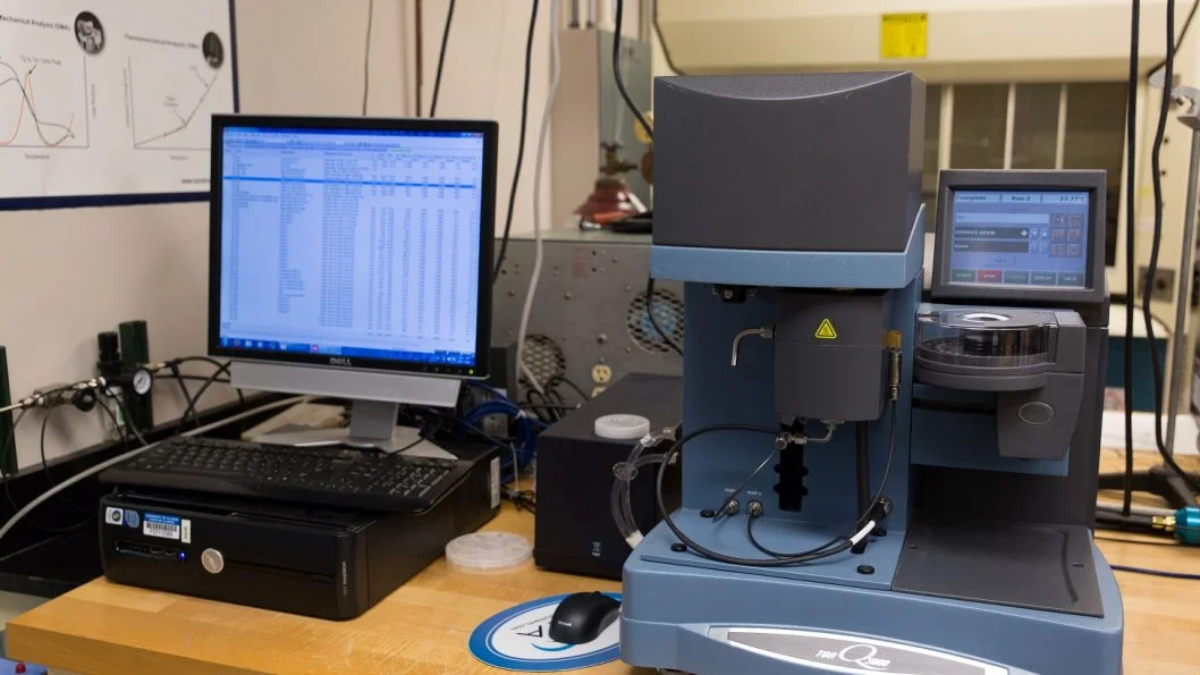
Thermogravimetric Analysis (TGA) is not just a laboratory technique. It is a decision tool used to understand how polymers behave when exposed to heat, how stable they really are, and what they are actually made of—not what the datasheet claims.


TGA Analysis of Polymers in Chennai – Kiyo R&D LAB | Thermal Stability & Filler Content
QC + failure analysis support ✅ tga analysis of polymers in chennai – Kiyo R&D LAB for reliable curves and clear interpretation.

What Is TGA and Why It Matters for Polymers

TGA measures weight change of a material as a function of temperature or time under a controlled atmosphere. In simple terms, it tells you:

  • When a polymer starts to degrade
  • How much material is lost at each temperature stage
  • Whether fillers, additives, or moisture are present
  • How thermally stable the polymer really is

For polymers, this information is critical because thermal degradation often dictates real service life.

A polymer that looks fine at room temperature may begin degrading far below its expected operating range. TGA helps identify that risk before it becomes a field failure.


Why TGA Analysis Is Essential in Polymer Testing

Many teams rely only on mechanical tests like tensile or impact. That’s a mistake.

Mechanical tests tell you how a polymer performs now.
TGA tells you how long it can survive under heat.

TGA analysis is essential when:

  • Polymers are exposed to elevated temperatures
  • Components undergo thermal cycling
  • Materials contain fillers, reinforcements, or additives
  • Processing involves high melt temperatures
  • Failure or odor issues appear after heating

This is why tga analysis of polymers in chennai – Kiyo R&D LAB is widely used across automotive, electrical, packaging, and industrial sectors.


What TGA Analysis Reveals About Polymers

TGA provides insights that most other tests cannot.

Thermal Stability and Decomposition Temperature

TGA identifies:

  • Onset of thermal degradation
  • Major decomposition stages
  • Final residue content

This helps determine whether a polymer can safely operate at a given temperature without losing integrity.


Filler and Ash Content

Many polymers contain fillers such as:

  • Glass fiber
  • Calcium carbonate
  • Talc
  • Carbon black

TGA quantifies actual filler or ash content, which is critical for supplier validation and grade comparison.


Moisture and Volatile Content

Early weight loss in TGA curves often indicates:

  • Moisture
  • Residual solvents
  • Plasticizers or low-molecular-weight additives

These can cause issues like porosity, odor, or reduced mechanical strength.


Material Comparison and Validation

Two polymer grades may claim identical properties, but TGA often reveals:

  • Different decomposition behavior
  • Different filler percentages
  • Different thermal stability profiles

This makes TGA a powerful tool for material comparison and approval.


TGA Analysis of Polymers in Chennai – Kiyo R&D LAB: Practical Approach

At Kiyo R&D LAB, TGA is not treated as a graph-printing exercise. The focus is on interpretation and application relevance.

The lab ensures:

  • Proper sample preparation
  • Controlled heating rates
  • Correct atmosphere selection (nitrogen, air, etc.)
  • Repeatable and meaningful data

Because small variations in TGA parameters can significantly affect results.


Step-by-Step TGA Analysis Procedure

1. Sample Selection and Preparation

Polymer samples may be:

  • Granules
  • Sheets or films
  • Molded components
  • Coated or filled materials

Small, representative samples are carefully prepared to avoid contamination or uneven heating.


2. Selection of Test Conditions

Depending on the application, TGA may be performed under:

  • Inert atmosphere (to study thermal stability)
  • Oxidative atmosphere (to study oxidation behavior)

Heating rates and temperature ranges are chosen based on material type and testing objective.


3. Controlled Heating and Data Collection

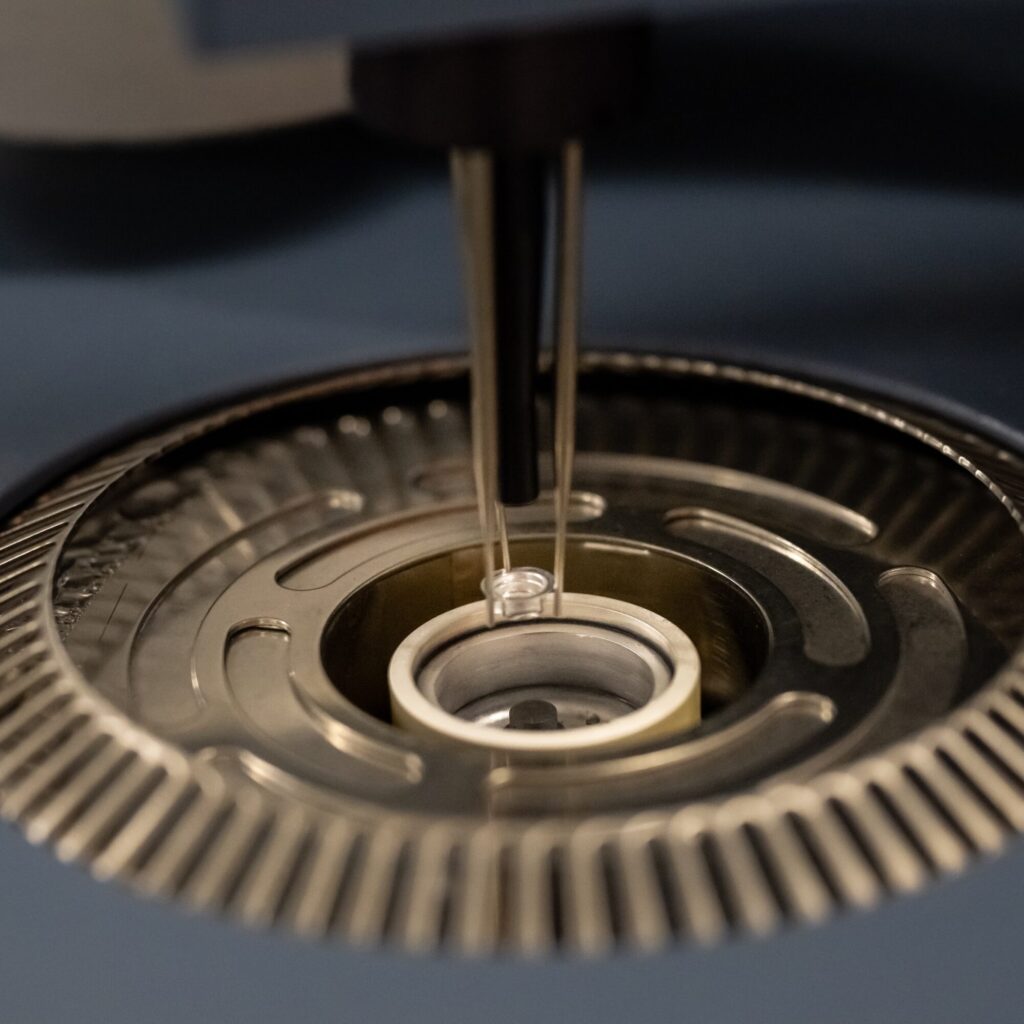
The polymer sample is heated gradually while its weight is continuously recorded. The resulting curve shows:

  • Weight loss vs temperature
  • Distinct degradation steps
  • Residual mass at high temperature

Each stage provides insight into material composition and stability.


4. Data Interpretation

This is where experience matters.

At Kiyo R&D LAB, TGA data is interpreted to explain:

  • Onset temperature of degradation
  • Multi-step decomposition behavior
  • Filler or ash percentage
  • Possible reasons for unexpected weight loss

Raw curves alone are meaningless without interpretation.


Why TGA Is Critical for Quality Control

TGA is often the first test to reveal inconsistency in polymer materials.

It is widely used for:

  • Incoming raw material inspection
  • Batch-to-batch consistency checks
  • Supplier validation
  • Alternate grade approval
  • Detection of contamination or adulteration

When mechanical properties look acceptable but TGA curves differ, it’s a warning sign.


TGA in Failure Analysis and Troubleshooting

TGA is extremely useful when:

  • Parts degrade prematurely
  • Burnt smell appears during processing
  • Discoloration occurs after heating
  • Mechanical properties drop after thermal exposure

By comparing failed samples with reference material, TGA helps identify thermal degradation, filler changes, or volatile loss.

This makes tga analysis of polymers in chennai – Kiyo R&D LAB valuable not only for testing—but for problem solving.


Who Needs TGA Analysis of Polymers?

TGA analysis services are relevant for:

  • Automotive plastic component manufacturers
  • Electrical and electronics companies
  • Polymer compounders and raw material suppliers
  • Packaging and film manufacturers
  • R&D and material development teams
  • QA and quality control departments
  • Engineering colleges and research projects

If your polymer experiences heat at any stage—processing or service—TGA is not optional.


TGA Analysis of Polymers in Chennai – Kiyo R&D LAB | Thermal Stability & Filler Content

Reporting That Supports Decisions

TGA reports from Kiyo R&D LAB include:

  • Test conditions and atmosphere
  • Weight loss vs temperature curves
  • Key thermal events and observations
  • Residue and filler estimation
  • Clear remarks linked to application relevance

The goal is to help customers make informed decisions, not just archive data.


Final Thoughts

Polymers rarely fail suddenly. They degrade gradually—until one day they don’t perform as expected.

TGA helps you see that degradation before it becomes a failure.

The tga analysis of polymers in chennai – Kiyo R&D LAB supports manufacturers, researchers, and QA teams by revealing thermal stability, composition, and degradation behavior that other tests cannot show.

If thermal performance matters to your product, TGA is not an advanced option—it’s a necessary one.

Polymer Testing Impact Factor in Chennai – Kiyo R&D LAB | Izod & Charpy Impact

Polymer Testing Impact Factor in Chennai – Kiyo R&D LAB | Izod & Charpy Impact

In polymer manufacturing, failure rarely happens without warning. The signs are usually there—reduced toughness, unexpected cracks, brittle fracture, or inconsistent part performance. What most teams miss is how strongly impact behavior influences real-world polymer performance and analyse polymer testing impact factor.

That’s where understanding the polymer testing impact factor in chennai – Kiyo R&D LAB becomes essential.

Impact factor is not just a number on a report. It represents how a polymer absorbs energy under sudden force, shock, or collision—conditions that occur daily in automotive parts, consumer products, electrical housings, packaging, and industrial components.


What Does “Impact Factor” Mean in Polymer Testing?

In simple terms, impact factor describes a polymer’s resistance to sudden impact loading. Unlike tensile or flexural tests that apply slow, controlled force, impact testing evaluates how a material behaves when force is applied instantly.

This matters because:

  • Real products face drops, hits, and vibration
  • Brittle failure is often sudden and catastrophic
  • A polymer that performs well statically can still fail on impact

The polymer testing impact factor in chennai – Kiyo R&D LAB focuses on measuring this shock resistance accurately and consistently, using standardized test methods.


Why Impact Factor Is Critical for Polymers

Let’s be blunt:
Most field failures are not slow, graceful failures—they are sudden breaks.

Impact testing helps answer questions like:

  • Will this plastic crack if dropped?
  • Can this component survive transport and handling?
  • How does low temperature affect brittleness?
  • Is this new grade truly equivalent to the old one?
  • Did processing conditions reduce toughness?

Ignoring impact factor means guessing how a polymer behaves in real use.


Polymer Testing Impact Factor in Chennai – Kiyo R&D LAB | Izod & Charpy Impact

Polymer Testing Impact Factor in Chennai – Kiyo R&D LAB: Real Relevance

At Kiyo R&D LAB, impact testing is not treated as a routine checkbox test. It is used as a decision-making parameter for design validation, supplier approval, and failure analysis.

The lab focuses on:

  • Correct specimen preparation
  • Proper notch geometry
  • Controlled test conditions
  • Repeatable and interpretable results

Because in impact testing, small errors create big deviations.


Common Methods for Polymers testing impact factors

Izod Impact Test

One of the most widely used methods to determine polymer impact factor.

It measures:

  • Energy absorbed by a notched or unnotched specimen
  • Resistance to crack initiation and propagation

Izod testing is commonly used for:

  • Automotive interior plastics
  • Consumer product housings
  • Electrical enclosures

Charpy Impact Test

Charpy impact testing evaluates:

  • Energy absorbed when a specimen is struck in a supported position

It is useful for:

  • Comparing material grades
  • Studying brittle-ductile transition
  • Evaluating effect of fillers and reinforcements

Instrumented polymer testing Impact factor (Where Applicable)

For advanced analysis, impact force vs time or energy vs displacement data helps understand how failure occurs, not just that it occurs.

This is particularly useful in:

  • Failure investigations
  • R&D material development
  • Polymer modification studies

Factors That Affect Polymer Impact Factor

Impact factor is not a fixed value. It is influenced by several variables:

1. Polymer Type and Molecular Structure

Amorphous polymers often behave differently from semi-crystalline polymers. Molecular weight, chain flexibility, and additives all play a role.

2. Temperature

Many polymers become brittle at low temperatures. Impact testing at different temperatures is often necessary for automotive and outdoor applications.

3. Notch Sensitivity

The notch acts as a stress concentrator. A polymer with high notch sensitivity may fail suddenly even if unnotched impact strength looks acceptable.

4. Processing Conditions

Injection molding parameters, cooling rate, and residual stress can significantly reduce impact performance—even if tensile results look fine.

Understanding these variables is a key part of evaluating the polymer testing impact factor in chennai – Kiyo R&D LAB.


polymer testing Impact Factor in Quality Control and Supplier Validation

Impact testing is often the first test to show inconsistency between batches or suppliers.

It helps:

  • Approve new raw material suppliers
  • Validate alternate polymer grades
  • Monitor batch-to-batch consistency
  • Detect degradation or contamination

When tensile strength stays constant but impact strength drops, it’s a warning sign that should not be ignored.


polymer testing Impact factor Testing for Failure Analysis

One of the most practical uses of impact factor testing is failure investigation.

If a part cracked suddenly:

  • Impact testing helps determine if material toughness was adequate
  • Comparisons can be made with reference or approved material
  • Processing-induced brittleness can be identified

Kiyo R&D LAB uses impact test results along with visual fracture observation to support root-cause analysis.


Who Needs Polymer testing Impact factor?

The polymer testing impact factor in chennai – Kiyo R&D LAB is relevant for:

  • Automotive OEMs and Tier-1 suppliers
  • Plastic injection molding companies
  • Electrical and electronics manufacturers
  • Packaging and consumer product brands
  • Polymer compounders and raw material suppliers
  • QA and quality control teams
  • Engineering colleges and research projects

If your product can be dropped, struck, or vibrated—impact factor matters.


Reporting and Interpretation of polymer testing impact factor

Impact test reports from Kiyo R&D LAB include:

  • Test method and standard reference
  • Specimen details and notch condition
  • Individual and average impact values
  • Observations on fracture behavior
  • Remarks supporting acceptance or investigation

The focus is on clarity and usability, not just numbers.


Polymer Testing Impact Factor in Chennai – Kiyo R&D LAB | Izod & Charpy Impact

Final Thoughts – Polymer Testing Impact Factor

Impact factor is not just another test parameter—it is a real-world performance indicator.

A polymer that looks strong on paper but fails on impact is a liability, not a solution. Understanding and controlling impact behavior early helps prevent failures, rejections, and customer complaints.

The polymer testing impact factor in chennai – Kiyo R&D LAB supports manufacturers, researchers, and quality teams in making informed material decisions backed by reliable data—not assumptions.

If toughness, safety, and durability matter to your product, impact testing is not optional. It’s essential.

DMA Mechanical Analysis Services in Chennai – Kiyo R&D LAB | Tg, Modulus & Damping

DMA Mechanical Analysis Services in Chennai – Kiyo R&D LAB | Tg, Modulus & Damping

Most plastic and polymer failures don’t happen because the material was “weak.”
They happen because the material behaved differently under real operating conditions than expected.That’s exactly why dma mechanical analysis services in chennai – Kiyo R&D LAB exist.

A tensile test at room temperature won’t tell you how a plastic part behaves at 80 °C.
An impact test won’t explain why stiffness drops over time.
And a datasheet certainly won’t predict long-term viscoelastic behavior.

Dynamic Mechanical Analysis (DMA) is not a luxury test. It is a decision-making tool—used when you need to understand how materials truly respond to temperature, frequency, and load over time.


What Is DMA mechanical analysis services and Why It Actually Matters

DMA (Dynamic Mechanical Analysis) measures how a material stores and dissipates energy when subjected to a small oscillating force. Instead of asking “How strong is this plastic?”, DMA asks more relevant questions:

  • How stiff is it at operating temperature?
  • When does it start losing mechanical integrity?
  • How does it behave under repeated loading?
  • Where exactly is the glass transition temperature (Tg)?
  • Will this polymer creep, relax, or damp vibration?

These are the questions that standard mechanical tests cannot answer.

That’s why dma mechanical analysis services in chennai – Kiyo R&D LAB are widely used in:

  • Automotive interiors and under-hood components
  • Electrical and electronic housings
  • Rubber parts, seals, and damping materials
  • Polymer R&D and formulation studies
  • Failure analysis and material comparison

DMA Mechanical Analysis Services in Chennai – Kiyo R&D LAB | Tg, Modulus & Damping
Compare polymer grades accurately ✅ dma mechanical analysis services in chennai – Kiyo R&D LAB for temperature sweep & frequency sweep testing.

Why DMA Mechanical Analysis services Is Often Ignored (And Why That’s a Mistake)

Let’s be blunt.

Many manufacturers skip DMA because:

  • “The datasheet already gives Tg”
  • “Tensile and impact tests passed”
  • “DMA sounds like research, not production”

All three reasons are flawed.

Datasheet Tg values are generic averages, not process-specific.
Tensile and impact tests are static, not dynamic.
And DMA is often the only test that explains field failures caused by heat, vibration, or time-dependent deformation.

Ignoring DMA doesn’t save money—it just delays the problem.


DMA Mechanical Analysis Services in Chennai – Kiyo R&D LAB: What’s Different

At Kiyo R&D LAB, DMA is not treated as a lab demo test. It is handled as a controlled, application-driven analysis.

The focus is not just on generating curves—but on interpreting what those curves mean for real use conditions.


Step-by-Step DMA Mechanical Analysis Procedure

1. Understanding the Application First

Before running DMA, Kiyo R&D LAB documents:

  • Material type (thermoplastic, thermoset, rubber, composite)
  • Sample form (molded part, sheet, film)
  • Operating temperature range
  • Loading type (static, cyclic, vibration-related)
  • Failure or performance concern

DMA without application context is just data.
DMA with context becomes insight.


2. Sample Preparation and Geometry Selection

DMA results are highly sensitive to specimen geometry.

Depending on the material and requirement, Kiyo R&D LAB selects:

  • Single cantilever mode
  • Dual cantilever mode
  • Three-point bending
  • Tension or compression mode
  • Shear mode (for soft materials)

Improper geometry = misleading results.
This is where inexperienced labs get it wrong.


3. Temperature Sweep Analysis

This is the most commonly requested DMA test.

A controlled temperature ramp is applied while measuring:

  • Storage modulus (E′) – stiffness
  • Loss modulus (E″) – energy dissipation
  • Tan delta (δ) – damping behavior

This reveals:

  • Glass transition temperature (Tg)
  • Softening zones
  • Mechanical stability limits

For automotive and electrical parts, this data is often more valuable than tensile strength.


4. Frequency Sweep Testing

Materials behave differently at different loading speeds.

DMA frequency sweep tests help to:

  • Understand vibration behavior
  • Compare grades under dynamic loads
  • Predict noise, vibration, and harshness (NVH) issues

This is critical for dashboards, trims, mounts, and rubber components.


5. Time-Dependent Behavior and Viscoelastic Response

Plastics and rubbers are viscoelastic, not purely elastic.

DMA helps evaluate:

  • Creep tendency
  • Stress relaxation behavior
  • Long-term stiffness loss

This explains why a part that passed all initial tests may deform after months of use.


What DMA Mechanical Analysis services Tells You That Other Tests Cannot

Here’s the uncomfortable truth:

If your product experiences heat + vibration + time, and you didn’t run DMA, you’re guessing.

DMA mechanical analysis services in chennai – Kiyo R&D LAB provide:

  • Accurate Tg under real conditions
  • Stiffness retention with temperature
  • Damping characteristics
  • Grade-to-grade comparison
  • Processing effect evaluation
  • Root-cause clues in failure analysis

No other single test gives this depth.


DMA for Failure Analysis and Material Comparison

DMA is especially powerful when:

  • A new supplier material is introduced
  • Two grades claim “equivalent performance”
  • Field failure occurs without visible damage
  • Noise, vibration, or deformation issues appear

Kiyo R&D LAB uses DMA curves to visually and numerically compare materials, making decisions data-driven rather than assumption-based.


Who Should Use DMA Mechanical Analysis services?

DMA mechanical analysis services in chennai – Kiyo R&D LAB are ideal for:

  • Automotive OEMs and Tier-1 suppliers
  • Plastic injection molding companies
  • Rubber and elastomer manufacturers
  • Electrical & electronics component makers
  • Polymer R&D teams
  • QA engineers preparing for validation or audits
  • Engineering colleges and research scholars

If your material experiences real-world mechanical stress, DMA is not optional—it’s necessary.


Reporting and Interpretation

DMA reports from Kiyo R&D LAB include:

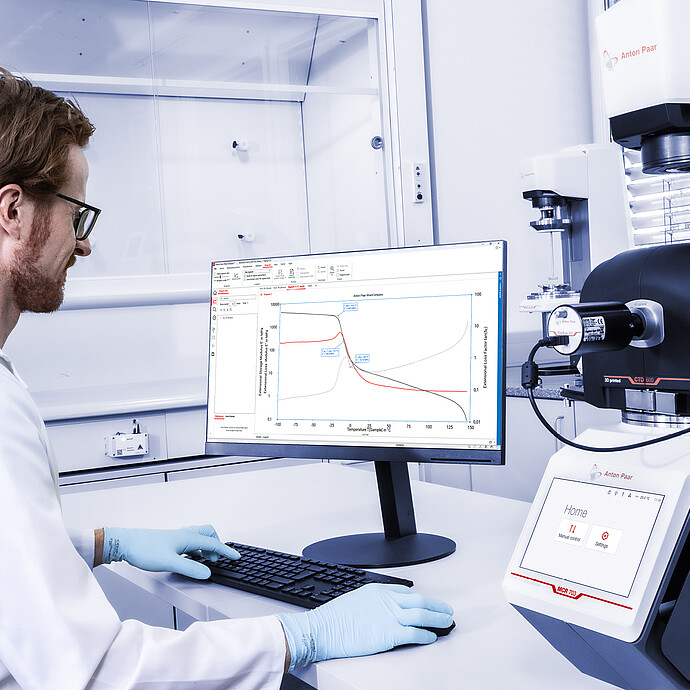
  • Clear graphs (E′, E″, Tan δ vs temperature/frequency)
  • Identified transition points
  • Test conditions and modes
  • Observations linked to application relevance
  • Technical remarks (not generic statements)

The goal is not to confuse clients with curves—but to help them make confident material decisions.


DMA Mechanical Analysis Services in Chennai – Kiyo R&D LAB | Tg, Modulus & Damping

Final Thoughts

Static tests tell you how a material behaves once.
DMA tells you how it behaves over time, temperature, and motion.

That difference matters.

DMA mechanical analysis services in chennai – Kiyo R&D LAB are designed for manufacturers who want clarity instead of assumptions, data instead of guesswork, and prevention instead of post-failure explanations.

If performance matters beyond room temperature and short-term loading, DMA is not an advanced option—it’s the correct one.

Thermogravimetric Analysis of Polymers Services in Chennai | Accurate TGA – Kiyo R&D LAB

Thermogravimetric Analysis of Polymers Services in Chennai | Accurate TGA – Kiyo R&D LAB

Most polymer failures don’t start with cracks or visible damage. They start silently—through thermogravimetric analysis of polymers degradation, filler breakdown, moisture loss, or additive decomposition. By the time a product softens, discolors, smells burnt, or loses strength, the real damage has already happened at the molecular level.

This is exactly why thermogravimetric analysis of polymers services in Chennai – Kiyo R&D LAB are essential for manufacturers, processors, and R&D teams who need to understand what happens to their polymer when temperature rises.

At Kiyo R&D LAB, TGA testing is not treated as a fancy graph for reports. It is treated as a decision-making tool—one that explains material composition, thermal stability, and degradation behavior in clear, usable terms.


Thermogravimetric Analysis of Polymers Services in Chennai | Accurate TGA – Kiyo R&D LAB
Verify polymer stability and filler/ash content with thermogravimetric analysis – Kiyo R&D LAB, Chennai.

What Is Thermogravimetric Analysis of polymers (TGA) in Simple Terms?

Thermogravimetric Analysis (TGA) measures how a polymer’s weight changes as temperature increases under controlled conditions. As the sample is heated, components such as moisture, plasticizers, polymers, and fillers decompose or volatilize at different temperatures.

In practical terms, TGA helps answer:

  • At what temperature does degradation begin?
  • How thermally stable is this polymer?
  • How much filler, ash, or inorganic content is present?
  • Is there moisture or volatile content trapped in the material?
  • Has the formulation changed between batches or suppliers?

Unlike mechanical tests, TGA looks inside the material, not just how it behaves externally.


Why TGA Matters for Polymer Applications

Polymers are often exposed to elevated temperatures during:

  • Processing (extrusion, molding, curing)
  • Service conditions (automotive, electrical, outdoor use)
  • Recycling and reprocessing

If a polymer begins degrading near its processing temperature, failures are inevitable—no matter how good the mechanical properties look initially.

Thermogravimetric analysis of polymers services in Chennai – Kiyo R&D LAB help manufacturers verify thermal limits before parts reach production or the field.


Why Chennai-Based Industries Need Thermogravimetric analysis of polymers Testing

Chennai is a major hub for automotive components, plastics processing, electrical products, and industrial manufacturing. In these sectors:

  • Processing temperatures are tightly controlled
  • Materials are cost-optimized with fillers and additives
  • Thermal margins are often small

A slight formulation change or incorrect filler content can cause:

  • Processing fumes or odor
  • Surface defects
  • Premature degradation
  • Reduced service life

This is why local access to thermogravimetric analysis of polymers services in Chennai is critical for fast diagnosis and corrective action.


Commonly Evaluated Using Thermogravimetric Analysis of Polymers

At Kiyo R&D LAB, TGA analysis is commonly performed on:

  • Thermoplastics (PP, PE, ABS, PVC, Nylon)
  • Engineering plastics and blends
  • Filled and reinforced polymers
  • Rubber and elastomeric materials
  • Coated and composite polymer systems

Samples may be raw pellets, powders, molded parts, films, or even failed components—because processing history affects thermal behavior.


What Thermogravimetric Analysis of Polymers Actually Reveals

Thermal Degradation Behavior

TGA identifies the onset temperature of degradation, helping determine whether a polymer can safely withstand processing and service temperatures.

Moisture & Volatile Content

Early weight loss at low temperatures often indicates moisture or volatile additives. This can explain porosity, bubbles, or surface defects during molding.

Filler and Ash Content

After polymer decomposition, remaining residue represents fillers or inorganic content. TGA helps quantify filler loading and detect formulation changes.

Composition Comparison

By comparing TGA curves of different samples, variations between suppliers, batches, or grades become obvious—without relying on declarations alone.


TGA in Product Development

Using TGA early in development prevents costly mistakes. It helps teams:

  • Compare polymer grades objectively
  • Select materials with adequate thermal stability
  • Optimize processing temperature windows
  • Evaluate the effect of fillers and additives

Early TGA testing saves time, tooling changes, and repeated trial runs later.


TGA for Quality Control & Supplier Validation

Batch variation is one of the biggest hidden risks in polymer manufacturing. TGA analysis supports quality teams by:

  • Verifying consistency of filler and additive content
  • Detecting moisture contamination
  • Confirming thermal stability of incoming materials
  • Comparing new suppliers against approved references

Thermogravimetric analysis of polymers services in Chennai – Kiyo R&D LAB provide objective thermal fingerprints that support confident batch release decisions.


Thermogravimetric Analysis of polymers in Failure Analysis

When polymer parts fail due to heat, odor, discoloration, or unexpected degradation, TGA often provides the missing link. It helps identify:

  • Overheating during processing
  • Incorrect material substitution
  • Excess filler or reduced polymer content
  • Thermal aging beyond design assumptions

TGA converts vague symptoms into measurable evidence.


Standards-Based Thermogravimetric Analysis of Polymers Testing

At Kiyo R&D LAB, TGA testing is conducted using controlled methods aligned with relevant ASTM, ISO, IS, or customer-specific requirements where applicable.

Standards-based testing ensures:

  • Repeatable results
  • Comparable data across samples
  • Acceptance during audits and customer reviews
  • Defensible conclusions during disputes

A TGA curve without method control is just a picture. With standards, it becomes evidence.


What Makes a TGA Report Useful?

A useful TGA report should clearly include:

  • Sample identity and condition
  • Heating rate and test atmosphere
  • Temperature ranges of weight loss
  • Residual (ash) content
  • Practical interpretation of results

At Kiyo R&D LAB, reports are written for engineers and quality teams—not just analysts. The focus is on what the data means for processing and performance.


Why Choose Kiyo R&D LAB for TGA in Chennai?

Many labs can run TGA instruments. Fewer labs explain what the curve means for your product.

Kiyo R&D LAB stands out because:

  • Testing is application-driven
  • Real production samples are evaluated
  • Results are linked to processing and durability risks
  • Interpretation is clear and engineering-focused

This approach reduces guesswork and accelerates decision-making.


Who Needs Thermogravimetric Analysis of Polymers?

Thermogravimetric analysis of polymers services in Chennai – Kiyo R&D LAB are essential for:

  • Plastic processors and molders
  • Automotive and electrical suppliers
  • Polymer compounders
  • R&D and product development teams
  • Quality teams handling batch variation or failures

If thermal stability, filler content, or degradation affects your product, TGA testing is not optional.


Thermogravimetric Analysis of Polymers Services in Chennai | Accurate TGA – Kiyo R&D LAB

Final Thoughts

Thermal degradation doesn’t announce itself—it accumulates quietly until failure becomes unavoidable. Thermogravimetric analysis reveals how polymers truly behave under heat and exposes risks long before they show up in production or the field.

With thermogravimetric analysis of polymers services in Chennai – Kiyo R&D LAB, manufacturers gain clarity, control, and confidence—turning thermal uncertainty into actionable data.

In polymer engineering, understanding weight loss with temperature is understanding the life of the material itself.