Introduction
Corrosion is one of the invisible adversaries of engineering and manufacturing. Over time, even the most carefully engineered materials degrade under exposure to moisture, chemicals, salt, or extreme environments. That slow degradation can lead to catastrophic failures, costly repairs, safety hazards, and reputational damage.
If you’re actively searching for corrosion resistance testing services in India – Kiyo R&D Lab, you’re making the right decision to protect your product, your brand, and your bottom line. In this blog, we’ll walk you through:
- What corrosion resistance testing is, and why it matters
- Common methods and tests used
- Challenges and key considerations
- The advantages of engaging Kiyo R&D Lab
- Tips to choose a reliable testing partner
- Real-world use cases
- A wrap-up conclusion
By the end, you’ll have clarity on how to evaluate labs, what to expect, and how Kiyo R&D Lab can be your preferred partner for corrosion resistance testing services in India.
What Is Corrosion Resistance Testing & Why It Matters
What Is Corrosion?
Corrosion refers to the gradual degradation of metals (and sometimes some non‑metallic materials) as they react chemically or electrochemically with their environment. It’s not just “rusting” — it can include pitting, crevice corrosion, stress corrosion cracking, intergranular corrosion, and more.
Over time, corrosion can weaken structural integrity, damage coatings, reduce reliability, and lead to product failure under load or in extreme conditions.
Why Testing for Corrosion Resistance Is Essential
- Design confidence & longevity: Knowing how a material or coating behaves in a corrosive environment allows you to design for long service life.
- Material/coating selection: Choosing the right alloy, plating, or coating system demands quantitative data, not guesswork.
- Compliance & standards: Many industries require adherence to standards (ASTM, NACE, ISO) that mandate corrosion testing.
- Quality assurance & warranty claims: Data helps in justifying warranties, validating durability, and managing customer expectations.
- Failure analysis & root cause: If corrosion has damaged components in the field, testing can help reconstruct what went wrong and prevent future failures.
Without trusted corrosion resistance testing services in India, companies risk deploying materials that degrade prematurely, eroding trust, increasing maintenance costs, or facing legal liabilities.
Common Methods & Standards for Corrosion Resistance Testing
A robust lab offering corrosion resistance testing services must support a variety of test types depending on material, environment, and failure mode. Below are frequent methods and relevant standards used by labs in India and globally.
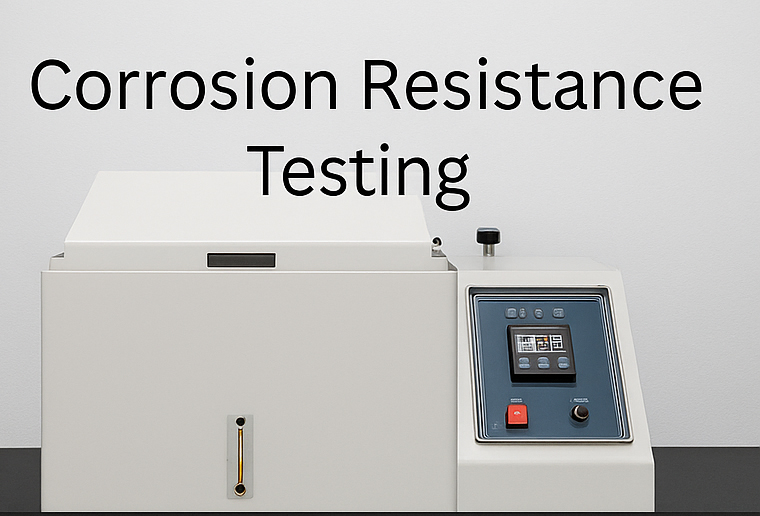
1. Salt Spray / Salt Fog Testing (ASTM B117, CASS, NSS)
- One of the most common screening tests.
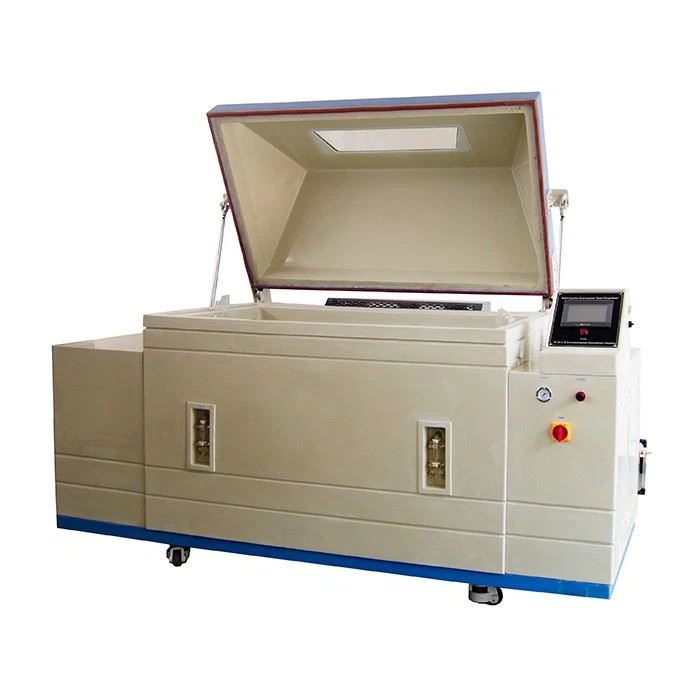
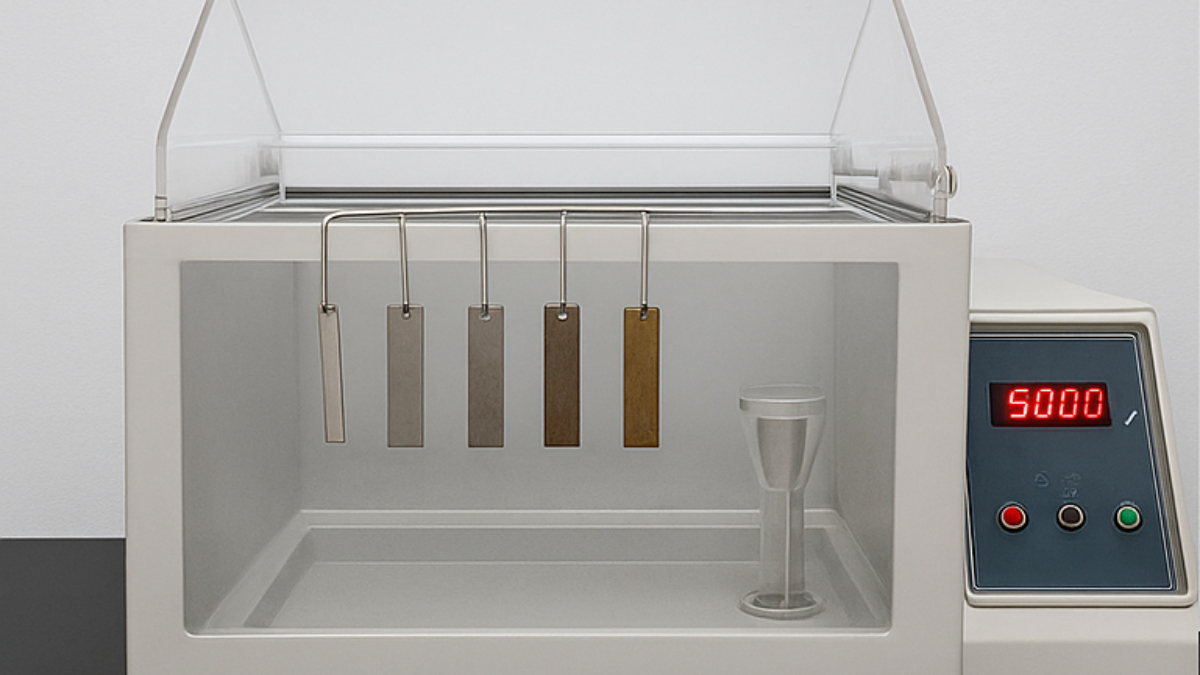
- A chamber generates a fine saline mist to simulate corrosive chloride environments.
- Common variants: Neutral Salt Spray (NSS), Copper-Accelerated Acetic Acid Salt Spray (CASS).
- Useful for comparing coatings or treatments under accelerated conditions.
Many Indian labs (e.g. Material Testing Laboratory LLP) explicitly list salt spray (NSS ASTM B117, CASS) as part of their corrosion service offerings. Material Testing Laboratory LLP
2. Immersion / Immersion Cycles
- Samples are immersed in corrosive media (acids, alkalis, saline, etc.) for fixed durations.
- Cyclic immersion may include wet/dry cycles to simulate real exposure.
- Good for evaluating general corrosion, pitting, or uniform attack.
3. Electrochemical Methods
- Potentiodynamic polarization / Tafel plots
- Electrochemical impedance spectroscopy (EIS)
- Cyclic polarization
- These methods probe kinetics of corrosion, passive film breakdown, and barrier properties.
- Particularly useful for coatings, inhibitors, and advanced alloys.
4. Pitting / Crevice Corrosion (ASTM G48)
- Used to assess susceptibility to localized corrosion (pitting) or crevice-initiated attack.
- Labs performing these tests measure critical pitting potential, number/size of pits, etc.
- CorrosionTesting.co.in offers pitting / crevice services per ASTM G48 in India. corrosiontesting.co.in
5. Intergranular Corrosion Testing (e.g. ASTM A262)
- Targets corrosion along grain boundaries in stainless steels or alloys.
- Labs perform practices A, B, C, E, etc., depending on alloy type.
- Some labs in India (e.g. Subodh Material Technologists) advertise intergranular corrosion testing as part of their scope. Subodh Labs
6. Stress Corrosion Cracking (SCC), Sulfide Stress Cracking (SSC), Hydrogen-Induced Cracking (HIC)
- For metals under stress in corrosive environments.
- Tests examine crack initiation, propagation, and threshold stresses.
- Subodh labs mention SCC, SSC, HIC among their services. Subodh Labs
- TCR Engineering offers a wide range of corrosion and stress corrosion tests per ASTM / NACE standards. TCR Engineering
7. Atmospheric / Cyclic Corrosion Tests
- Expose samples outdoors or in cyclic chambers (humidity, salt spray + drying).
- Simulate exposure to changing conditions (rain, salt spray, UV, temperature cycles).
Challenges & Key Considerations in Corrosion Testing
Before trusting a lab, be aware of the following challenges and practical aspects.
Heterogeneity & Localized Behavior
- Many real-world corrosion failures begin at weak spots — coating defects, inclusions, microstructural inhomogeneity.
- Lab tests must account for these; a lab only testing “ideal” samples might miss real vulnerabilities.
Reproducibility & Uncertainty
- Corrosion is stochastic — replicates may differ. Good labs run multiple specimens and report statistical measures (mean, standard deviation).
- They should report measurement uncertainty, conditions (temperature, pH, salinity), and sample prep.
Sample Preparation & Surface Conditions
- Surface finish, contaminants, pre-treatment, residual stresses, microstructure all influence results.
- Labs should require or guide preparation protocols.
Interface Effects & Coating Defects
- For coated samples, defects or pinholes can dominate corrosion; lab methodology should reveal real behavior.
- Crevice seals, O-rings, gaskets can influence outcomes.
Environmental Relevance & Acceleration Factors
- Accelerated tests may not always reflect real service conditions. For example, salt spray may exaggerate or under-express certain mechanisms.
- Labs and clients must understand what the accelerated test is simulating (not a perfect predictor).
Thermal / Mechanical Stress Coupling
- In real service, corrosion often couples with temperature cycles, mechanical stress, or vibration.
- Testing protocols may need combined stress + corrosion conditions.
Standard Compliance & Accreditation
- A lab claims “corrosion testing” — but for your data to be acceptable, they should follow recognized standards (ASTM, NACE, ISO) and hold accreditation (e.g. NABL in India).
- Laboratories such as Sigma Test & Research Centre provide corrosion testing services and emphasize their standard-based approach. Sigmatest
Why Choose Kiyo R&D Lab for Corrosion Resistance Testing Services in India?
Now that you understand what corrosion testing encompasses, let’s see how Kiyo R&D Lab can be your ideal partner.
1. Domain Expertise Across Materials & Industries
Kiyo R&D Lab specializes in corrosion resistance testing services in India across metals, coatings, composites, and surface treatments. Their engineers understand the nuances of different failure modes, enabling smart test design and interpretation.
2. Diverse Testing Capabilities
A good lab should support all major corrosion test types — salt spray, immersion, electrochemical, pitting, SCC, etc. Kiyo’s infrastructure is designed to handle a wide test portfolio so clients don’t need multiple vendors.
3. Calibration, Controls & Quality Assurance
Kiyo R&D Lab ensures equipment is calibrated, test chambers are validated, and control samples (reference materials) are used to verify performance. This level of internal QA is critical for trust.
4. Transparent Reporting & Interpretation Support
They deliver detailed test reports — including test conditions, sample details, raw data, statistical analysis, observations, and actionable insights. This helps clients make confident decisions, not just read numbers.
5. Turnaround Time & Logistical Advantage
Located in southern India (Chennai or nearby), Kiyo R&D Lab can serve clients in Tamil Nadu, Kerala, Andhra Pradesh, Karnataka, and even overseas in Sri Lanka more efficiently. Shorter shipping, faster results.
6. Flexibility & Consultation
They can work with small quantities, irregular geometries, or development-stage prototypes. Additionally, their team offers guidance on test planning, failure analysis, or improved material design based on results.
7. Cost-Effectiveness & Single-Stop Solution
Instead of juggling multiple labs for different corrosion modes, Kiyo can serve as a one-stop corrosion testing hub. You benefit from consolidated costs, consistent standards, and streamlined communication.
Suggested Workflow When Working with Kiyo R&D Lab
Engaging corrosion resistance testing services in India – Kiyo R&D Lab typically unfolds in these steps:
- Inquiry & Requirement Definition
- Client shares material, coating (if any), expected environment (salt, acid, etc.), stress conditions, duration, and accuracy expectations.
- Test Plan Proposal & Quotation
- Kiyo designs a test matrix (which methods, durations, replicates) and provides cost, timeline, and sample requirements.
- Sample Submission & Preparation
- Client ships samples (with surface finish protocols).
- Kiyo may carry out pre-treatment or cleaning as required.
- Testing Execution
- Tests are run under controlled conditions, often in parallel.
- Calibration runs, blank controls, and replicates are performed.
- Data Processing & Verification
- Raw measurements, electrochemical curves, weight changes, corrosion morphology are analyzed.
- Outliers examined, uncertainties computed.
- Reporting & Expert Review
- A formal test report is issued.
- Kiyo’s materials experts may review and suggest design or coating changes.
- Follow-up / Consultation
- If needed, Kiyo can help interpret failure, suggest alternate materials, or design improved testing for the next cycle.
How to Evaluate & Choose a Corrosion Testing Partner
When you get proposals from Kiyo and others, use this checklist to compare:
| Criterion | Why It Matters | What to Ask / Check |
|---|---|---|
| Accreditation / Certification | Ensures technical competence and data acceptance | Is the lab NABL / ISO 17025 accredited for corrosion testing? |
| Standards / Methods Supported | You need the relevant test types | Does the lab support ASTM, NACE, ISO versions relevant to your industry? |
| Range of Tests | You may need multiple test modes | Do they do salt spray, immersion, EIS, SCC, pitting, etc.? |
| Replicates & Statistics | Corrosion data has variance | How many specimens do they test? What’s the reproducibility? |
| Reporting Depth | A bare result isn’t enough | Does the report include raw data, curves, morphology images, suggestions? |
| Cost Transparency | Hidden costs can blow budgets | Are sample prep, shipping, re-tests, consumables included in quote? |
| Turnaround Time | Prolonged R&D or delays cost money | What is the lead time per method? Are urgent runs possible? |
| Sample Flexibility | Prototypes may be awkward shapes | Can they accept small, curved, coated, or irregular parts? |
| Technical Support / Consultation | Data is only as good as interpretation | Is there expert support to discuss test design or results? |
| Past Track Record / References | Reputation and practical experience | Can they show past clients, case studies, or certifications? |
Using this rubric, Kiyo R&D Lab can often rank high, but always ask direct questions or request sample reports before committing.
Use Cases & Scenarios Where Kiyo’s Services Shine
Let’s explore some real-world scenarios where corrosion resistance testing services in India – Kiyo R&D Lab bring tangible value.
A. Automotive Component Coatings
An OEM needs assurance that coated components (e.g., exhaust parts, bolts, underbody shields) survive salt-laden road conditions. They submit coated metal coupons to Kiyo, who run salt spray, cyclic corrosion, and electrochemical tests to compare coating formulations. Data helps choose the best coating system.
B. Oil & Gas / Pipeline Steel
Steel pipelines and components operate under corrosive conditions (chloride-rich water, H₂S, CO₂). Kiyo can test SCC, SSC, or corrosion-fatigue under relevant conditions and help screen materials or inhibitors before field deployment.
C. Marine & Offshore Structures
Ship parts, offshore platforms, and marine sensors face saltwater, waves, humidity, and alternating wet/dry exposure. Through combined tests (salt spray + cyclic humidity + immersion + EIS), Kiyo helps validate and optimize anticorrosion coatings or alloy choices.
D. Consumer Appliances & Coated Parts
Even household devices like HVAC units, outdoor lighting or gas stoves need corrosion resistance. Kiyo can test painted or powder-coated components and verify warranties, preventing early failure.
E. Failure Investigation
If a component failed prematurely (e.g. pitting, coating breakdown, crevice corrosion), a client can send failed parts to Kiyo. They’ll perform microscopy, corrosion morphology analyses, cross-sections, and replicate tests to derive root causes.
In each scenario, Kiyo’s combination of lab reach, test breadth, and interpretive support becomes a differentiator.

Conclusion
Corrosion is a subtle yet relentless enemy. Without proper assessment, even high‑performance materials and coatings may fail unexpectedly in service. That’s why corrosion resistance testing services in India – Kiyo R&D Lab is more than a cost — it’s a strategic investment in reliability, reputation, and safety.
When selecting a test partner, prioritize accreditation, method breadth, statistical rigor, flexibility, transparency, and interpretive support. Kiyo R&D Lab meets these critical criteria and offers a localized, capable, and consultative approach to corrosion testing.