Fabric testing lab near me – Kiyo R&D LAB for textile quality checks like strength, shrinkage, GSM and colorfastness. Reliable reports for QA and buyers.

Fabric Testing Lab Near Me | Kiyo R&D LAB

When fabric quality fails, it rarely fails quietly. It shows up as color bleeding after the first wash, tearing at seams, pilling on the surface, shrinkage after ironing, or rejection by buyers during inspection. This is why people searching for a fabric testing lab near me – Kiyo R&D LAB are usually not just looking for a certificate—they are looking for certainty.

In today’s textile and apparel market, quality is not judged by appearance alone. Buyers, brands, and export markets demand measured, documented, and repeatable performance. Fabric testing bridges the gap between how a fabric looks in the showroom and how it behaves in real life.

Why fabric testing matters more than ever

The textile industry has changed. Customers expect durability, comfort, safety, and consistency. At the same time, brands face tighter regulations, stricter buyer requirements, and intense competition.

This is where a fabric testing lab near me – Kiyo R&D LAB becomes critical. Fabric testing helps answer questions that visual inspection never can:

  • Will this fabric shrink after washing?
  • Will the color fade or bleed?
  • Is the fabric strong enough for its intended use?
  • Will it pill or tear during regular wear?
  • Does it meet buyer or export standards?

Testing turns assumptions into evidence.
 Fabric testing lab near me – Kiyo R&D LAB for textile quality checks like strength, shrinkage, GSM and colorfastness. Reliable reports for QA and buyers.

What is fabric testing in practical terms?

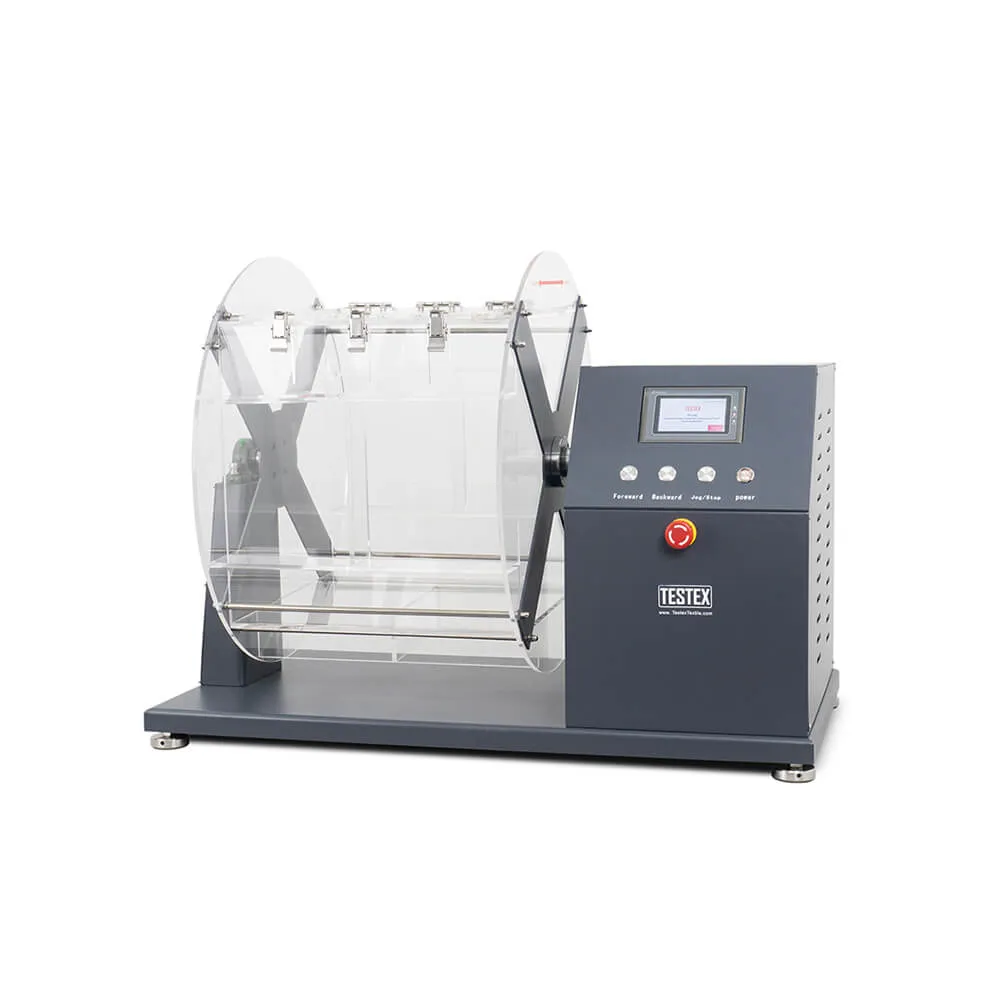
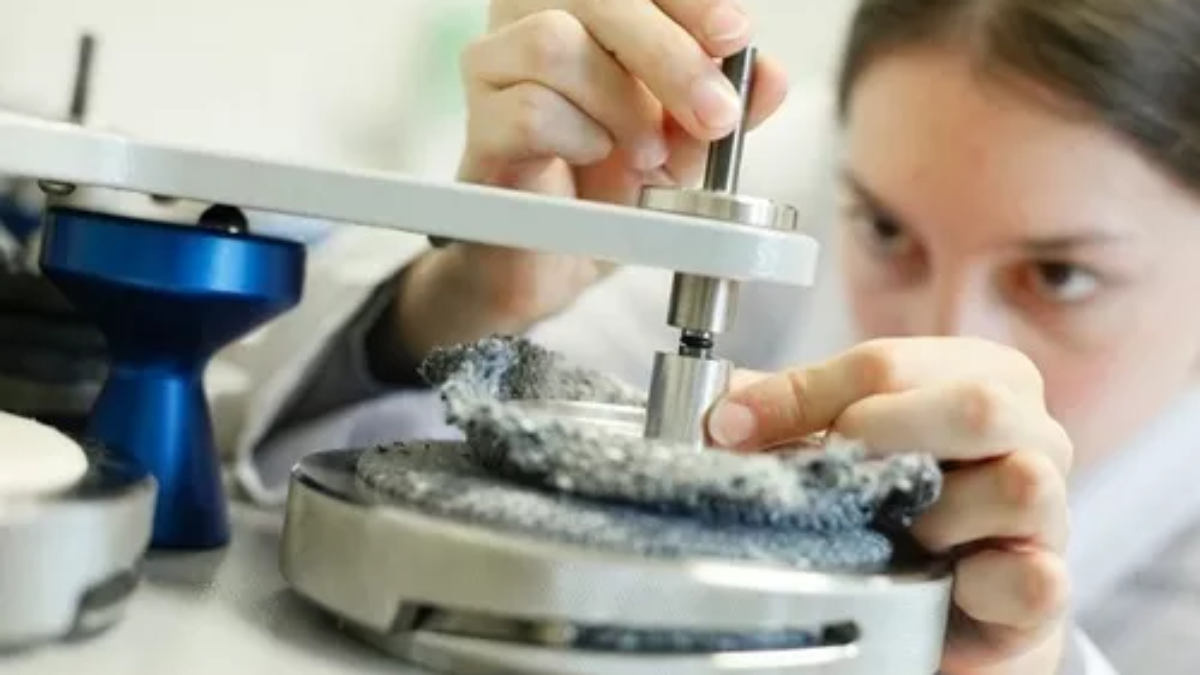
Fabric testing is the process of evaluating physical, mechanical, colorfastness, and performance properties of textile materials under controlled conditions. These tests simulate real-world use such as washing, rubbing, stretching, abrasion, and exposure.

A reliable fabric testing lab near me – Kiyo R&D LAB performs these evaluations using standardized methods so results are consistent, comparable, and accepted by buyers and auditors.

Fabric testing is not about passing or failing randomly—it’s about understanding how a material behaves and whether it is suitable for its intended application.

Types of fabric testing commonly required

Different fabrics fail in different ways. That’s why testing is selected based on end use.

Physical and mechanical testing

These tests evaluate the strength and durability of the fabric:

  • Tensile strength
  • Tear strength
  • Seam strength
  • Bursting strength
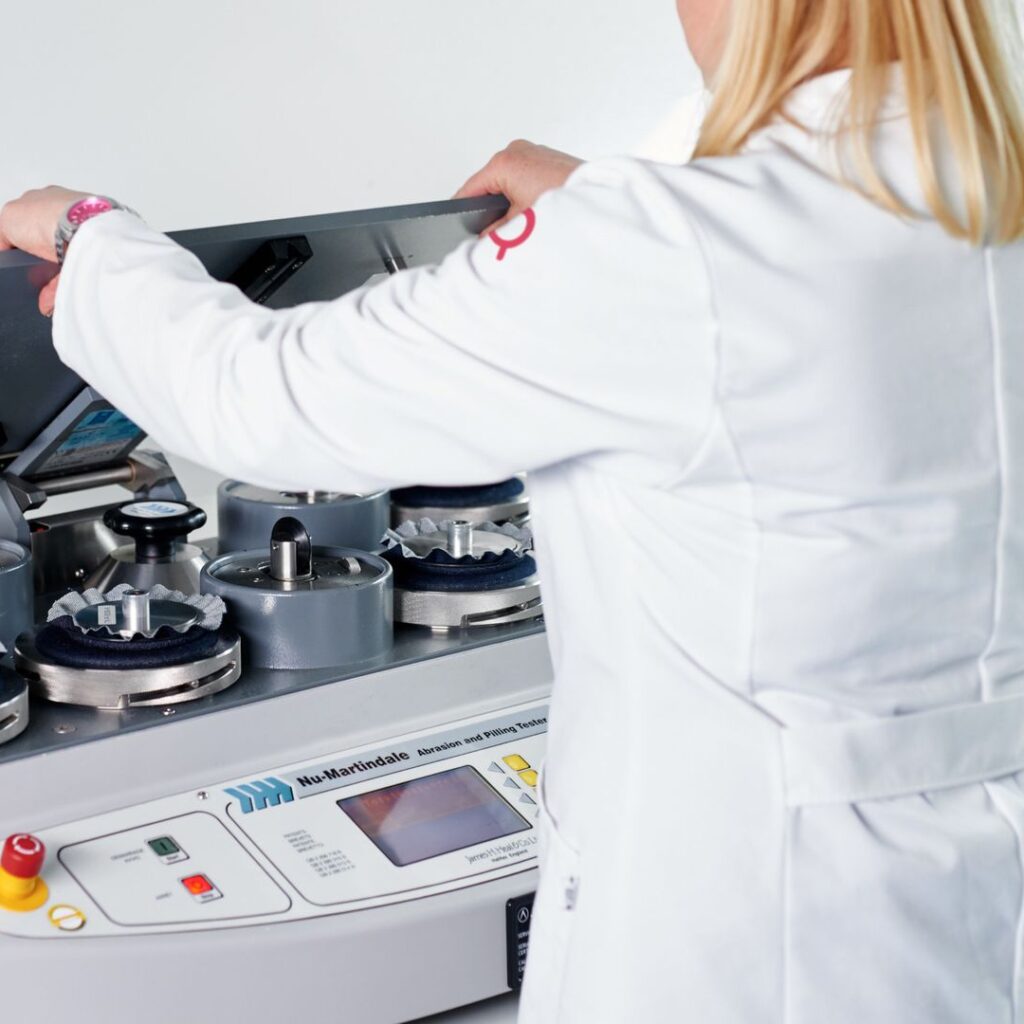
  • Abrasion resistance

These results are critical for garments, upholstery, industrial textiles, and workwear.

Colorfastness testing

Color performance is one of the most common rejection reasons. A fabric testing lab near me – Kiyo R&D LAB helps evaluate:

  • Colorfastness to washing
  • Colorfastness to rubbing (dry and wet)
  • Colorfastness to perspiration
  • Colorfastness to light

Poor colorfastness damages brand reputation quickly.

Dimensional stability and shrinkage

Shrinkage after washing or ironing is unacceptable in most markets. Testing helps predict dimensional changes before bulk production.

Performance and comfort testing

Depending on application, testing may include:

  • Pilling resistance
  • Air permeability
  • Fabric weight (GSM)
  • Thickness
  • Handle and feel indicators (where applicable)

These properties influence comfort, appearance, and consumer satisfaction.

Who needs a fabric testing lab?

The demand for a fabric testing lab near me – Kiyo R&D LAB comes from across the textile value chain.

Garment manufacturers

Testing ensures that finished garments meet buyer specifications and reduce rejection risk.

Fabric suppliers and mills

Testing helps validate fabric quality before supplying to brands or exporters.

Exporters

Most international buyers require third-party test reports for compliance and approvals.

Fashion brands and designers

Testing helps ensure that creative designs perform well in real-world use, not just on the runway.

Startups and small manufacturers

Testing provides credibility when entering competitive markets or pitching to buyers.

Why “near me” matters in fabric testing

Searching for a fabric testing lab near me – Kiyo R&D LAB is not just about convenience. Proximity matters for practical reasons:

  • Faster turnaround time
  • Easier communication on test selection
  • Reduced sample transport risk
  • Quicker corrective action if results fail

In fast-moving production cycles, delays in testing can delay shipments, approvals, and payments. Local testing support enables faster decisions without compromising technical rigor.

Common fabric quality issues caught during testing

Many fabric problems are not visible until testing reveals them. A professional fabric testing lab near me – Kiyo R&D LAB helps identify issues such as:

  • Low tear strength in lightweight fabrics
  • Excessive shrinkage after washing
  • Poor dye fixation causing color bleeding
  • Weak seam performance
  • High pilling tendency
  • Inconsistent GSM across batches

Catching these issues early saves money and prevents customer complaints.

Testing for development, not just compliance

One of the biggest mistakes in textiles is treating testing as a final checkbox. Smart manufacturers use testing earlier.

Using a fabric testing lab near me – Kiyo R&D LAB during development helps:

  • Compare fabric options
  • Optimize finishing processes
  • Select the right yarn or weave
  • Improve durability before bulk production
  • Reduce trial-and-error costs

Testing early is cheaper than reworking finished garments.

Why choose Kiyo R&D LAB for fabric testing?

At Kiyo R&D LAB, fabric testing is approached with a focus on accuracy, repeatability, and real-world relevance.

What makes the difference:

  • Standard-aligned testing procedures
  • Proper sample conditioning and handling
  • Clear, easy-to-understand reports
  • Support for QA, sourcing, and development teams
  • Honest reporting without cosmetic adjustments

The goal is not to make fabrics “pass,” but to help clients understand performance and improve quality.

Reports that buyers and auditors trust

Test reports are often shared with buyers, buying houses, and auditors. A reliable fabric testing lab near me – Kiyo R&D LAB provides documentation that is:

  • Clear and structured
  • Traceable to test methods
  • Suitable for buyer submission
  • Easy to interpret for decision-making

Poor reporting creates confusion—even when test results are acceptable.

Fabric testing protects your brand

In the textile industry, quality failures directly affect brand trust. Customers rarely forgive garments that fade, shrink, or tear prematurely.

By working with a fabric testing lab near me – Kiyo R&D LAB, brands and manufacturers protect:

  • Product quality
  • Customer satisfaction
  • Market reputation
  • Long-term profitability

Testing is not an expense—it’s risk control.
 Fabric testing lab near me – Kiyo R&D LAB for textile quality checks like strength, shrinkage, GSM and colorfastness. Reliable reports for QA and buyers.

Conclusion

Finding a fabric testing lab near me – Kiyo R&D LAB is about more than location. It’s about having a technical partner who understands fabrics, performance expectations, and real-world use.

Fabric testing converts uncertainty into confidence. It helps manufacturers deliver consistent quality, meet buyer expectations, and avoid costly failures. In a competitive textile market, testing is not optional—it is a foundation for sustainable growth.

If your fabric must perform beyond appearance, testing is the only way to be sure.
Behind Every Durable Fabric: Kiyo R&D Lab’s Testing Services in India

Fabric Testing Lab Services in India

Fabric Testing Lab Services in chennai

Introduction

In today’s textile-driven world, fabric quality isn’t just a luxury — it’s a necessity. Whether you’re a fashion brand, home textile manufacturer, technical textile innovator, or a supplier, the integrity of your fabrics defines how your products perform, how they age, and how your customers perceive them.

Yet fabrics are complex. They are made of fibers, yarns, weaves or knits, dyeing, finishes, and multiple chemical treatments. Each stage introduces variables and potential faults: strength, colorfastness, shrinkage, pilling, chemical residues, and more. Without rigorous testing, defects might only appear in the field — after expensive returns or reputational damage.

That’s where Fabric Testing Lab Services in India – Kiyo R&D Lab enters. As you scale your textile operations or refine your product lines, you need a lab partner you can trust — one that combines technical depth, responsiveness, and a strong understanding of India’s textile and regulatory landscape.

In this blog, we’ll explore:

  • Why fabric testing is vital
  • The types of tests a top lab should perform
  • What Fabric Testing Lab Services in India – Kiyo R&D Lab ideally offers
  • How to pick the right fabric testing lab
  • Trends and challenges in India’s textile testing sector
  • Real use‑cases and benefits of lab partnerships

Let’s dive in.


Behind Every Durable Fabric: Kiyo R&D Lab’s Testing Services in India

BODY

1. Why Fabric Testing Is Essential

1.1 Guaranteeing Product Quality & Longevity

Fabrics go through wear, washing, exposure, handling, sunlight, moisture, and mechanical stress. Without testing, you risk early fading, pilling, shrinkage, tearing, seam failure, or color bleed. Testing ensures your products live up to their claims — whether it’s “washable,” “durable,” or “sunproof.”

1.2 Meeting Regulatory & Compliance Requirements

In many markets, fabrics must conform to safety and environmental standards: restricted substances (e.g. heavy metals, formaldehyde, azo dyes, phthalates), flammability norms (especially for garments, interiors, kids’ goods), Oeko‑Tex, REACH, CPSIA, ISO/ASTM standards, and national textile norms. A credible lab issues test reports that help you clear audits and export clearances.

1.3 Reducing Risk & Cost

Catching defects or deviations early in the supply chain saves money. Rather than scrapping bulk orders or handling returns, you identify issues before they escalate. Labs also help optimize material choice — e.g. trade‑off between cost and durability.

1.4 Enabling Innovation & Differentiation

If you’re developing specialty textiles — moisture‑wicking sportswear, antimicrobial fabrics, technical textiles (geotextiles, medical textiles), smart fabrics — you’ll need advanced characterization (microstructure, thermal behavior, chemical durability). A robust lab can keep up with such demands.


2. Core Tests & Capabilities of Fabric Testing Labs

A comprehensive fabric testing lab should cover physical, chemical, mechanical, and performance tests. Below is a breakdown with typical tests you’d expect.

2.1 Physical / Mechanical Testing

  • Tensile / Breaking Strength & Elongation: evaluating how much force the fabric can handle before failure
  • Tear Strength: resistance to propagation of a tear
  • Burst / Mullen / Ball Burst Test: for knitted or woven fabrics under multi‑directional stress
  • Seam Strength / Slippage
  • Abrasion Resistance (Martindale, Taber, etc.)
  • Pilling / Fuzzing
  • Flex or Bending Properties
  • Dimensional Stability / Shrinkage (after washes)
  • Weight / GSM (Grams per Square Meter)
  • Thickness / Thickness Variation
  • Air Permeability & Porosity

2.2 Color & Appearance Tests

  • Colorfastness (to washing, perspiration, light, rubbing, water, bleach)
  • Opacity / Transparency
  • Wrinkle recovery / appearance after creasing
  • Shade matching / spectral analysis
  • Color migration / bleeding

2.3 Chemical / Composition Tests

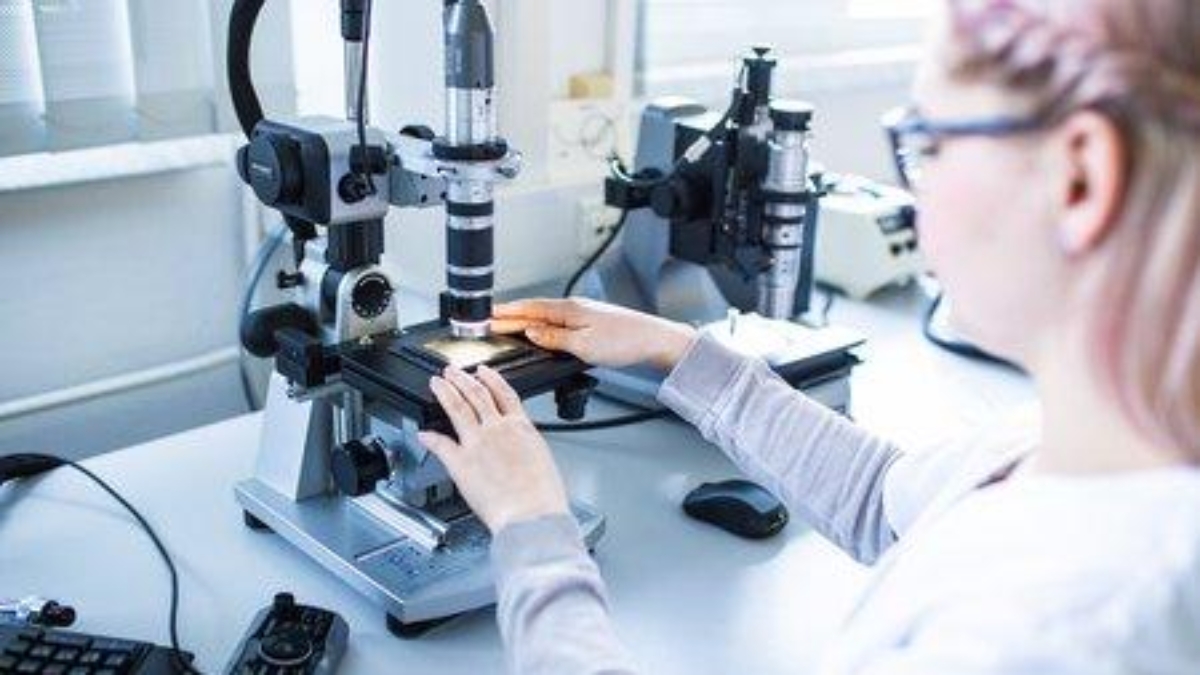
  • Fiber Composition / Blend Analysis (via microscopy, FTIR, chemical dissolution)
  • pH / Alkali content
  • Formaldehyde / Heavy metals / Azo dyes
  • Flame retardant content, durability
  • Water repellency / stain repellency / oil repellency
  • Moisture content, wicking / absorption
  • Finish evaluation: washes, coatings, antimicrobial agents

2.4 Performance, Environmental & Durability Tests

  • UV light / weathering / light exposure
  • Chlorine wash / bleaching durability
  • Salt spray / humidity / corrosion (for specialty fabrics)
  • Thermal aging / temperature cycling
  • Antimicrobial / anti‑fungal durability
  • Functional tests (for technical fabrics: conductivity, breathability, barrier properties)

2.5 Custom / Special Tests

If your product has a unique application (medical, industrial, sportswear, automotive interiors), the lab should be capable of designing or executing custom test protocols.


3. What “Fabric Testing Lab Services in India – Kiyo R&D Lab” Should Offer

To be a truly competitive choice, a lab positioning itself under this banner should deliver the following:

3.1 Accreditation & Trust

  • ISO/IEC 17025 / NABL accreditation (or equivalent) for textiles/fabrics
  • Scope covering physical, chemical, performance tests
  • Traceability, calibration, and documented quality systems

3.2 Broad Textile & Industry Coverage

  • Fabrics (woven, knitted, nonwoven), garments, technical textiles, home textiles, etc.
  • From fiber & yarn stage to finished goods
  • Across sectors: apparel, furnishings, automotive textiles, medical fabrics

3.3 State-of-the-Art Equipment & Technical Expertise

  • Latest testing machines, climate chambers, spectrometers, microscopy, etc.
  • Qualified staff with textile science, chemistry, materials background

3.4 Quick Turnaround & Sample Handling

  • Reasonable lead times even for complex tests
  • Well-managed logistics for sample receipt, conditioning, storage

3.5 Report Quality & Interpretation

  • Reports should not merely list numbers but also include interpretation, comparatives, pass/fail conclusions
  • Technical consultation to help you act on insights

3.6 Flexibility & Customization

  • Willingness to accept client protocols, adapt standards, or develop special methods
  • Co‑operation in new product development

3.7 Confidentiality & IP Protection

  • Handling sensitive samples or novel textile innovations securely
  • Non‑disclosure agreements

3.8 Value-added Services

  • Failure analysis / root cause studies
  • Pre‑compliance screening before full testing
  • Regulatory & compliance consulting
  • Training, guidance on standard selection

If Kiyo R&D Lab offers all (or most) of these, it can indeed become a trusted partner for brands, manufacturers, and textile innovators in India.


4. How to Select the Right Fabric Testing Lab in India

Here’s a step‑by‑step guide and checklist when evaluating candidate labs:

4.1 Check Accreditation & Scope

Always request the accreditation certificate and check if your desired tests fall within the accredited scope.

4.2 Peer References & Domain Experience

Choose a lab that has prior experience in your niche—whether apparel, technical textiles, home furnishing, or medical fabrics.

4.3 Technical Staff & R&D Capability

Labs with an R&D mindset can better troubleshoot, innovate, and support custom protocols.

4.4 Equipment & Calibration

Inspect (virtually or in person) if their instruments are up to date, calibrated, and maintained. Obsolete or poorly maintained equipment can degrade reliability.

4.5 Turnaround, Capacity & Sample Logistics

Ask for realistic lead times, capacity during peak seasons, and sample transport arrangements (especially for remote clients).

4.6 Cost Transparency

Get a detailed quotation with base test costs, preparation, environmental ageing, reporting, retests, etc. Beware of hidden add-ons.

4.7 Report Clarity & Support

Ask for sample reports. The best labs provide not just numbers but insight, commentary, and guidance. Also check if engineers are available for follow-up queries.

4.8 Confidentiality & Security

For proprietary products or novel textiles, ensure the lab can sign NDAs and provide secure sample handling.

4.9 Geographical Reach & Network

A lab with multiple centers or tie-ups can often serve clients better across India with logistical flexibility.


5. Trends, Challenges & Opportunities in India’s Fabric Testing Sector

Understanding the broader context helps you anticipate challenges and leverage opportunities.

5.1 Rising Demand & Export Orientation

India is a global textile hub. With exports to markets like EU, US, and Asia, quality and compliance demands are rising. This fuels demand for advanced fabric testing.

5.2 Sustainability & Circular Textiles

Eco‑friendly and recycled fabrics, biodegradable fibers, and zero‑waste processes are gaining ground. These require new, more stringent test protocols, e.g. microplastic shedding, degradation, recyclability.

5.3 Evolving Regulatory & Consumer Demands

Consumers and regulatory bodies now scrutinize chemical safety, banned substances, supply chain sustainability, and “green claims.” Labs must keep up.

5.4 Fragmented Lab Landscape & Gaps

Though central bodies like Textiles Committee run 17 testing labs across India (many accredited) Textiles Committee, private labs are often clustered in textile hubs. Some regions may lack advanced facilities, leading to longer lead times.

5.5 Collaboration & Innovation

To stay competitive, labs partner with textile institutes, universities, and technology innovation centers to develop new testing frameworks and co‑innovation.

5.6 Cost Pressure & Automation

To remain viable for clients, labs must streamline workflows, adopt automation, and invest in high throughput instrumentation.


6. Use Cases & Benefits of Partnering with a Quality Fabric Testing Lab

Let me illustrate with concrete scenarios to show how a lab like Fabric Testing Lab Services in India – Kiyo R&D Lab can deliver value.

Use Case A: New Textile Product Launch

You develop a new blend or finish (e.g. anti‑odor, UV protective). Before mass production, you send fabric samples for mechanical, colorfastness, and chemical tests. The lab flags a weakness in abrasion or finish durability. You refine before big investment.

Use Case B: Routine Quality Control & Supplier Assurance

During production, you batch test fabrics from suppliers for strength, color consistency, shrinkage. If something deviates, you quarantine lots and trace the supplier source.

Use Case C: Compliance & Export Certification

You want to export to EU/US or sell to a global fashion brand. Fabric must satisfy OEKO‑TEX, REACH, CPSIA, or import regulations. The lab provides accredited test reports to support audits and regulatory clearances.

Use Case D: Failure / Complaint Investigation

If a fabric in product fails in market (e.g. color bleed, seam tear), you send failed and reference samples to the lab. Through forensic testing (microscopy, spectral analysis, mechanical re‑testing), you identify root cause (faulty dye, substandard yarn, finishing error) and correct the production process.

Use Case E: Supplier Onboarding & Audit

Before approving a new textile supplier, you contract number of test runs on sample fabrics. This ensures materials meet your specs and reduces risk in scaling.

Key Benefits Summary:

  • Improved product durability and customer satisfaction
  • Reduced returns, wastage, and rework costs
  • Faster time to market through early detection
  • Strong compliance credentials and audit readiness
  • Better control over supplier quality
  • Data-driven innovation and optimization

Behind Every Durable Fabric: Kiyo R&D Lab’s Testing Services in India
Want your fabrics to pass every test? 🧪🧵 Trust Kiyo R&D Lab – India’s leading fabric testing experts helping brands deliver durability and compliance. #TextileTesting #KiyoRNDLab #FabricTestingIndia

Conclusion

In the intricate and evolving world of textiles, Fabric Testing Lab Services in India – Kiyo R&D Lab can act as more than just a service provider — it can be your strategic partner. From verifying product claims to supporting R&D, from export compliance to root cause analysis, a capable lab empowers textile businesses to innovate confidently, reduce risk, and build trust.

When choosing a lab, focus on accreditation, technical capability, domain expertise, turnaround time, reporting quality, and flexibility. A lab that invests in you — not just the sample — is the kind of partner that will help you grow continually.