Login With Mobile OTP


ISO 604

ISO 604

Blog

Home > Blog

Lead Paragraph: At Kiyo R&D Center & Laboratory, we understand that the backbone of reliable plastic products lies in rigorous compliance with international standards. ISO 604:2002 is instrumental in defining how we test the compressive properties of plastics, ensuring every material we test meets global benchmarks for strength and durability.

Core Details of ISO 604:2002:

  • Standard Focus: Compressive properties of plastics.
  • Specimen Shapes: Cylindrical or prismatic.
  • Key Measurements: Compressive strength, modulus, and stress at specific strains.

Specimen Requirements Explained:

  1. Cylindrical Specimens:

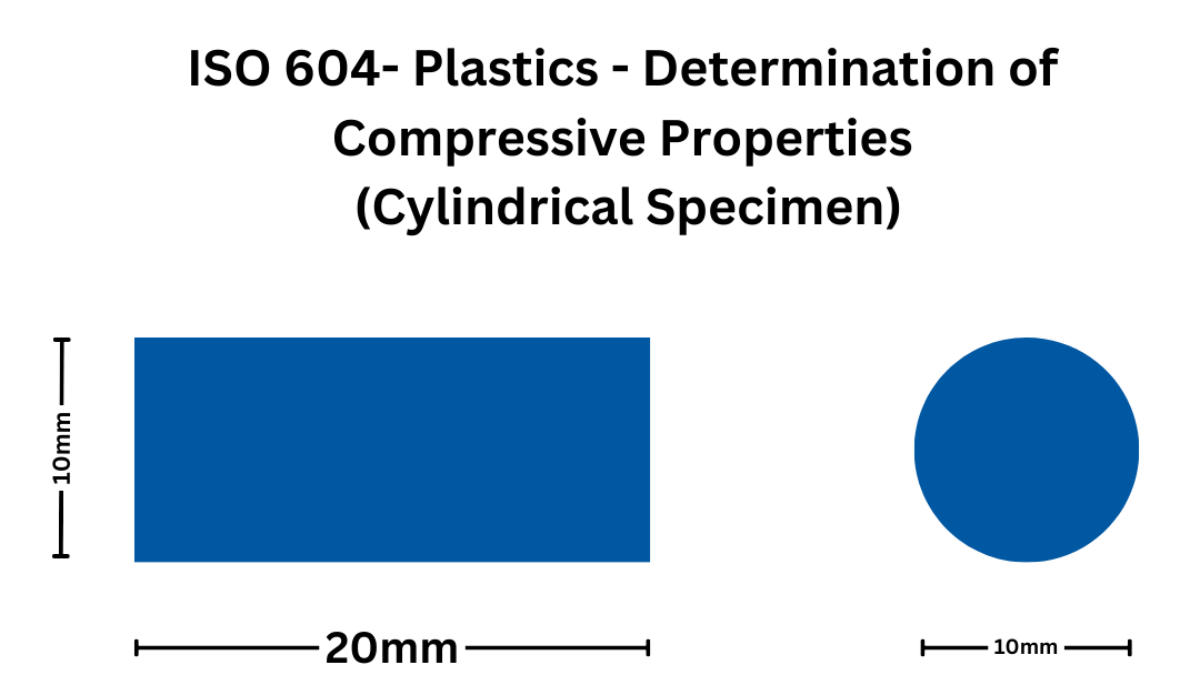
    • Ideal Dimensions: Diameter of 10 mm or 14 mm; height is double the diameter.
    • Purpose: Designed to provide a standard measurement of compressive strength free from external influencing factors like buckling.
  2. Prismatic Specimens:

    • Ideal Dimensions: Width and thickness around 10 mm; height twice the smallest lateral dimension.
    • Purpose: These dimensions help maintain the integrity and uniformity of the test results.

Importance of Adhering to ISO 604:2002: Following ISO 604:2002 ensures that our testing methodologies are robust and provide a reliable foundation for assessing material suitability across a range of applications. This standard not only supports product development but also facilitates regulatory compliance and market trust.

Industries We Serve:

  • Automotive and Aerospace: Where the integrity of materials under compression can determine the safety and functionality of the final product.
  • Consumer Electronics and Goods: Ensuring products are durable and can endure everyday use without failure.

Conclusion: Kiyo R&D Center & Laboratory is dedicated to upholding the highest standards of material testing. By integrating ISO 604:2002 into our testing protocols, we provide our clients with the confidence that their products are tested, validated, and verified against the best in the industry.

Call to Action: Don’t compromise on the quality and safety of your materials. Contact Kiyo R&D Center & Laboratory today to learn more about our comprehensive testing services or to discuss your specific testing needs. Visit our website www.kiyorndlab.com for further information and to get in touch with our experts.

Compression Testing

Compression Testing

Introduction

In industries where material performance dictates success, understanding the mechanical properties of rigid plastics through compression testing is non-negotiable. ASTM D695 provides a standardized approach to assessing these properties, playing a pivotal role in engineering, manufacturing, and quality assurance processes. This blog explores the relevance of ASTM D695, its procedural essentials, and why it’s indispensable for anyone working with rigid plastics.

Decoding ASTM D695

ASTM D695 sets forth the methods for compression testing of rigid plastics. This standard is a cornerstone in the field, utilized to determine the compressive strength, modulus, and other key mechanical properties that indicate how a plastic material will behave under compressive forces.

Importance of Compression Testing

Why stress the importance of compression testing? The reasons are multifaceted:

  • Design Verification: Ensures that materials meet the structural demands of specific applications.
  • Quality Assurance: Regular testing maintains high standards, ensuring that products are durable and reliable.
  • Innovation and Development: Insights gained can drive the development of new materials and improvements in existing products.

Specimen Specifications and Test Preparation

Specimens for ASTM D695 are usually cylindrical, 12.7 mm in diameter and 25.4 mm in height, meticulously machined or molded to precise dimensions. The quality of specimen preparation is directly proportional to the accuracy of the test results, emphasizing the need for precision in every step of the testing process.

Step-by-Step Testing Process

The typical workflow for conducting an ASTM D695 test is straightforward yet requires meticulous attention to detail:

  1. Placement: Position the specimen centrally between the compression plates of the test apparatus.
  2. Load Application: Compress the specimen at a controlled rate, monitoring until failure or a predefined limit is reached.
  3. Data Recording: Measure and record the force applied and the deformation experienced by the specimen.

Interpreting the Results

The data derived from these tests provide:

  • Compressive Strength: Maximum stress the material can withstand under compression.
  • Modulus of Elasticity: Indicator of material stiffness, critical for design considerations.
  • Yield Strength: Stress at which permanent deformation begins.

Why ASTM D695 Matters

For businesses and researchers, ASTM D695 offers a reliable metric to evaluate the suitability of plastic materials for various applications, aiding in material selection and design processes. Compliance with this standard is synonymous with achieving predictable and desired material behaviors under stress.

Final Thoughts

At Kiyo R&D Center & Laboratory, we recognize the critical role of accurate compression testing and are equipped to conduct ASTM D695 tests with precision. Whether you are in the development phase, seeking to certify materials, or need to ensure product durability, our services are designed to support your goals with excellence.

For further information or to schedule a test, reach out to our team. Ensuring your materials perform optimally is our top priority, and through rigorous testing, we help pave the way for your products’ success.

ASTM D256

Izod Impact Test

Izod Impact Test

Home > Single Post

Izod Impact Testing

Introduction to Izod Impact Testing

Izod Impact Testing stands as a benchmark assessment to gauge the impact toughness of materials. By evaluating how much energy a material absorbs upon a sudden impact, this test illuminates the material’s toughness—a crucial attribute for materials subjected to dynamic stresses in real-world applications.

Step-by-Step: The Izod Impact Testing Procedure

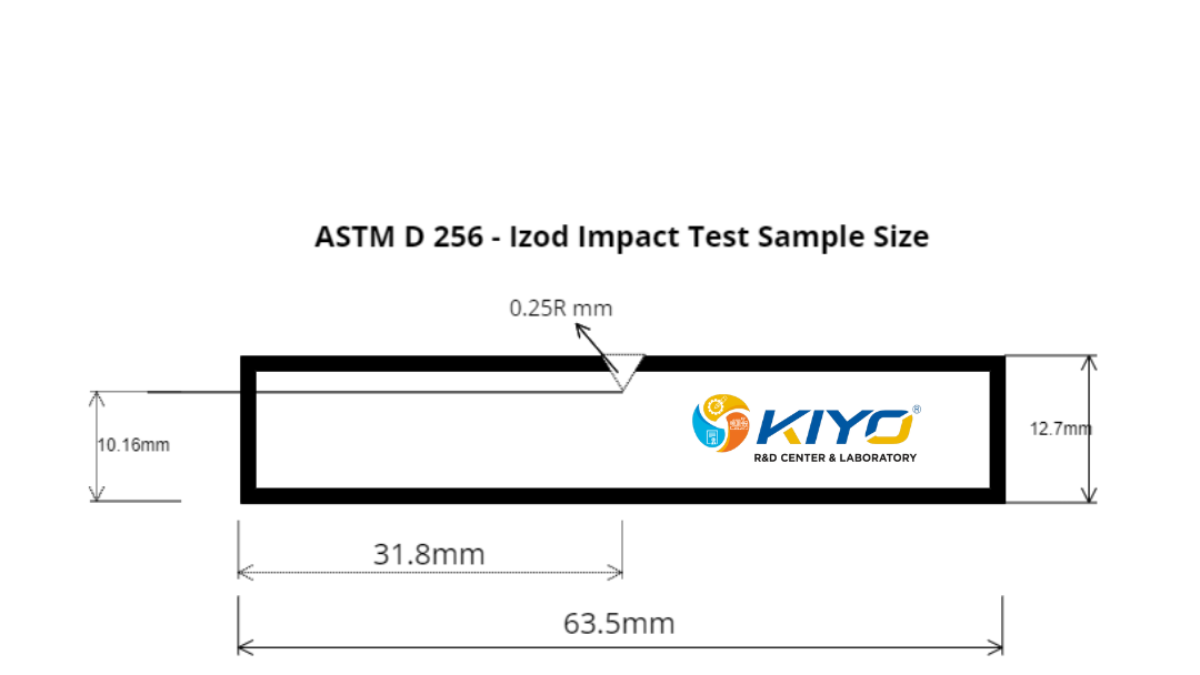
At the heart of the Izod Impact Test is a methodical approach that involves notching a specimen, mounting it vertically, and then striking it with a pendulum. The energy absorbed by the specimen during the impact is then calculated, offering a quantitative measure of its impact toughness. This procedure is not just about breaking materials; it’s about uncovering the resilience embedded within them.

The Critical Role of Izod Impact Testing

The implications of Izod Impact Testing stretch far and wide, impacting various industries such as automotive, aerospace, and construction. This test is instrumental in:

  • Guiding Material Selection: Engineers rely on Izod Impact Testing to choose materials that will stand up to the rigors of their application.
  • Validating Design Concepts: It ensures materials will behave as expected under sudden stress, a vital factor in product safety and longevity.
  • Ensuring Quality Assurance: Regular testing helps maintain material consistency, preempting potential failures in the field.

The Advantages of Partnering with Our Laboratory for Izod Impact Testing

  • Precision and Accuracy: Our laboratory is equipped with cutting-edge technology to deliver precise and accurate Izod Impact Testing results.
  • Expert Guidance: Our team of experts provides comprehensive support, from sample preparation to in-depth analysis of test results.
  • Versatility in Testing: While the test is quintessential for plastics and polymers, our facility accommodates a variety of materials, tailoring our approach to meet specific client needs.

Initiating Izod Impact Testing with Our Laboratory

Engaging with our laboratory for Izod Impact Testing is a straightforward process designed to integrate seamlessly with your project’s requirements. Our experts are ready to guide you through every step, ensuring that you gain valuable insights into your material’s performance and resilience.

Concluding Thoughts

Izod Impact Testing is more than a technical procedure; it’s a critical lens through which the resilience and reliability of materials are assessed, ensuring they meet the rigorous demands of their intended applications. Our laboratory is committed to providing comprehensive Izod Impact Testing services, empowering clients with the data needed to make informed decisions about their materials and products. Partner with us to navigate the complexities of material durability and take your project to new heights of success.

Material testing
Unveiling the Molecular Mysteries: FTIR Spectroscopy at Kiyo R&D

FTIR Spectroscopy

Decoding the Material World: The Impact of FTIR Spectroscopy

In a world driven by advancements in materials science, the ability to decode the structural secrets of materials is more than just academic—it’s a necessity. At Kiyo R&D Center & Laboratory, Fourier Transform Infrared (FTIR) Spectroscopy is more than a sophisticated technique; it’s a gateway to innovation and quality assurance across industries. This post explores the transformative impact of FTIR Spectroscopy and its role in shaping the future of materials research and development.

Bridging the Gap Between Science and Solutions

FTIR Spectroscopy is a pivotal tool in our laboratory, bridging the gap between theoretical science and practical solutions. It enables us to dive deep into the molecular structure of materials, from polymers to metals, offering insights that go beyond the surface. This analytical technique is not just about identifying substances; it’s about understanding their properties, interactions, and potential applications.

The Power of Molecular Fingerprints

Imagine having the ability to identify any material’s “molecular fingerprint” with precision. FTIR Spectroscopy does exactly that. By measuring how a material absorbs infrared light, it reveals the unique vibrational patterns of its molecules. These patterns are as distinctive as fingerprints, allowing us to accurately identify materials, detect impurities, and understand their molecular composition.

Real-World Applications

Quality Control: In manufacturing, the purity and composition of materials are paramount. FTIR Spectroscopy enables industries to maintain high-quality standards by detecting any deviations or contaminants in the raw materials and products.

Environmental Analysis: From monitoring air and water quality to detecting hazardous substances, FTIR Spectroscopy plays a crucial role in environmental protection and compliance with safety regulations.

Pharmaceuticals: Ensuring the safety and efficacy of pharmaceutical products is essential. FTIR Spectroscopy provides a non-destructive method for analyzing drug formulations, helping to validate the consistency and quality of medicinal products.

Forensic Science: In the realm of forensic investigations, FTIR Spectroscopy can analyze substances such as drugs, fibers, and explosives, assisting in crime scene investigations and legal proceedings.

Why Kiyo R&D?

At Kiyo R&D, we’re not just performing tests; we’re providing solutions. Our state-of-the-art FTIR Spectroscopy services are integral to our mission of driving innovation and ensuring quality across various sectors. Our team of experts leverages this technology to deliver accurate, reliable, and timely results, empowering our clients to make informed decisions.

Connect With Us

Are you facing a material analysis challenge? Do you need insights into the molecular composition of your materials? Kiyo R&D Center & Laboratory is here to help. Contact us to discover how our FTIR Spectroscopy services can support your projects and contribute to your success.

Vibration Testing

Vibration Testing

Mastering the Dynamics: Vibration Testing at Kiyo R&D Center & Laboratory

Introduction

In the relentless pursuit of excellence and durability in product design, vibration testing emerges as a pivotal evaluation tool. At Kiyo R&D Center & Laboratory, we harness the power of advanced vibration testing to simulate real-world conditions, ensuring that products not only meet but exceed the rigorous demands of their intended environments.

Unveiling Vibration Testing

Vibration testing subjects products and materials to a variety of vibratory forces to mimic operational stresses. This simulation helps identify potential weaknesses, ensuring that the final product can withstand everything from daily use to extreme conditions without failure.

The Significance of Vibration Testing

  1. Predictive Analysis: Offers a glimpse into a product’s durability and operational lifespan.
  2. Design Optimization: Highlights areas for improvement, contributing to more resilient product designs.
  3. Regulatory Compliance: Ensures products meet global standards and regulations for safety and performance.
  4. Consumer Trust: Builds confidence in product reliability and quality, enhancing brand reputation.

Kiyo R&D’s Approach to Vibration Testing

At Kiyo R&D, we offer a comprehensive suite of vibration testing services, utilizing cutting-edge technology and methodologies to deliver unparalleled insights.

  1. Random Vibration Testing: Mimics complex, real-world environments by applying random vibrations across a spectrum of frequencies.
  2. Sinusoidal Vibration Testing: Identifies resonant frequencies by applying continuous sine wave vibrations, crucial for understanding how products behave under specific conditions.
  3. Combined Environmental Testing: Integrates vibration testing with temperature and humidity variations to evaluate product performance under environmental stressors.
  4. Shock and Impact Testing: Assesses product resilience to sudden forces or impacts, simulating scenarios like drops, collisions, and transportation stresses.

Tailoring Solutions Across Industries

Our vibration testing services cater to a diverse array of industries, each with unique challenges and standards:

  • Aerospace & Aviation: Ensuring components can endure the rigors of flight and atmospheric pressure changes.
  • Automotive: Simulating road vibrations and impacts to test vehicle components and systems for durability and safety.
  • Electronics: Assessing the resilience of devices and components against everyday handling and environmental vibrations.
  • Manufacturing & Construction: Evaluating machinery and structural components for operational longevity and safety under vibrational stress.

Case Studies: Success Through Vibration Testing

[This section would feature real-life examples of how Kiyo R&D has helped clients identify and solve vibration-related challenges, enhancing product durability, safety, and performance.]

Partnering with Kiyo R&D

Choosing Kiyo R&D Center & Laboratory for your vibration testing needs means partnering with a leader in precision testing services. Our team of experts employs a meticulous approach to testing, analysis, and reporting, ensuring your products stand the test of time and exceed market expectations.

Conclusion: Ensuring Excellence in a Vibrant World

Vibration testing is more than a procedure; it’s a commitment to quality and reliability. At Kiyo R&D Center & Laboratory, we empower industries to forge ahead with confidence, providing the insights needed to create products that are not only capable of surviving but thriving under the dynamic stresses of their operational lives.

Contact Kiyo R&D today to learn more about our vibration testing services and how we can help elevate your products to new heights of excellence and reliability.

Performance Testing

Performance Testing

Advancing Material Innovation: The Crucial Role of Performance Testing in Material Science

The relentless pursuit of innovation within the materials science sector underscores the transformative potential of new materials in reshaping industries, from aerospace to consumer electronics and beyond. Performance testing, a critical component of materials research and development, ensures that these innovative materials not only promise revolutionary properties but also deliver on those promises under real-world conditions. This blog post explores the importance, methodologies, and best practices of performance testing in materials science, offering insights into its pivotal role in driving forward technological and scientific breakthroughs.

Performance Testing

Why Performance Testing Matters in Materials Science

In the realm of materials science, performance testing is essential for several key reasons:

  • Verifying Material Properties: Testing validates the theoretical properties of new materials, such as strength, durability, and conductivity, ensuring they perform as expected in practical applications.
  • Safety and Reliability: Materials intended for use in critical applications, such as in medical devices or structural engineering, must undergo rigorous testing to ensure they can safely withstand operational stresses and environmental conditions.
  • Innovation and Optimization: Performance testing provides invaluable data that can spur further innovation, allowing scientists and engineers to refine material compositions and processing methods to achieve optimal performance.

Strategies for Effective Performance Testing in Materials Science

  1. Comprehensive Test Design: Develop a testing strategy that covers the full range of material properties of interest, from mechanical strength and flexibility to thermal resistance and electrical conductivity.
  2. Realistic Simulation of Conditions: Ensure that testing scenarios accurately reflect the conditions under which the material will be used, including environmental exposures and mechanical loads.
  3. Advanced Testing Technologies: Utilize the latest in testing technology, such as high-resolution imaging, spectroscopy, and computer simulations, to analyze material performance at the micro and nano scales.
  4. Iterative Testing and Analysis: Adopt an iterative approach to testing, using the results of initial tests to refine hypotheses and testing protocols, thereby optimizing material properties through successive iterations.
  5. Cross-disciplinary Collaboration: Engage in collaborative efforts across disciplines, combining insights from chemistry, physics, engineering, and industry-specific knowledge to enhance testing methodologies and material applications.

Overcoming Challenges in Materials Science Performance Testing

Performance testing in materials science faces challenges such as the high cost of advanced testing equipment, the complexity of simulating real-world conditions, and the need for specialized expertise to interpret test results. Overcoming these challenges requires a strategic approach, including investment in state-of-the-art facilities, fostering collaboration among academic and industrial partners, and continuous training for research and development teams.

Conclusion

The role of performance testing in materials science cannot be overstated. It is the linchpin that connects theoretical material innovations with practical, reliable applications, ensuring that new materials can meet the demands of tomorrow’s technologies. As we continue to push the boundaries of what materials can achieve, rigorous and innovative performance testing will remain a cornerstone of material science research and development.

Partner with Kiyo R&D for Cutting-edge Material Performance Testing

Kiyo R&D Center & Laboratory stands at the forefront of material science research, offering comprehensive performance testing services that help bridge the gap between theoretical innovation and practical application. With our advanced testing facilities and expert team, we are dedicated to supporting the development of next-generation materials that will define the future of technology. Discover how partnering with Kiyo R&D can accelerate your material innovation journey.

Product Testing

Product Testing

The Essential Guide to Product Testing: Ensuring Quality, Safety, and Compliance

In today’s competitive marketplace, product testing is not just a best practice—it’s a crucial part of the product development lifecycle that ensures safety, compliance, and customer satisfaction. At Kiyo R&D Center & Laboratory, we specialize in comprehensive product testing services that span across various materials, including plastics, rubber, and metals. Our state-of-the-art facilities and expert team are dedicated to helping businesses navigate the complexities of product testing, ensuring that their products meet the highest standards of quality and safety.

Why Product Testing is Critical

Product testing serves multiple critical functions in product development and manufacturing:

  • Safety and Compliance: It ensures that products are safe for consumers and comply with international standards and regulations, reducing the risk of recalls and legal issues.
  • Quality Assurance: Testing helps identify defects and areas for improvement, ensuring that the final product meets the intended design specifications and quality standards.
  • Customer Satisfaction: By ensuring product reliability and safety, testing helps in building trust and satisfaction among end-users, which is crucial for brand reputation and loyalty.
  • Market Readiness: Comprehensive testing verifies that a product is ready for the market, minimizing risks and maximizing success potential.

Our Product Testing Services

Kiyo R&D Center & Laboratory offers a wide range of testing services tailored to the specific needs of our clients:

  • Tensile Testing: Measures the strength and ductility of materials under uniaxial tension, essential for evaluating material performance under stress.
  • Flexural Testing: Assesses a material’s stiffness and flexural modulus, critical for products that will experience bending forces in their application.
  • Flammability Testing: Evaluates a material’s resistance to ignition and burning, crucial for compliance with safety standards in many industries.
  • Filler/Ash Content Testing: Determines the composition of materials, important for verifying material specifications and quality.
  • Melt Flow Rate Testing: Assesses the flow characteristics of thermoplastic polymers, indicating their processability and suitability for various applications.
  • HDT/VSP Testing: Measures the heat distortion temperature and Vicat softening point, crucial for evaluating thermal properties of polymers.
  • Advanced Analytical Techniques: Including FTIR, SEM, TGA, and DSC, provide detailed insights into material composition, thermal stability, and other critical properties.
  • Vibration, Impact, and Thermal Testing: These tests simulate real-world conditions to evaluate how a product will perform under various stressors, ensuring durability and reliability.

Embracing Innovation in Testing

At Kiyo R&D, innovation is at the core of what we do. We continually invest in cutting-edge technologies and methodologies to enhance our testing capabilities. Our collaborative approach with clients involves not just testing, but also providing insights and recommendations based on the test results to help in refining product design and performance.

Partnering for Success

Choosing the right partner for product testing is a critical decision for any business. At Kiyo R&D Center & Laboratory, we pride ourselves on our technical expertise, comprehensive service offerings, and commitment to customer service. We work closely with our clients at every stage of the testing process, from initial consultation to final reporting, ensuring clarity, transparency, and actionable insights.

Conclusion

In conclusion, product testing is an indispensable part of the product development process. It not only ensures safety and compliance but also plays a vital role in maintaining quality, enhancing customer satisfaction, and achieving market success. At Kiyo R&D Center & Laboratory, we’re dedicated to providing our clients with the highest level of service and support, helping them bring safe, reliable, and high-quality products to market.


Testing Procedure

Testing Procedure

do you need our help? we always give the best for you

9087686986

Welcome to Kiyo R&D Laboratory, where we make testing simple and stress-free!

download & Fill TRF

Start by telling us what you need. Grab our Test Request Form (TRF) and jot down all the details about your sample and the tests you’re interested in.

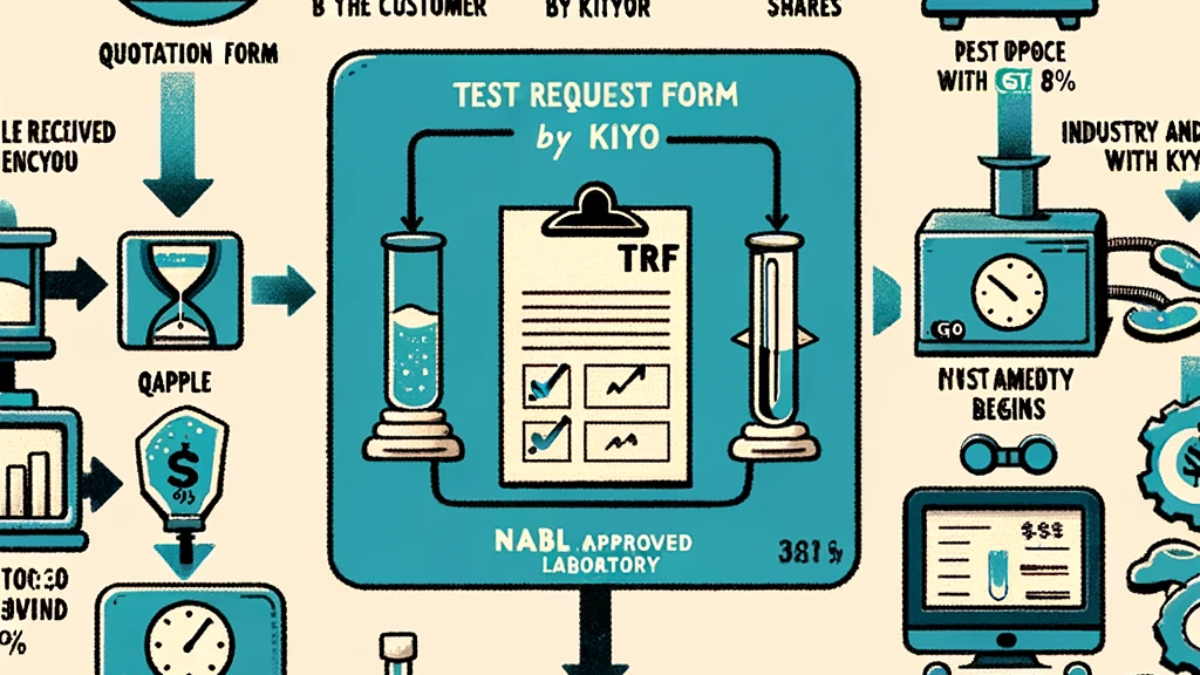
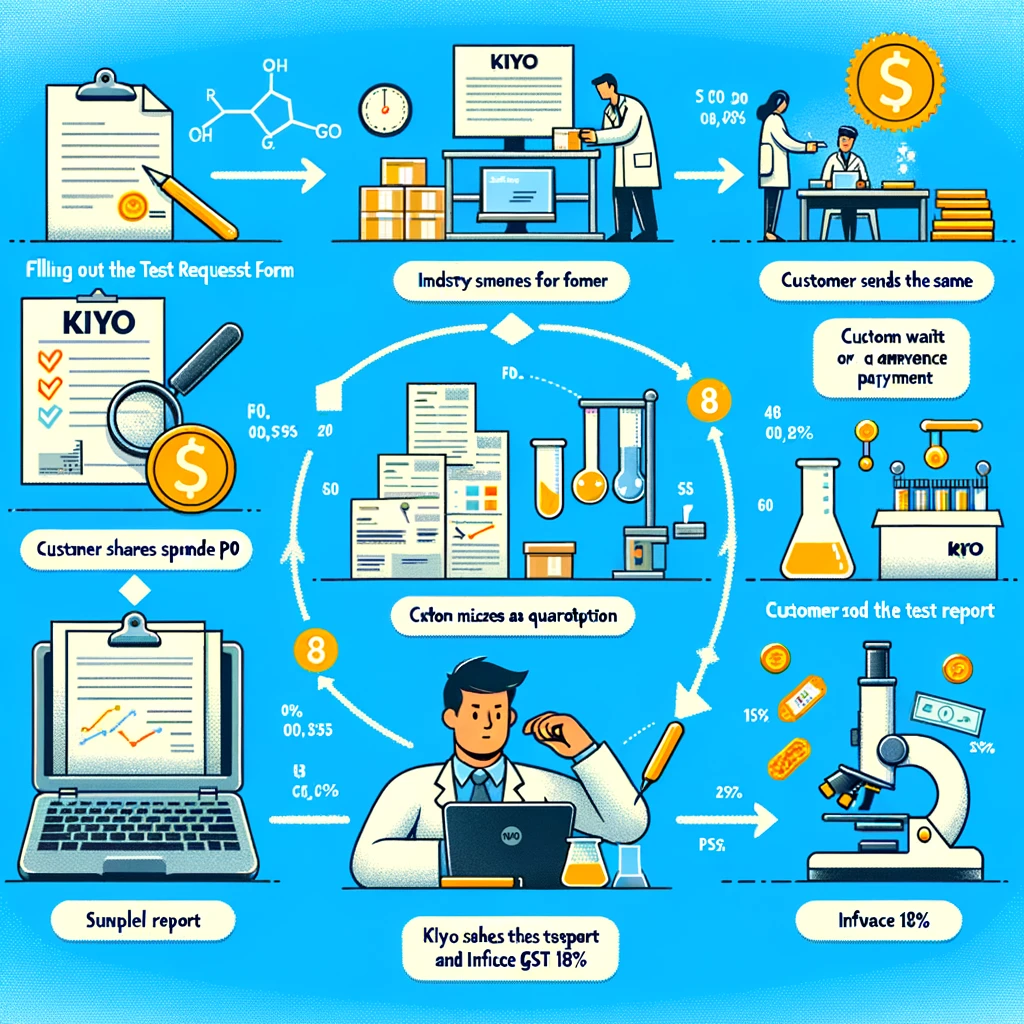
A Step-by-Step Guide to the Testing Procedure at Kiyo's NABL Approved Lab

Welcome to Kiyo R&D Laboratory, a premier testing facility certified by the National Accreditation Board for Testing and Calibration Laboratories (NABL). Our commitment to excellence ensures that every test we conduct meets rigorous standards, providing you with reliable and accurate results. If you’re considering utilizing our services, here’s a simple, step-by-step guide to our testing procedure, designed for clarity and ease of understanding for everyone.

Step 1: Test Request Form (TRF)

Initiating Your Test Request: The first step in engaging with Kiyo’s state-of-the-art laboratory services begins with you, the customer, filling out the Test Request Form (TRF). This form captures all the necessary details about the tests you require, including the type of material to be tested, the specific tests needed, and any other relevant information. It’s crucial to fill out this form as comprehensively as possible to ensure that we fully understand your testing needs.

Step 2: Quotation

Understanding the Costs: Upon receiving your TRF, we will review your request and provide you with a detailed quotation. This quote will include the cost of the requested tests, giving you a clear understanding of the financial aspect of the testing process. Our goal is to ensure transparency and provide you with all the information needed to make an informed decision.

Step 3: Sample Receipt

Sending Your Samples to Kiyo: Once you’ve reviewed and accepted our quotation, the next step is to send your samples to Kiyo R&D Laboratory. We handle each sample with the utmost care and precision, ensuring it’s properly logged and stored until testing begins. Properly packaging and labeling your samples will facilitate a smooth process.

Step 4: Purchase Order or Payment

Finalizing the Agreement:

  • For industrial clients, we require a Purchase Order (PO) to proceed with the testing services. This official document should be issued by your company, confirming the services requested and agreeing to the quoted costs.
  • For students and individual researchers, an advance payment is required. This step ensures that all financial prerequisites are settled, allowing us to allocate resources and schedule your tests promptly.

Step 5: Testing Process

The Testing Phase: Each test conducted in our laboratory requires a specific amount of time, depending on the complexity and type of analysis. We ask for your patience during this period. Rest assured, our team of experts utilizes the latest technologies and methodologies to ensure accurate and timely results.

Step 6: Report and Invoice

Receiving Your Results: Upon completion of the tests, Kiyo R&D Laboratory will compile a comprehensive test report detailing the outcomes and analyses. Along with this report, an invoice including the applicable GST (currently at 18%) will be shared with you. This documentation provides a complete overview of the services rendered and the results obtained.

Step 7: Customer Review

Your Feedback Matters: Your satisfaction is paramount to us. After you’ve reviewed the test report and invoice, Kiyo will reach out to request your feedback on our services. This step is crucial for us to maintain high standards of customer service and continually improve our processes.

Conclusion

At Kiyo R&D Laboratory, we strive to make our testing process as straightforward and transparent as possible. From your initial request through to the delivery of results, we’re committed to providing you with high-quality, reliable testing services. If you have any questions or need further assistance at any step of the process, our dedicated team is here to help.

We look forward to serving your testing needs and contributing to your projects’ success with our accredited, expert services.

Paper Testing

Paper Testing

Navigating the Complex World of Paper Testing: Ensuring Quality and Sustainability

In today’s environmentally conscious world, the role of paper in our daily lives is under constant scrutiny. From the books we read to the packaging that protects our online orders, paper is an integral part of modern society. Ensuring that this pervasive material meets the highest standards of quality and sustainability is where paper testing becomes crucial. Here’s a deep dive into the complex world of paper testing, highlighting its importance in manufacturing, environmental stewardship, and consumer satisfaction.

The Pillars of Paper Testing

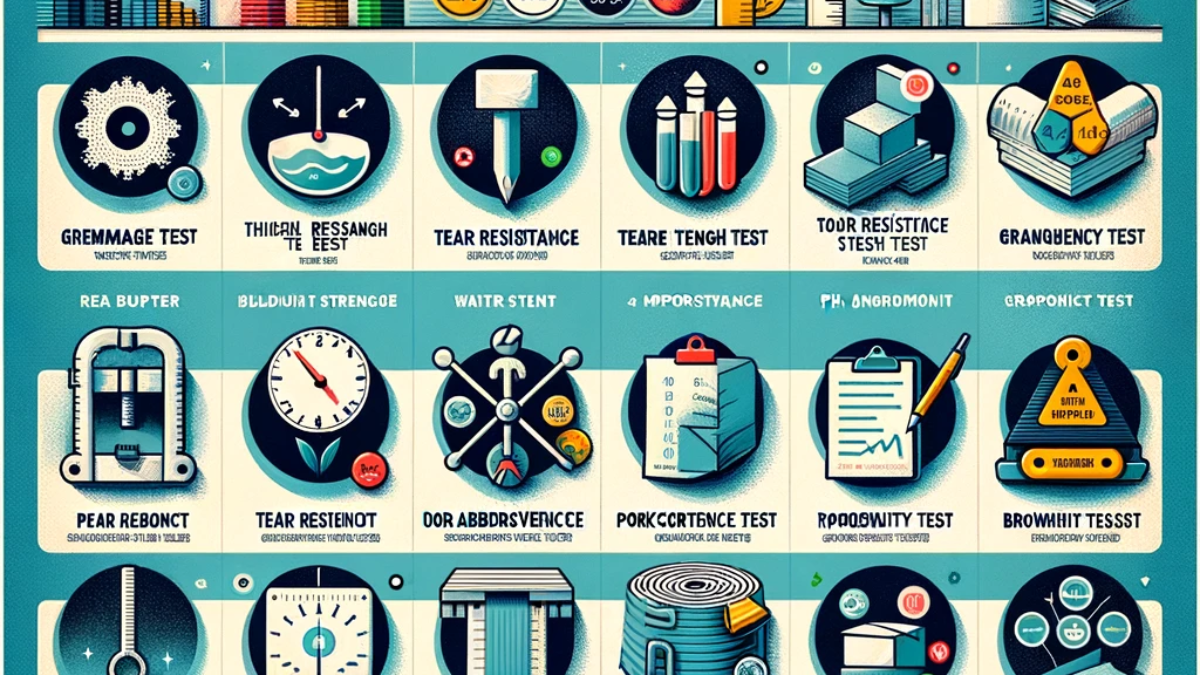
Physical and Mechanical Tests: The journey of paper testing begins with understanding its physical and mechanical properties. The Grammage Test, for instance, measures the paper’s weight per unit area, a fundamental aspect that influences its application, whether for a delicate page in a novel or a sturdy shipping box. The Thickness and Bulk Test further assesses how the paper feels and how stiff it is, factors that are critical for both aesthetic and functional purposes.

The resilience of paper is tested through Tensile Strength and Tear Resistance tests, determining how much force a piece of paper can withstand before breaking or tearing. This is especially vital for packaging materials that need to protect contents during shipping. Similarly, the Folding Endurance and Burst Strength tests evaluate the paper’s durability under stress, ensuring it can handle the rigors of processing, folding, and transportation without failing.

Surface Properties Tests: The surface of the paper plays a pivotal role in its usability, particularly in printing and writing. Smoothness and Roughness tests provide insights into the paper’s texture, affecting ink adherence and the clarity of the printed text. The Porosity test, measuring air flow through paper, and the Water Absorbency test, or Cobb test, are essential for determining how quickly ink dries, impacting print quality and speed.

Chemical Tests: The chemical composition of paper can affect its longevity, appearance, and environmental impact. pH Level tests help ensure the paper’s acidity or alkalinity is within a range that won’t hasten degradation, important for archival purposes. Brightness and Whiteness tests gauge the paper’s aesthetic appeal and readability, while Ink Absorption tests are crucial for print quality. The Ash Content test, on the other hand, determines the inorganic content in paper, which can affect its burning properties and overall strength.

Environmental Tests: As the world moves towards more sustainable practices, the environmental impact of paper has come under the microscope. Biodegradability and Compostability tests assess the paper’s ability to break down naturally, reducing its footprint. Recyclability tests are equally important, evaluating the paper’s potential for reuse in the face of global waste concerns.

Beyond the Lab: The Impact of Paper Testing

The comprehensive testing of paper ensures that manufacturers can produce materials that are not only high in quality but also meet stringent environmental standards. For printers and end-users, these tests mean access to paper that performs reliably under various conditions, whether it’s running through a high-speed press or being folded into a book.

In an age where sustainability is as important as utility, the detailed evaluation of paper’s environmental impact through testing is indispensable. It allows for the development of more eco-friendly materials and practices, contributing to a more sustainable future.

Conclusion

Through the meticulous process of paper testing, the industry can guarantee the production of superior and sustainable paper products. This not only satisfies the immediate needs of consumers but also addresses broader environmental concerns. As we continue to rely on paper in numerous aspects of our lives, the role of these tests becomes ever more critical, ensuring that paper remains a versatile, reliable, and eco-conscious choice for generations to come.

paper testing
FMVSS 302

FMVSS 302

A Closer Look at FMVSS 302: Ensuring Safety Through Flammability Standards

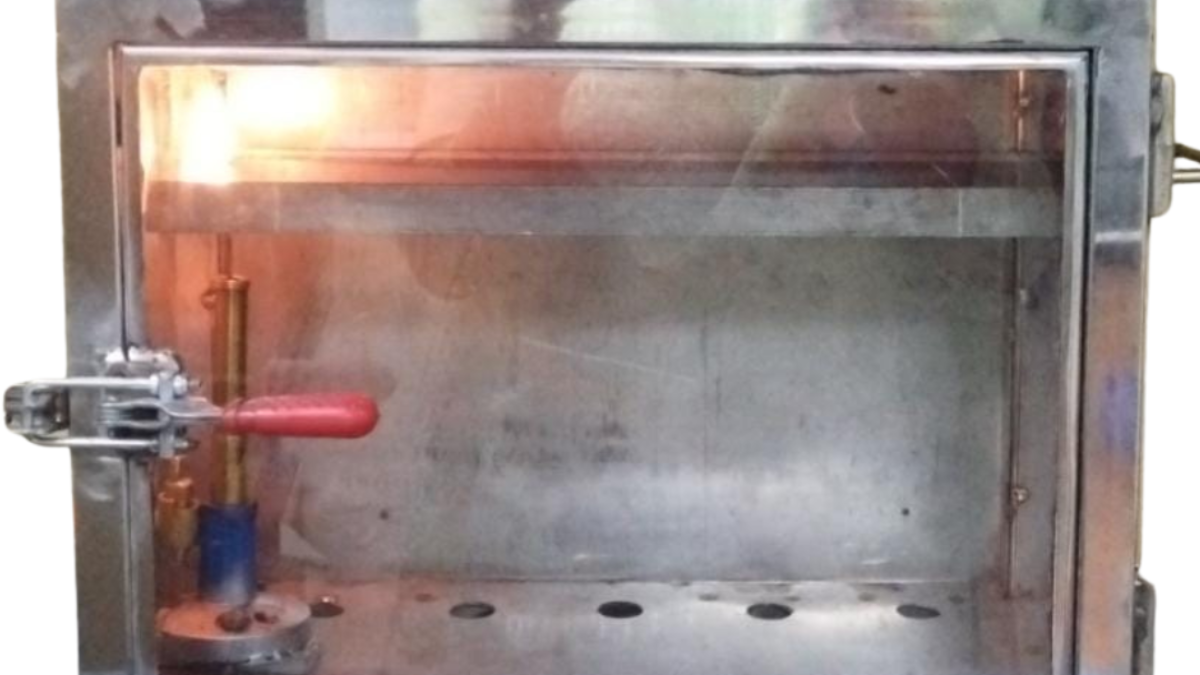
In the realm of automotive safety, the Federal Motor Vehicle Safety Standards (FMVSS) represent a cornerstone of regulations that safeguard vehicle occupants by setting rigorous benchmarks for vehicle design and construction. Among these pivotal standards, FMVSS 302 stands out by addressing a critical aspect of safety: the flammability of interior materials. This blog post aims to shed light on FMVSS 302, detailing its significance, outlining the testing procedure it prescribes, and explaining, in layman’s terms, the formula used to gauge material flammability.

The Essence of FMVSS 302

FMVSS 302’s mission is straightforward yet vital: to minimize the risks posed by vehicle fires, with a specific focus on the materials found within the passenger compartment. By dictating a maximum permissible burn rate for these materials, the standard is a proactive measure designed to slow the spread of fire, providing passengers with precious additional seconds to evacuate safely in an emergency.

FMVSS 302

Decoding the Test Procedure

To comply with FMVSS 302, materials used in vehicle interiors must undergo a standardized test that measures their burn rate under controlled conditions. Here’s a breakdown of this procedure:

  1. Preparation: Samples are precisely cut and conditioned to ensure uniformity, simulating real-world environmental conditions.
  2. Mounting: Samples are placed in a specific holder that prevents the flame from reaching the material’s upper surface, ensuring the flame spreads horizontally.
  3. Ignition: A controlled flame ignites one end of the sample for a fixed period, initiating the test.
  4. Observation: The progression of the flame is closely monitored, noting the time it takes to travel a predefined distance.
  5. Calculation: The material’s burn rate is determined by comparing the distance traveled by the flame against the time elapsed.

Understanding the Formula Without Math

The heart of FMVSS 302 lies in its formula, which assesses whether a material meets safety standards based on its burn rate. Without delving into mathematical expressions, the formula essentially calculates how fast the flame travels across the material, with the outcome expressed in millimeters per minute. To pass the test, a material’s burn rate cannot exceed 100 millimeters per minute, ensuring it burns slowly enough to significantly mitigate the risk of fire spread within the vehicle’s interior.

The Role of Kiyo R&D Center & Laboratory

At Kiyo R&D Center & Laboratory, our commitment to automotive safety drives us to offer comprehensive flammability testing services, including those required by FMVSS 302. Our state-of-the-art facilities and expert team ensure that your materials not only comply with these critical safety standards but also contribute to the overarching goal of safeguarding lives.

Should you require assistance with FMVSS 302 testing or wish to learn more about our services, we invite you to reach out to us. Together, we can achieve the highest standards of safety, making each journey safer for everyone involved.