Most polymer failures don’t start with cracks or visible damage. They start silently—through thermogravimetric analysis of polymers degradation, filler breakdown, moisture loss, or additive decomposition. By the time a product softens, discolors, smells burnt, or loses strength, the real damage has already happened at the molecular level.
This is exactly why thermogravimetric analysis of polymers services in Chennai – Kiyo R&D LAB are essential for manufacturers, processors, and R&D teams who need to understand what happens to their polymer when temperature rises.
At Kiyo R&D LAB, TGA testing is not treated as a fancy graph for reports. It is treated as a decision-making tool—one that explains material composition, thermal stability, and degradation behavior in clear, usable terms.
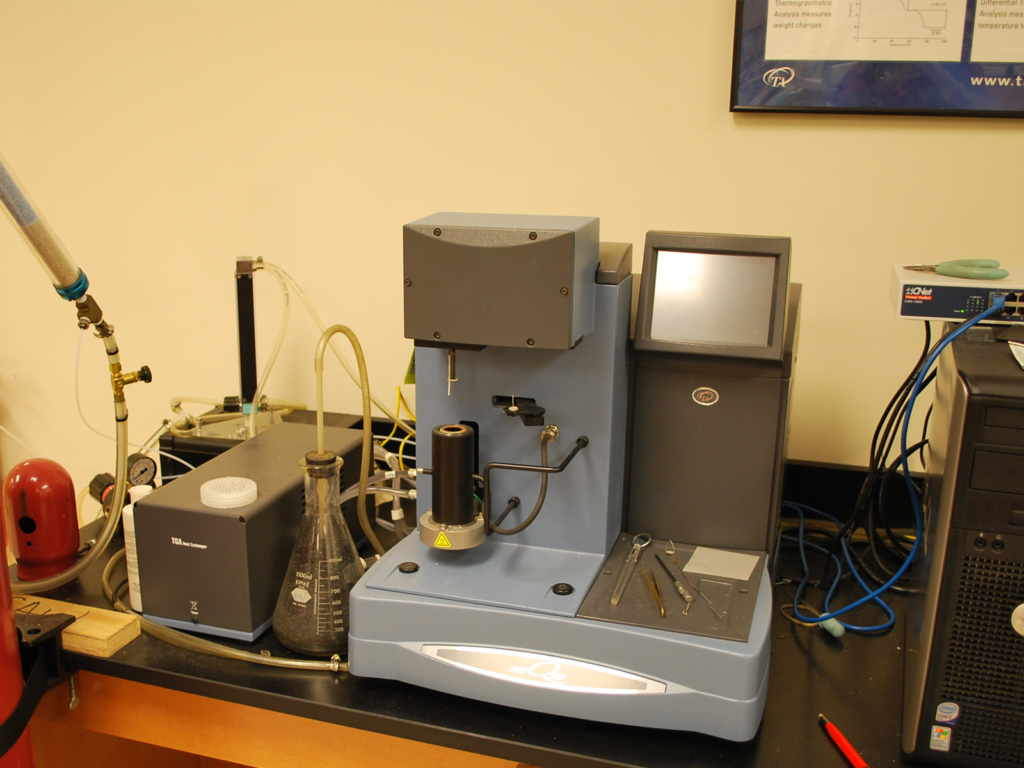
Thermogravimetric Analysis (TGA) measures how a polymer’s weight changes as temperature increases under controlled conditions. As the sample is heated, components such as moisture, plasticizers, polymers, and fillers decompose or volatilize at different temperatures.
In practical terms, TGA helps answer:
Unlike mechanical tests, TGA looks inside the material, not just how it behaves externally.
Polymers are often exposed to elevated temperatures during:
If a polymer begins degrading near its processing temperature, failures are inevitable—no matter how good the mechanical properties look initially.
Thermogravimetric analysis of polymers services in Chennai – Kiyo R&D LAB help manufacturers verify thermal limits before parts reach production or the field.
Chennai is a major hub for automotive components, plastics processing, electrical products, and industrial manufacturing. In these sectors:
A slight formulation change or incorrect filler content can cause:
This is why local access to thermogravimetric analysis of polymers services in Chennai is critical for fast diagnosis and corrective action.
At Kiyo R&D LAB, TGA analysis is commonly performed on:
Samples may be raw pellets, powders, molded parts, films, or even failed components—because processing history affects thermal behavior.
TGA identifies the onset temperature of degradation, helping determine whether a polymer can safely withstand processing and service temperatures.
Early weight loss at low temperatures often indicates moisture or volatile additives. This can explain porosity, bubbles, or surface defects during molding.
After polymer decomposition, remaining residue represents fillers or inorganic content. TGA helps quantify filler loading and detect formulation changes.
By comparing TGA curves of different samples, variations between suppliers, batches, or grades become obvious—without relying on declarations alone.
Using TGA early in development prevents costly mistakes. It helps teams:
Early TGA testing saves time, tooling changes, and repeated trial runs later.
Batch variation is one of the biggest hidden risks in polymer manufacturing. TGA analysis supports quality teams by:
Thermogravimetric analysis of polymers services in Chennai – Kiyo R&D LAB provide objective thermal fingerprints that support confident batch release decisions.
When polymer parts fail due to heat, odor, discoloration, or unexpected degradation, TGA often provides the missing link. It helps identify:
TGA converts vague symptoms into measurable evidence.
At Kiyo R&D LAB, TGA testing is conducted using controlled methods aligned with relevant ASTM, ISO, IS, or customer-specific requirements where applicable.
Standards-based testing ensures:
A TGA curve without method control is just a picture. With standards, it becomes evidence.
A useful TGA report should clearly include:
At Kiyo R&D LAB, reports are written for engineers and quality teams—not just analysts. The focus is on what the data means for processing and performance.
Many labs can run TGA instruments. Fewer labs explain what the curve means for your product.
Kiyo R&D LAB stands out because:
This approach reduces guesswork and accelerates decision-making.
Thermogravimetric analysis of polymers services in Chennai – Kiyo R&D LAB are essential for:
If thermal stability, filler content, or degradation affects your product, TGA testing is not optional.
Thermal degradation doesn’t announce itself—it accumulates quietly until failure becomes unavoidable. Thermogravimetric analysis reveals how polymers truly behave under heat and exposes risks long before they show up in production or the field.
With thermogravimetric analysis of polymers services in Chennai – Kiyo R&D LAB, manufacturers gain clarity, control, and confidence—turning thermal uncertainty into actionable data.
In polymer engineering, understanding weight loss with temperature is understanding the life of the material itself.