Every material has a breaking point — not just under force, but under heat. At what temperature does your polymer start degrading? How much filler is really inside your compound? Is there hidden moisture ruining your product quality? TGA (Thermogravimetric Analysis) answers all of these by precisely tracking how your material’s weight changes as it’s heated.
At Kiyo R&D Lab, with two advanced facilities in Chennai — Chrompet and Oragadam — we deliver accurate, affordable TGA analysis for thermal stability, composition, filler content, and moisture studies. Let’s turn up the heat on your material questions. 🔥
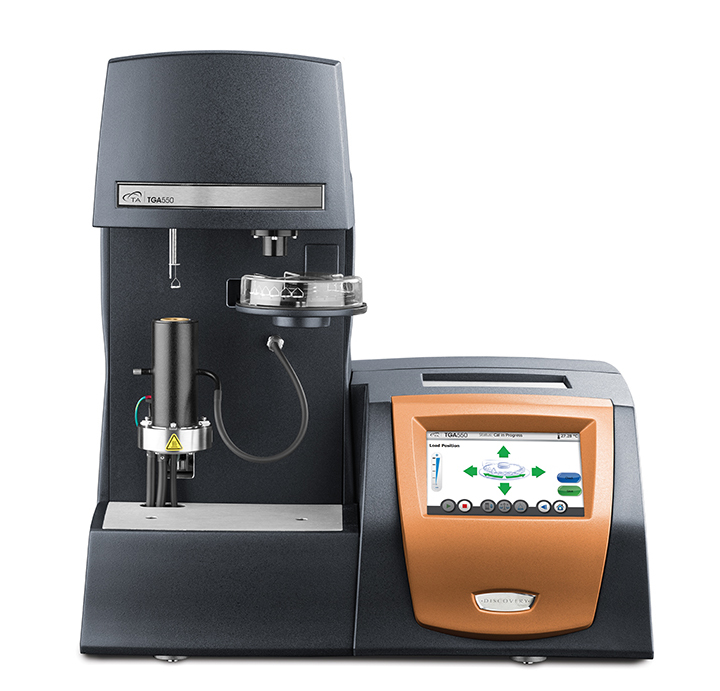
TGA is beautifully simple in concept: place a small sample on an ultra-sensitive microbalance inside a furnace, heat it under a controlled atmosphere (nitrogen, air, or oxygen), and continuously record its weight. As temperature rises, the material loses weight in distinct steps — moisture evaporates first, then volatiles escape, then the polymer or organic content decomposes, and finally only ash or inorganic filler remains.
The resulting thermogram (weight vs. temperature curve) tells a complete story: how thermally stable your material is, what it’s made of, and how much of each component is present — all from a sample as small as a few milligrams.
Exact onset and decomposition temperatures — so you know your material’s safe operating limits.
Quantify glass fibre, carbon black, talc, CaCO₃, and other inorganic fillers in your compound.
Measure moisture, solvents, and plasticisers that affect processing and product quality.
Break down a formulation into polymer, oil, carbon black, and ash percentages — step by step.
| Industry | How TGA Analysis Helps |
|---|---|
| Plastics & Polymers | Degradation temperature, filler content, polymer identification, recyclate quality checks |
| Rubber & Tyres | Polymer/oil/carbon black/ash breakdown as per ASTM D6370 for compound verification |
| Automotive & Aerospace | Thermal limits of components, composite resin content, material qualification |
| Pharmaceuticals | Moisture content, solvate/hydrate studies, excipient stability, decomposition profiles |
| Construction & Cement | Hydration product analysis, gypsum/limestone content, admixture studies |
| Chemicals & Coatings | Volatile content, curing studies, residue analysis, oxidative stability |
| Academia & PhD Research | Publication-quality TGA/DTG curves for journals, theses, and new material development |
A TGA curve is only meaningful when the test is run under controlled, standardised conditions — heating rate, atmosphere, and sample mass all change the result. That’s why every TGA test at Kiyo R&D Lab follows internationally recognised standards. Here’s what each one means and why it matters to you:
This is the workhorse standard for breaking a material into four fractions: highly volatile matter (moisture, solvents), medium volatile matter (oils, plasticisers), combustible material (polymer, organic content), and ash (inorganic residue). By switching the furnace atmosphere from nitrogen to air at the right point, we separate carbon black from mineral filler. The result: a complete percentage breakdown of what’s inside your compound — invaluable for formulation verification and competitor benchmarking.
The international standard for running TGA on plastics. It defines how to determine onset temperature (where degradation begins), mass loss steps, and residue content under specified heating rates and atmospheres. Following ISO 11358 means your polymer degradation data is comparable across labs worldwide — important for export documentation and global customers.
Specifically designed for rubber compounds, this standard quantifies polymer content, oil/plasticiser, carbon black, and ash in a single run. Tyre manufacturers, gasket producers, and rubber component suppliers use it to verify that every batch matches the approved formulation — and to investigate field failures when a compound doesn’t perform as expected.
This standard defines how to measure the temperature at which a material starts to lose weight (decomposition onset). It’s the go-to method for answering “how hot can my material safely go?” — critical for components near engines, electronics, ovens, or any high-temperature environment.
A precise way to measure moisture and volatile content at a defined temperature. Far more accurate than a simple oven test, it’s widely used in pharma, food ingredients, and chemical powders where even 0.5% extra moisture can cause caking, degradation, or processing failures.
Located in Chrompet, Chennai — easily reachable from South Chennai, Tambaram, Pallavaram, Guindy, and nearby industrial and academic hubs.
Situated in Oragadam, Chennai — at the heart of Tamil Nadu’s automotive and manufacturing corridor, ideal for OEMs and industrial suppliers.
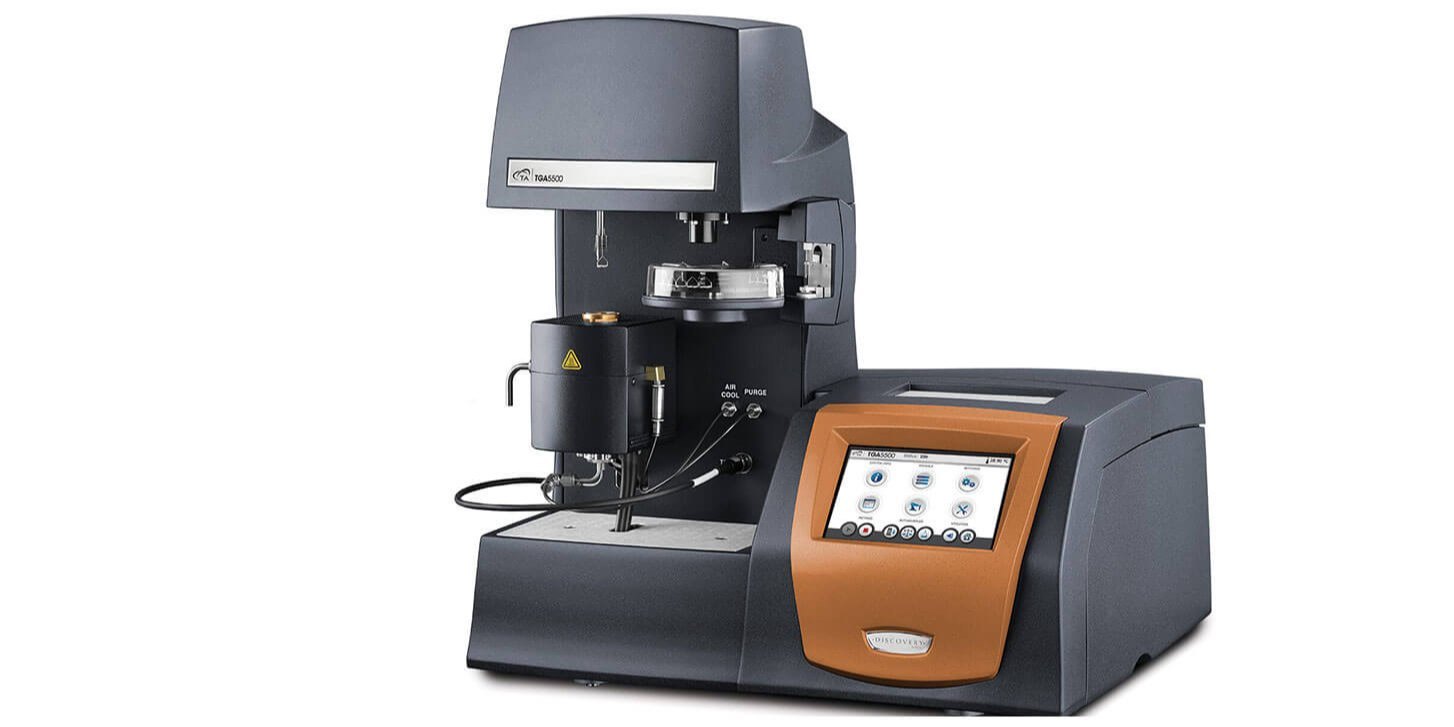
Whether it’s degradation temperature, filler content, or hidden moisture, TGA analysis reveals the thermal truth about your material — accurately and from just a few milligrams. With ASTM & ISO standard methods, expert interpretation, and two convenient labs at Chrompet and Oragadam, Kiyo R&D Lab is Chennai’s trusted partner for thermal analysis.
TGA (Thermogravimetric Analysis) measures how a material’s weight changes with temperature. It’s used to determine thermal stability, decomposition temperature, filler and ash content, moisture and volatile content, and complete compositional breakdown of polymers, rubbers, and formulations.
Very little — typically just 5 to 20 milligrams. This makes TGA ideal even when your sample is rare or limited. However, the sample should be representative of the whole material, and our team will guide you on the best way to collect it.
We follow internationally recognised standards including ASTM E1131 (compositional analysis), ISO 11358 (TGA of polymers), ASTM D6370 (rubber composition), ASTM E2550 (thermal stability), and ASTM E1868 (loss-on-drying) — so your reports are accepted by customers and auditors worldwide.
TGA measures weight change with temperature (decomposition, filler content, moisture), while DSC measures heat flow (melting point, glass transition, crystallisation). They’re complementary — many projects benefit from running both, and our team can advise which you actually need.
Yes — that’s one of its most popular uses. By heating until all organic content decomposes, the remaining residue gives the exact inorganic filler content (glass fibre, talc, CaCO₃, etc.). With atmosphere switching, we can even separate carbon black from mineral filler.
Drop your sample at our Chrompet or Oragadam lab, or courier it to us. Most TGA reports are delivered quickly after sample receipt. Before sending, call 90420 86986 for guidance on sample quantity and packing.
Yes! We regularly support PhD scholars, M.Tech/M.E./M.Sc. students, and research institutions with publication-quality TGA and DTG curves for journals, theses, and projects — at student-friendly pricing with expert interpretation included.
It’s easy — tap to call 90420 86986 / 90876 86986, visit www.kiyorndlab.com, or 💬 request a quote on WhatsApp and we’ll respond promptly.
We specialize in material and product testing, providing tailored solutions to meet each client’s unique needs.
For quotation or visit