
Plastics are everywhere—automotive parts, packaging materials, electrical housings, consumer products, engineering components, and thousands of everyday applications. Yet behind every reliable plastic product lies a critical mechanical property that determines its real-world performance: tensile strength.
Whether a product will stretch, break, deform, or survive under load depends on how it behaves when pulled. That’s why tensile testing for plastics services in India @ Kiyo R&D LAB plays an essential role in quality assurance, product development, and material selection across industries.
In this blog, we explore how tensile testing works, why it matters, what industries rely on it, and how Kiyo R&D LAB delivers accurate, NABL-accredited testing services for both businesses and engineering students across India.
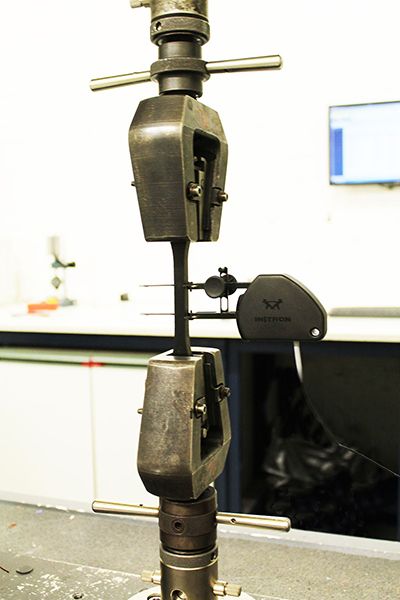
Tensile testing is a scientific method of stretching a plastic specimen until it breaks. During the test, we measure:
These properties help determine whether the plastic material is suitable for its intended application.
A typical tensile test provides several important values:
These measurements create a complete mechanical profile of the plastic.
Manufacturers, OEMs, and designers rely on tensile testing for plastics services in India @ Kiyo R&D LAB because tensile strength determines:
Will a component hold its shape?
Will it bend, warp, or deform under load?
Parts used in automotive or industrial applications must survive long-term stress.
Weak materials can crack unexpectedly, leading to product failure or hazards.
Tensile results help in choosing the best polymer grade—HDPE vs PP vs ABS vs Nylon, etc.
Ensures consistent results between batches, suppliers, or production cycles.
When products fail, tensile testing helps diagnose the root cause.
Final-year engineering projects depend on accurate tensile values for analysis.
Without tensile testing, engineering decisions become assumptions—and that leads to poor product performance, customer complaints, and safety risks.
At Kiyo R&D LAB, tensile testing is performed using advanced Universal Testing Machines (UTMs) with precision load cells and extensometers. The procedure includes:
Specimens are cut or molded according to ASTM/ISO dimensions.
Samples are stabilized under controlled temperature and humidity.
To avoid slippage or premature failure, grips are matched to material type.
The machine pulls the specimen at a fixed speed.
Load, elongation, and stress–strain curves are collected in real time.
Results are interpreted by trained professionals.
Our tensile testing for plastics services in India @ Kiyo R&D LAB follow globally accepted standards such as:
These standards ensure consistency, repeatability, and international acceptance.
Tensile testing is used in almost every industry that manufactures or uses plastic products.
Impact resistance is important, but tensile strength defines structural integrity.
Tensile testing ensures packaging does not tear, deform, or split during transit.
These parts must withstand mechanical stress without cracking.
High-performance polymers like ABS, Nylon, PBT, PC, and composites require tensile testing for:
PVC pipes, composite panels, and FRP structures rely on validated tensile performance.
Students and researchers depend on accurate tensile results for project validation, comparative analysis, and thesis work.
Many variables influence tensile performance:
At Kiyo R&D LAB, we help you understand how each factor impacts your material’s tensile behavior so you can make informed decisions.
Kiyo R&D LAB has built a strong reputation for delivering accurate and reliable testing services across India. Here’s why industries trust us:
Your results are officially recognized and accepted nationwide.
Essential for tight production and submission deadlines.
Our UTMs provide precision data with minimal error.
We help you understand not just the numbers, but what they mean for your product.
Final-year students get guidance and affordable testing packages.
Combine tensile testing with:
to get a complete material performance profile.
When you choose tensile testing for plastics services in India @ Kiyo R&D LAB, you gain:
It ensures your product is not just “good,” but mechanically dependable.
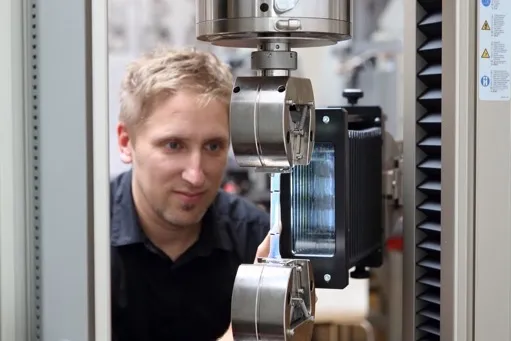
Tensile testing is one of the most fundamental yet powerful tools in plastic material evaluation. It reveals how strong, flexible, and durable your product truly is under real-world conditions. With tensile testing for plastics services in India @ Kiyo R&D LAB, industries and students gain access to NABL-accredited results, expert analysis, and fast reporting—everything needed to ensure performance, reliability, and quality.
Whether you are developing a new product, verifying material consistency, solving a failure issue, or completing an engineering project, Kiyo R&D LAB is equipped to support your journey with precision and confidence.