
In polymer manufacturing, failure rarely happens without warning. The signs are usually there—reduced toughness, unexpected cracks, brittle fracture, or inconsistent part performance. What most teams miss is how strongly impact behavior influences real-world polymer performance and analyse polymer testing impact factor.
That’s where understanding the polymer testing impact factor in chennai – Kiyo R&D LAB becomes essential.
Impact factor is not just a number on a report. It represents how a polymer absorbs energy under sudden force, shock, or collision—conditions that occur daily in automotive parts, consumer products, electrical housings, packaging, and industrial components.
In simple terms, impact factor describes a polymer’s resistance to sudden impact loading. Unlike tensile or flexural tests that apply slow, controlled force, impact testing evaluates how a material behaves when force is applied instantly.
This matters because:
The polymer testing impact factor in chennai – Kiyo R&D LAB focuses on measuring this shock resistance accurately and consistently, using standardized test methods.
Let’s be blunt:
Most field failures are not slow, graceful failures—they are sudden breaks.
Impact testing helps answer questions like:
Ignoring impact factor means guessing how a polymer behaves in real use.
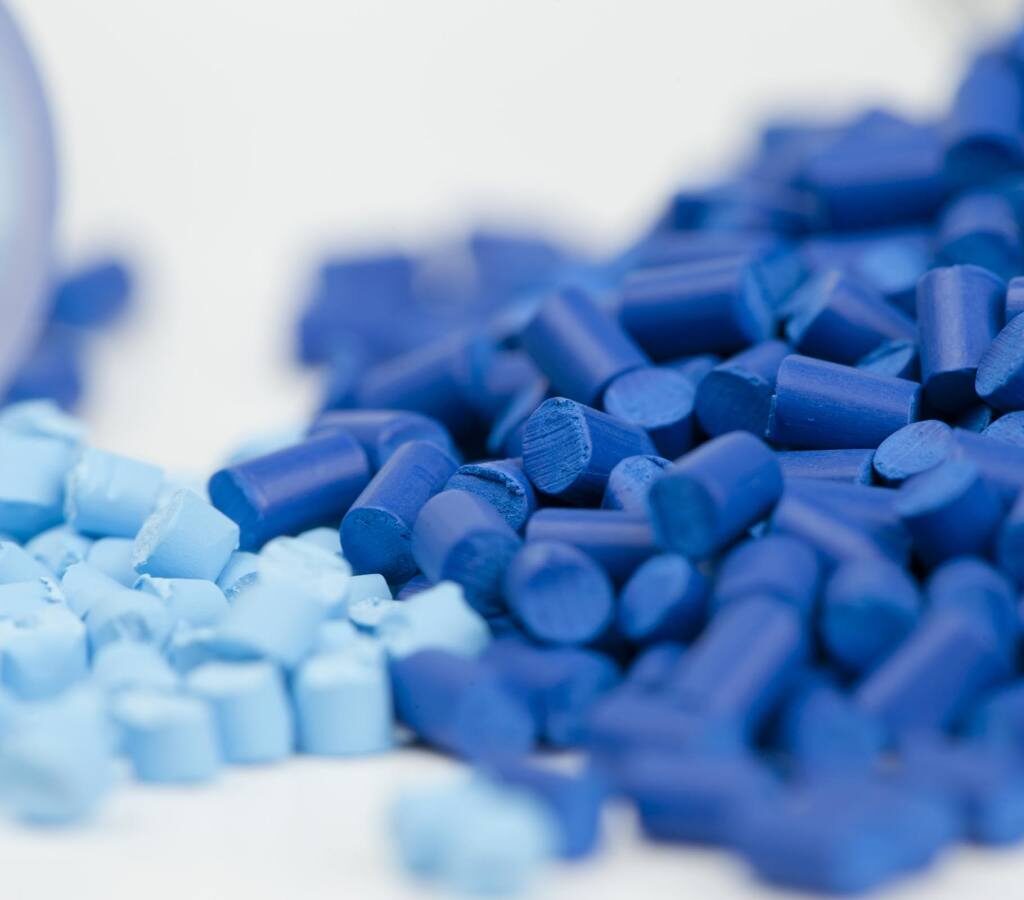
At Kiyo R&D LAB, impact testing is not treated as a routine checkbox test. It is used as a decision-making parameter for design validation, supplier approval, and failure analysis.
The lab focuses on:
Because in impact testing, small errors create big deviations.
One of the most widely used methods to determine polymer impact factor.
It measures:
Izod testing is commonly used for:
Charpy impact testing evaluates:
It is useful for:
For advanced analysis, impact force vs time or energy vs displacement data helps understand how failure occurs, not just that it occurs.
This is particularly useful in:
Impact factor is not a fixed value. It is influenced by several variables:
Amorphous polymers often behave differently from semi-crystalline polymers. Molecular weight, chain flexibility, and additives all play a role.
Many polymers become brittle at low temperatures. Impact testing at different temperatures is often necessary for automotive and outdoor applications.
The notch acts as a stress concentrator. A polymer with high notch sensitivity may fail suddenly even if unnotched impact strength looks acceptable.
Injection molding parameters, cooling rate, and residual stress can significantly reduce impact performance—even if tensile results look fine.
Understanding these variables is a key part of evaluating the polymer testing impact factor in chennai – Kiyo R&D LAB.
Impact testing is often the first test to show inconsistency between batches or suppliers.
It helps:
When tensile strength stays constant but impact strength drops, it’s a warning sign that should not be ignored.
One of the most practical uses of impact factor testing is failure investigation.
If a part cracked suddenly:
Kiyo R&D LAB uses impact test results along with visual fracture observation to support root-cause analysis.
The polymer testing impact factor in chennai – Kiyo R&D LAB is relevant for:
If your product can be dropped, struck, or vibrated—impact factor matters.
Impact test reports from Kiyo R&D LAB include:
The focus is on clarity and usability, not just numbers.

Impact factor is not just another test parameter—it is a real-world performance indicator.
A polymer that looks strong on paper but fails on impact is a liability, not a solution. Understanding and controlling impact behavior early helps prevent failures, rejections, and customer complaints.
The polymer testing impact factor in chennai – Kiyo R&D LAB supports manufacturers, researchers, and quality teams in making informed material decisions backed by reliable data—not assumptions.
If toughness, safety, and durability matter to your product, impact testing is not optional. It’s essential.