Plastics are everywhere—automotive interiors, medical devices, electrical housings, packaging, aerospace components, and consumer products. Yet one dangerous assumption still exists: if it looks fine, it must be fine for NDT. That assumption causes failures, recalls, and compliance issues every year.
This is exactly why non destructive testing methods for plastics services in Chennai – Kiyo R&D LAB are critical. These methods allow you to evaluate plastic components without cutting, breaking, or damaging them, while still uncovering internal defects, material inconsistencies, and performance risks.
Non-destructive testing (NDT) is no longer limited to metals. Advanced plastic components demand the same level of scrutiny.
Non-destructive testing for plastics refers to inspection and evaluation techniques that do not alter the usability of the plastic part. The component remains intact, functional, and usable after testing.
Unlike destructive tests (tensile, impact, flexural), NDT focuses on:
With non destructive testing methods for plastics services in Chennai – Kiyo R&D LAB, manufacturers gain insight without sacrificing samples.
Plastics today are not simple commodity materials. They are:
Failures in plastic components often start internally, long before they appear on the surface.
NDT helps prevent:
Skipping NDT is gambling with performance.
Kiyo R&D LAB provides non destructive testing methods for plastics services in Chennai to multiple industries, including:
If failure is unacceptable, NDT becomes mandatory.
Plastic NDT is not one-size-fits-all. Different materials and applications require different approaches.
Often underestimated, controlled visual inspection is the first and essential NDT step.
At Kiyo R&D LAB, this includes:
This method is simple but powerful when done correctly.
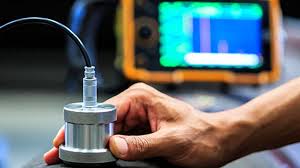
Ultrasonic testing uses high-frequency sound waves to detect internal defects.
Applicable for:
UT helps identify:
This method is especially useful for structural plastic and composite parts.
X-ray testing is not just for metals. It is highly effective for certain plastic applications.
Used to detect:
Radiographic NDT is ideal when internal geometry matters and the component cannot be cut open.
This method detects temperature variations that indicate defects beneath the surface.
Infrared thermography helps identify:
It is especially useful for composite plastics and bonded assemblies.
Acoustic emission monitors stress-induced sound waves released from materials.
Used for:
This method is advanced and applied when dynamic behavior of plastics matters.
Plastic composites deserve special attention.
Fiber-reinforced plastics (FRP, GFRP, CFRP) often fail internally before visible damage appears. Using non destructive testing methods for plastics services in Chennai – Kiyo R&D LAB, composite components are evaluated for:
This is crucial for automotive and aerospace applications.
One major advantage of Kiyo R&D LAB is flexibility.
Testing is planned based on component size, geometry, and risk level.
Non-destructive testing at Kiyo R&D LAB follows:
Reports are structured, traceable, and suitable for audits and technical reviews.
Many student projects focus only on destructive testing, which gives incomplete insight.
Kiyo R&D LAB supports:
Understanding NDT gives students real-world relevance, not just academic marks.
Here’s the blunt truth: NDT is only valuable if the interpretation is correct.
Non destructive testing methods for plastics services in Chennai – Kiyo R&D LAB are trusted because of:
This lab focuses on engineering decisions, not just test execution.
Skipping NDT doesn’t save money—it delays failure.
Consequences include:
Most of these failures could have been detected early with non-destructive testing.

Plastics are no longer “simple” materials. As their applications become more critical, testing methods must evolve.
If you want insight without destroying parts, early defect detection, and confidence in plastic component integrity, non destructive testing methods for plastics services in Chennai – Kiyo R&D LAB provide exactly that.
Because when defects are hidden, testing must go deeper—not harder.