
Plastic components rarely fail slowly. They fail suddenly — during handling, installation, transport, or real-world use. When that happens, the first question engineers ask is simple but critical: Did we evaluate the impact resistance correctly?
That’s exactly where ASTM D256 Izod Impact Testing services – Kiyo R&D LAB come into play.
At Kiyo R&D LAB, Izod impact testing is not treated as a routine checkbox test. It is a performance-critical evaluation carried out under NABL-accredited conditions, strictly aligned with ASTM D256 requirements, to generate results that are reliable, repeatable, and defensible.
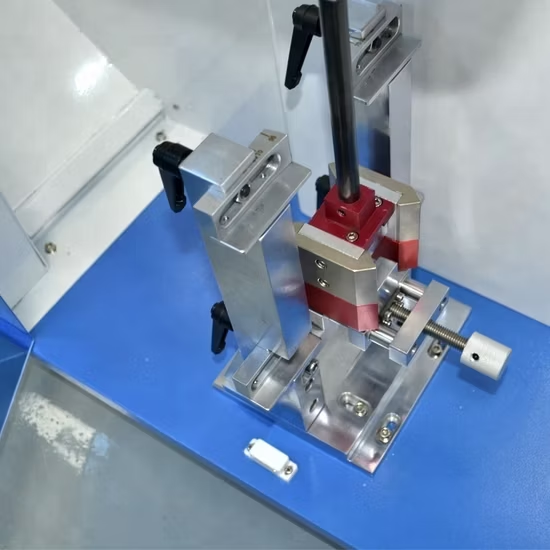
Plastics may show excellent tensile or flexural strength and still fail catastrophically when subjected to sudden impact. Impact loading is fundamentally different from slow, controlled loading.
ASTM D256 Izod impact testing helps determine:
Without this data, manufacturers are effectively guessing how a product will behave when dropped, struck, or mishandled.
That’s why ASTM D256 Izod Impact Testing services – Kiyo R&D LAB are essential for real-world validation.
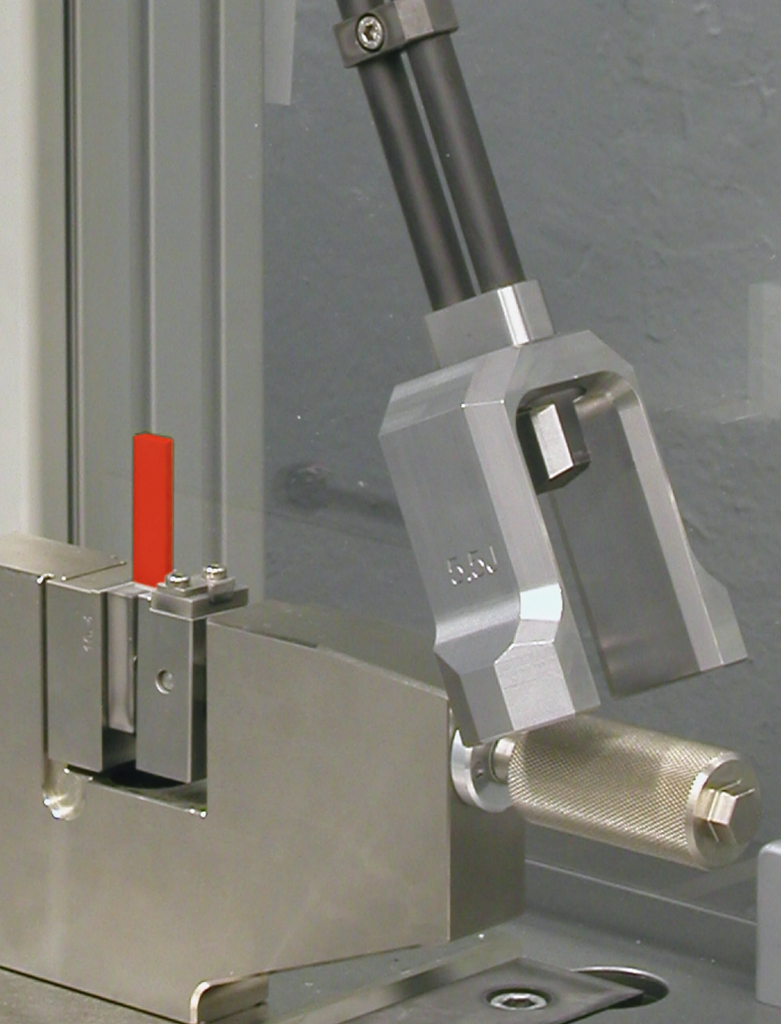
ASTM D256 is a standardized test method used to measure the impact resistance of plastics using the Izod pendulum impact configuration.
In simple terms:
The result indicates how much energy the material can absorb before breaking.
At Kiyo R&D LAB, Izod impact testing is conducted strictly as per ASTM D256 to ensure comparability, acceptance, and technical credibility.
One of the most misunderstood aspects of ASTM D256 is the difference between notched and unnotched specimens.
Many plastic failures initiate at sharp corners, holes, or molded features — which is why notched Izod data is often more representative of real-world behavior.
Choosing the correct configuration is critical. At Kiyo R&D LAB, we guide clients on test selection based on application, not convenience.
ASTM D256 Izod impact testing is widely used for materials such as:
Each material responds differently to impact, temperature, and notch geometry — making standardized testing essential.
At Kiyo R&D LAB, Izod impact testing is performed under NABL-accredited laboratory conditions, ensuring accuracy and traceability.
Our testing process includes:
Every step is aligned with ASTM D256 requirements, eliminating ambiguity in results.
Impact test results are often used for:
Non-accredited results may be questioned or rejected.
ASTM D256 Izod Impact Testing services – Kiyo R&D LAB are NABL-accredited, which means:
This is especially critical for manufacturers supplying regulated or export markets.
Izod impact resistance is not a fixed number. It is influenced by:
For example, a plastic that performs well at room temperature may fail brittle at low temperatures. That’s why interpreting Izod data without context can be misleading.
At Kiyo R&D LAB, we help clients understand what the numbers actually mean for their application.
ASTM D256 Izod Impact Testing services – Kiyo R&D LAB are widely used by:
Any plastic component that may be dropped, struck, or mishandled should undergo Izod impact testing.
Clients often approach us after facing:
Izod impact testing helps identify whether the issue is related to:
This transforms trial-and-error into engineering control.
Let’s be honest — many labs can run an impact test. Very few deliver results you can confidently defend.
ASTM D256 Izod Impact Testing services – Kiyo R&D LAB stand out because we offer:
We focus on decision-ready data, not just numbers on a page.
Engage ASTM D256 Izod Impact Testing services – Kiyo R&D LAB when:
Testing early reduces risk, cost, and reputational damage.
Impact failure is one of the most common and costly issues in plastic products — and it rarely gives a warning.
ASTM D256 Izod Impact Testing services – Kiyo R&D LAB provide manufacturers, designers, and researchers with accurate, NABL-accredited, and practically meaningful impact resistance data.
If your plastic product must survive real-world handling, don’t rely on assumptions or datasheets.
Test it as per ASTM D256. Validate it properly.
That’s the standard at Kiyo R&D LAB.